
SPACE November 2026 (No. 708)
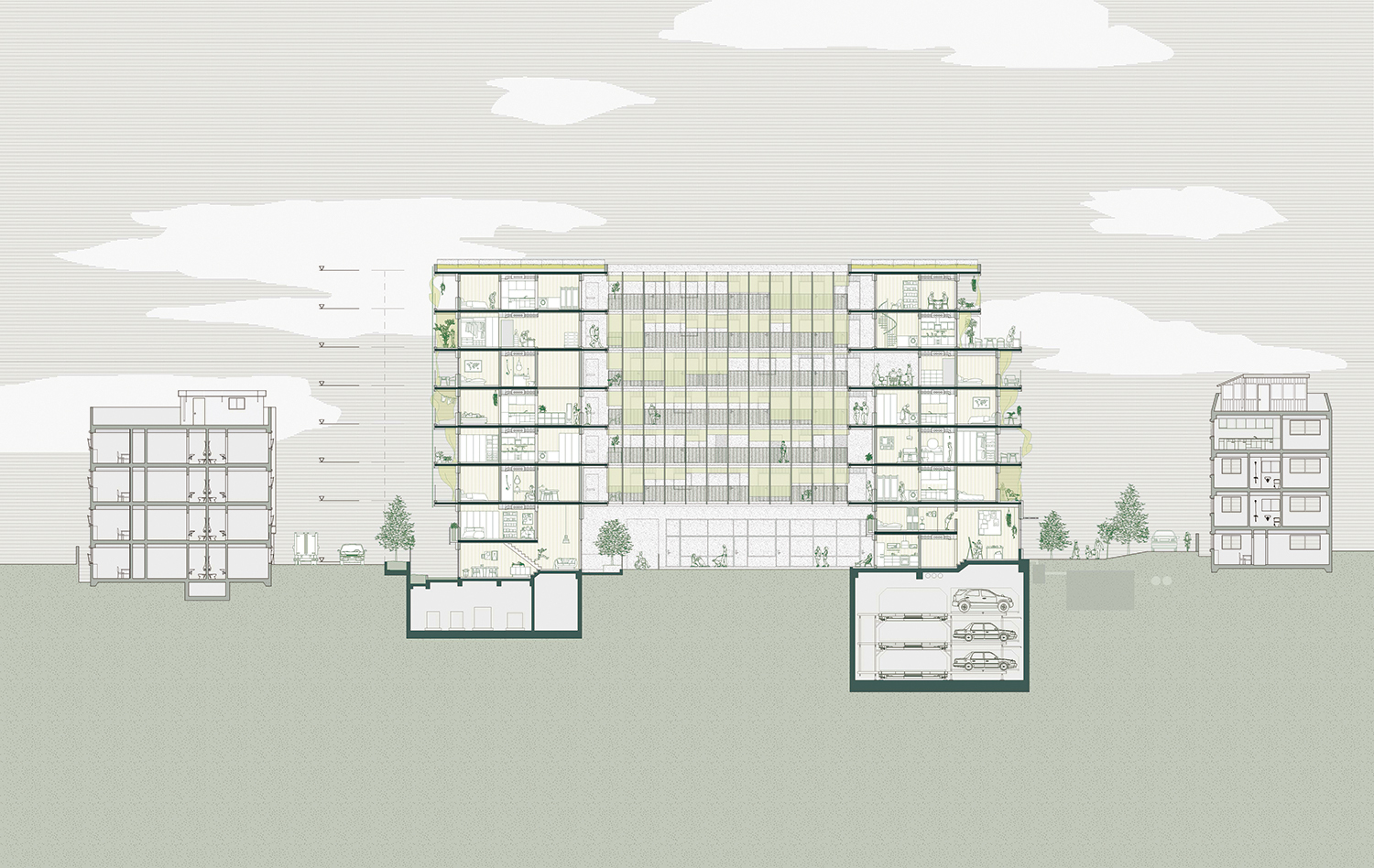
Kim Hana’s ‘Design Public Value’. ©Kim Hana

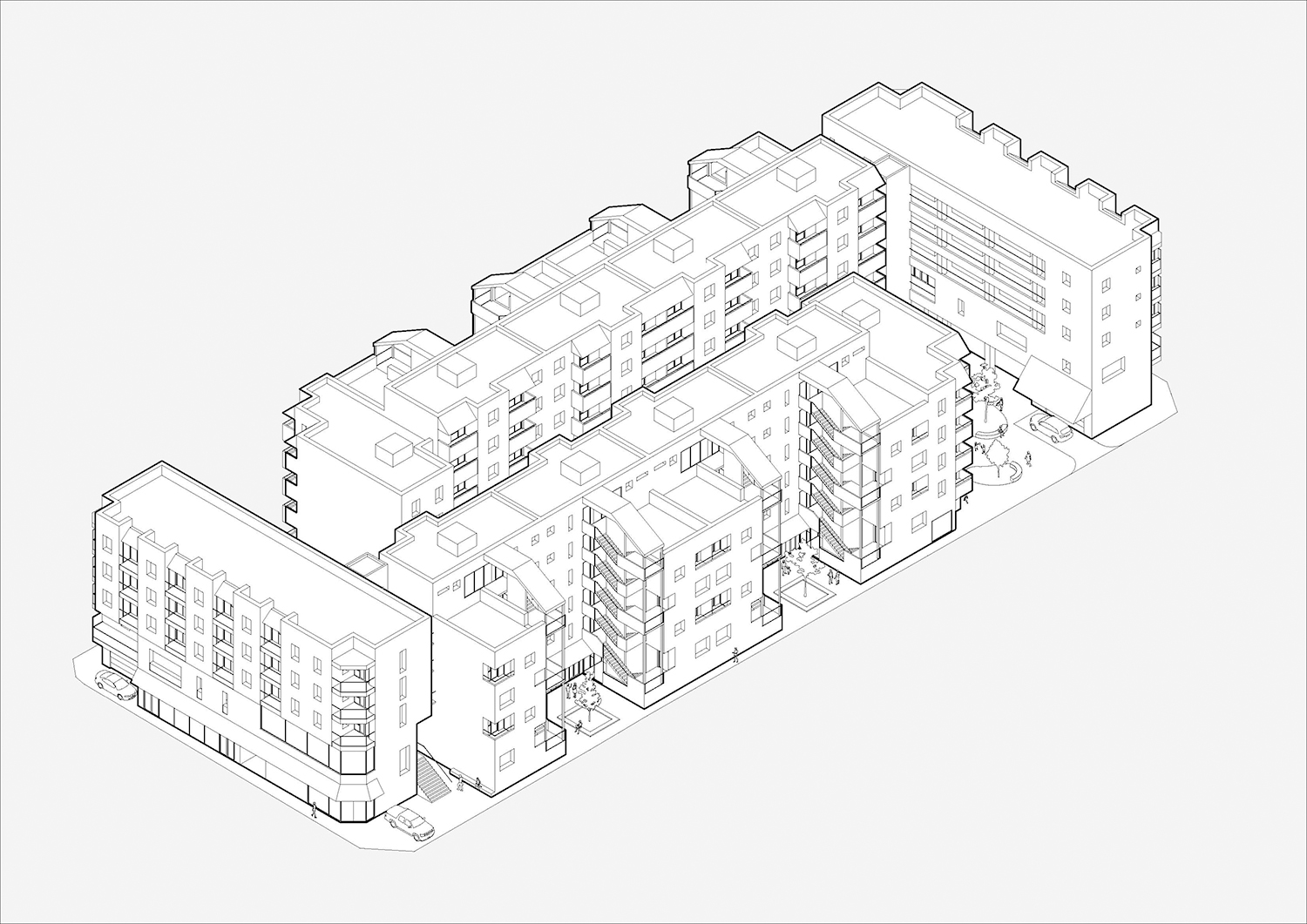
Nam Jungwoo, Cho Donghyun and Jo Beomhee’s ‘A Typological Proposal for Korean Block Housing’. ©Nam Jungwoo, Cho Donghyun, Jo Beomhee
Kim Minsoo’s ‘Building a Neighbourhood: A Pattern Book’. ©Kim Minsoo
On Sep. 15, the winner of the HAU Award 2026 Design Competition #1, titled ‘Exploring the Missing Middle: Between Large Apartment Complexes and Small-Lot Multi-Family Housing’ was announced. The award is co-organised by Korea Architects Institute (KAI) (President, Lim Hyoungnam) and SPACE. The jury committee including, jury chair, Park Insuk (Professor Emeritus, Myongji University), Kim Yongmi (Co-Principal, G.S Architects & Associates), Sung Hong Kim (Professor Emeritus, University of Seoul), Yoon Seunghyun (Professor, Chung-Ang University) and Kim Daesung (Principal, URBAN INSITE Architects) conducted multiple rounds of assessment to select the winners.
The main theme of this competition was to investigate new possibilities for ‘in-between housing’ as an alternative type that can bridge the gap between the two dominant models, large apartment complexes and single-family houses. In this context, the competition asked participants to design a collective housing site within Sinsa-dong, Gwanak-gu, an area known for its aging low-rise multifamily housing. The proposed site can be one or more lots, with a total area between 1,000 and 3,000m². The competition guidelines allowed participants to disregard or modify existing building regulations. This was intended to encourage the development of ‘in-between housing’ as a new alternative model while also exposing contradictions and unreasonable constraints within the current regulatory framework. However, all proposals were required to comply with a maximum floor area ratio (FAR) of 250%, ensuring that development density was considered in relation to economic feasibility.
Three Grand Prize winners successfully addressed the different challenges of in-between housing in a balanced manner. ‘Design Public Value’ (Kim Hana) boldly proposes a large community garden occupying 20% of the site and an eight-storey courtyard block that reaches the maximum FAR to satisfy both public value and economic feasibility. ‘A Typological Proposal for Korean Block Housing’ (Nam Jungwoo, Cho Donghyun, Jo Beomhee) offers a pragmatic approach to reducing the cost of underground parking. The proposal dedicates the ground floor to parking and creates a platform for four residential buildings ranging from five to nine storeys. Unlike typical piloti parking, commercial and neighborhood facilities are placed around the perimeter of the ground-floor parking area. ‘Building a Neighbourhood: A Pattern Book’ (Kim Minsoo) proposes an anchor building that provides various residential services, including parking, while supporting the development of additional residential buildings on the surrounding lots. The two Best Awards went to ‘Searching for the Middle: City, Housing, Society’ (Park Shinwoo, Lee Seonghwan, Kim Yeseul), which establishes its design direction through an analysis of the broader neighbourhood while preserving the existing houses on the site; and ‘Architecture for Change and Evolution’ (Jo Jihyun), which arranges five-storey and seven-storey buildings in a staggered, checkerboard-like configuration to create open spaces and improve the quality of the residential environment.
In his jury comments, Park Insuk noted that ‘the demand for “low construction costs and the highest density” is often in conflict with our ideal goals of “quality housing” and a “desirable neighborhood”.’ He added, ‘Rather than judging which challenge is more important than the others, the jury equally appreciated proposals that rigorously engaged with these challenges.’ The award winners’ roundtable discussion is scheduled to take place on Oct. 15, followed by a symposium at the end of the year aimed at drawing public attention to housing issues. Using the winning proposals as a point of departure, the symposium will closely examine existing laws and regulations that hinder the realization of in-between housing and request for institutional reformation In this sense, the significance of this competition extends beyond the collection of design proposals to the realm of implementation.