




SPACE September 2026 (No. 706)
The 20th anniversary exhibition of Gyeonggi Museum of Modern Art, ‘The Summer We Call Ours’ is on view until Sep. 27. The exhibition presents 93 representative works by 26 emerging artists and collectives. Under the guiding theme, ‘summer’, each work reflects both on its potential and uncertainties. To highlight the notion of fluidity in these works, crossing the boundaries of painting, sculpture, installation, media, craft, architecture, design, and performance, the exhibition dispenses with themes or sectional divisions. Instead, it foregrounds a set of keywords for each artist, emphasising the diversity and distinct character of individual works. Keywords such as ‘wild soil, earth, people’ (ROS) and ‘family, coexistence, hybridity’ (Kim Heejae) serve as guides, inviting visitors to chart their own routes through the galleries. The brochure, accordingly, takes the form of a map.
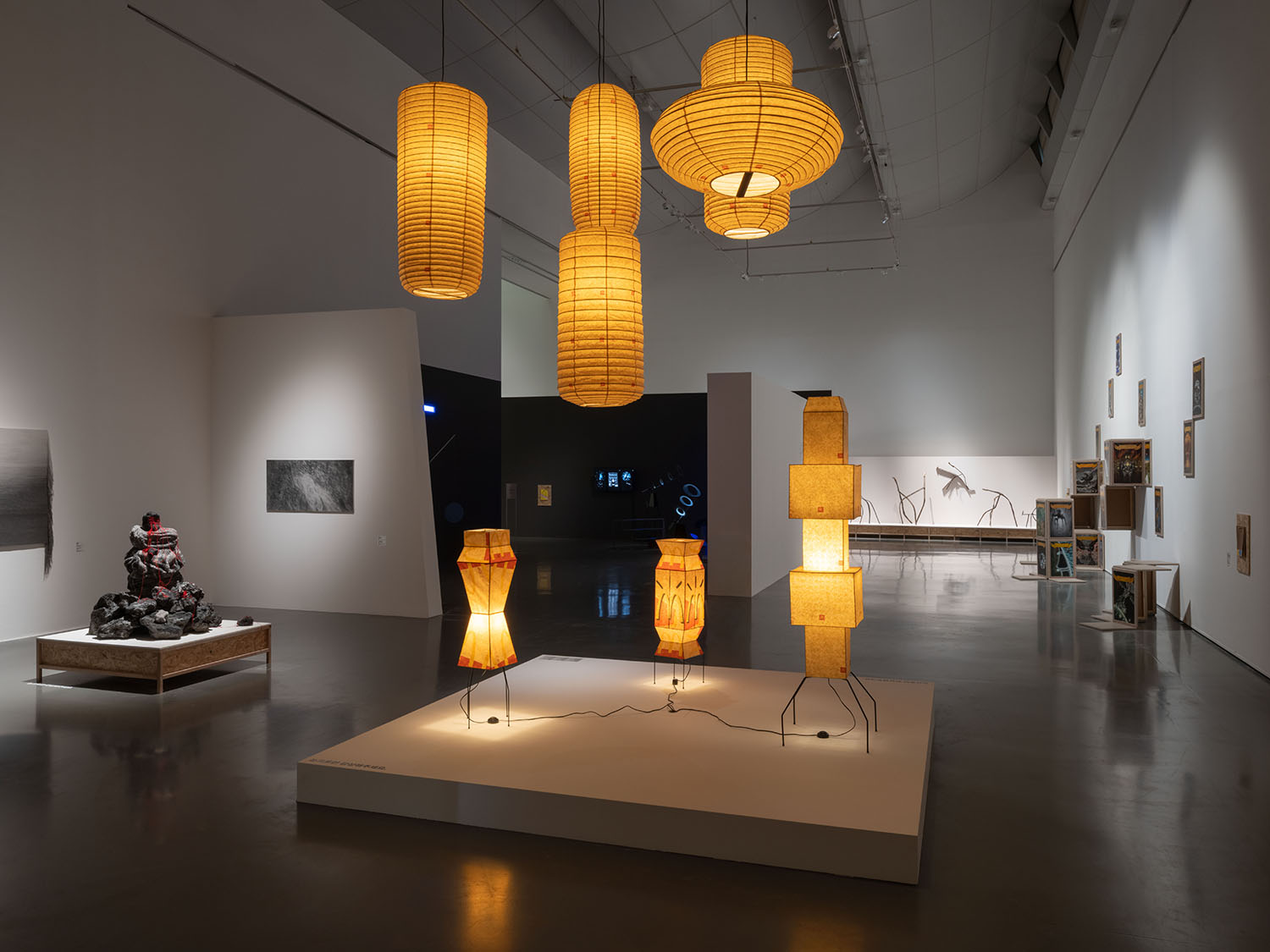
Exhibition view of ‘The Summer We Call Ours’. The works of Lee Hyunhwa (left) and Lee Gyuhan (middle) face each other. Image courtesy of Gyeonggi Museum of Modern Art
The exhibition pays particular attention to the ways young artists working in craft, design, and architecture test disciplinary boundaries and have expanded the scope of their practice. Chon Jaewoo (HYPERSPANDREL)’s THERE ARE NO TOILETS ON THE SECOND FLOOR (2026) series, which marks the beginning of the exhibition, is representative of this approach. Chon, an architect, visualises the message ‘there are no toilets on the second floor’ across a range of formats, including signs, electronic displays, and monitors, placed at points of circulation such as the lobby, staircase, gallery’s entrance and corridor. By foregrounding the inconvenience of having no toilet on the second floor, the work uses the conveyance of information to intervene in the exhibition environment and its visitor circulation, playfully questioning the rules and conventions of the space. Nam Dahoon’s July 12, 2008, Cheongu 3rd Complex, Building 106, Unit 507 (2017–2026) series tests the boundary between creation and reproduction. Nam meticulously reconstructs the home where the artist lived as a child, reproducing everything from the furniture to individual household objects in foam. The contrast between this meticulous reconstruction and the rough materiality of foam is tied to the fact that no ‘Unit 507’ actually exists in Building 106 of Cheongu 3rd Complex. Through this fictional time and space, the artist makes an ironic point: what matters is not the distinction between the real and the fake, but the narratives, memories, and experiences the work evokes.
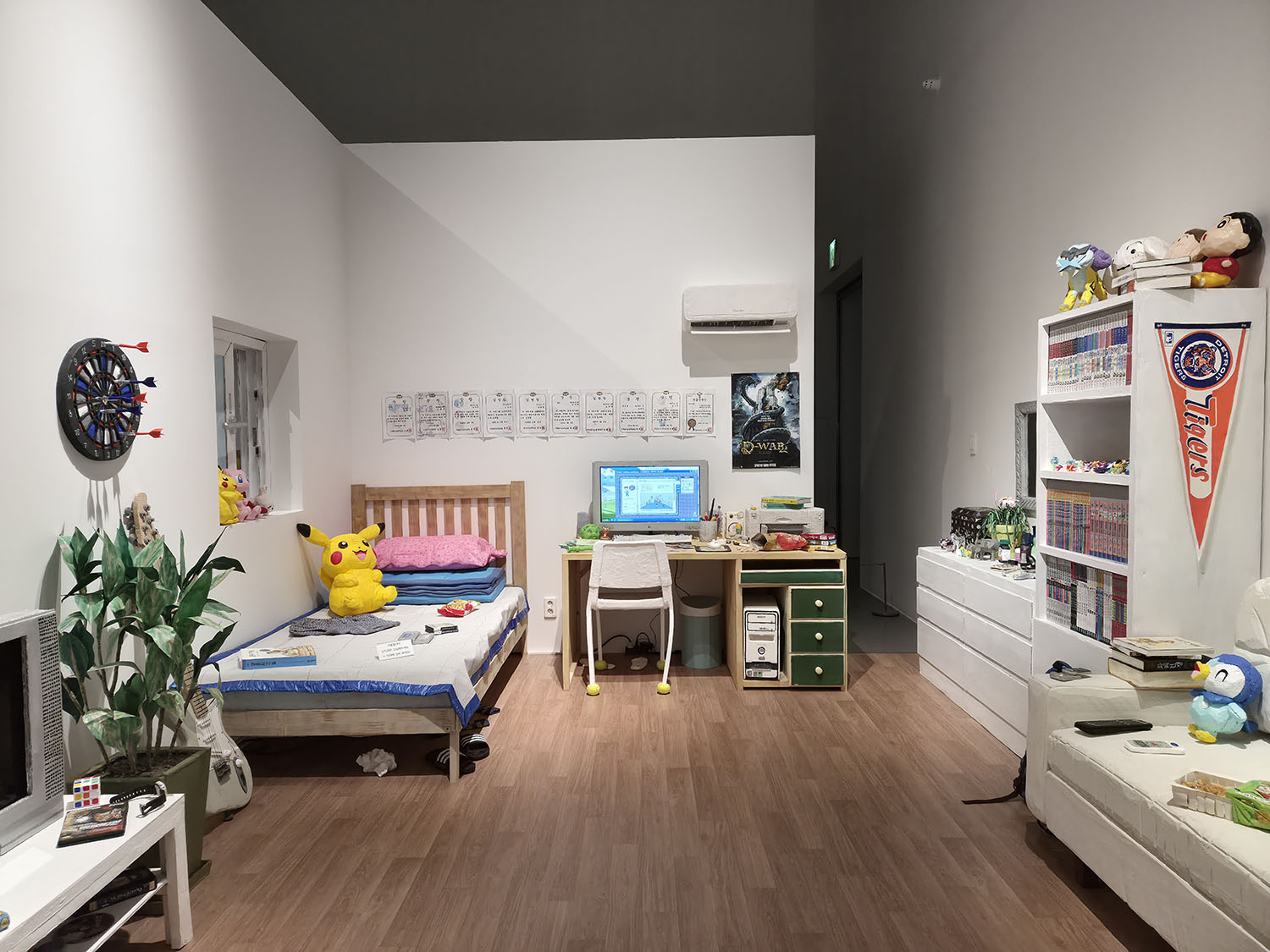
Installation view of July 12, 2008, Cheongu 3rd Complex, Building 106, Unit 507 (2017–2026) by Nam Dahoon ©Bang Yukyung
Artists in design and craft also feature. Prayer Stone (2024) is crafted by inserting metal wire into thread to create a three-dimensional structure, recalling the act of stacking stones while making a wish. Dawn (2024) is a tapestry woven by unraveling threads one by one from cotton fabric dyed with ink and weaving them again, while Daljip Taeugi (2024) is a painting made with ash from artist’s burned hair and conté. Placed in front of Lee Hyunhwa’s performative textile works, which evoke the burning away of impurity and a wish for inner purification and peace, is Lee Gyuhan’s McDonald’s Paper Bag Lighting (2025) series. By juxtaposing these works with lighting made from discarded paper bags and reworked to bridge tradition and the contemporary, the exhibition invites viewers to read across the shared concerns, working methods, and attitudes of artists who question the distinctions made between craftsperson, designer, and artist.
There is more video artwork placed in relation to explore temporality and movement. For example, in How to Make Movement: Premiere (2026), Lee Sooji stacks printed still images for visitors to tear off and take away the sheets one by one. HAN JSUK’s Labyrinth Ⅱ (2026) presents a video of a vehicle endlessly circling a cloverleaf interchange in the city, caught in a loop with no exit. Immersed within the various perspectives of these artists, visitors may find themselves losing their way through the galleries, or discovering new paths of their own.
0