




SPACE December 2025 (No. 697)
Interview Ivo Mareines, Matthieu Van Beneden co-principals, Mareines Arquitetura × Kim Bokyoung
Kim Bokyoung (Kim): How did Mareines Arquitetura come to develop the philosophy that ‘We believe that an organic response is the best way for architecture, nature and people to coexist together’?
Ivo Mareines, Matthieu Van Beneden (Mareines, Van Beneden): We believe there is no possibility that a single work of architecture (Vers une architecture) could account for the diversity of cultures and landscapes around the planet. Each place has its own specificities and requires a unique design response. Our response is organic in the sense that we always ask: What does the land ask of us? Land is understood as a natural and cultural phenomenon related to a given project. The answer must be in harmony with the depth of the question. This is what we call an organic response.
Kim: Passive House originated in the cold climates of Central Europe, but Mareines Arquitetura has adapted it to Brazil’s climate conditions. What principles or strategies did you follow when designing a Passive House suited to the Brazilian climate?
Mareines, Van Beneden: Yes, the term Passive House originated in cold climates. The concept, in a way, embodies the idea of freedom and independence; energetically self-sufficient, using water resources responsibly, and, to some extent, growing part of one’s own food. Etymologically, passive comes from the Latin passivus, meaning ‘the ability to feel or to suffer’. The architecture must, as the Latin root suggests, be capable of feeling and enduring the climatic changes occurring around the globe. As mentioned in the previous question, each place demands a different response. In hot and humid climates, life can undoubtedly develop in outdoor and shaded spaces. Shade is the greatest ally for a healthy and happy life. In cold climates, such as Campos do Jordão, the strategies are different, aligning more closely with those of the Northern Hemisphere in terms of energy conservation. Life here is more restricted to interior and protected spaces.
Kim: I’ve heard that Brazil tends to restrict the import of advanced foreign technologies in order to protect its domestic industries. Has this context created any particular limitations or challenges in your design process?
Mareines, Van Beneden: What you heard is true. It is always a relief when we build in countries that are less technologically restricted, allowing us to use more advanced materials and construction techniques. In Brazil, we actively adopt low-tech approaches in our projects. On one hand, the lack of access to high-tech resources forces us to find simpler and more economically accessible solutions. On the other hand, ancestral cultures can offer great examples, such as the ocas of the Kamaiurá people, who were already creating light, shade, and rain-resistant architecture long before the arrival of Europeans in our country.
Kim: In line with Mareines Arquitetura’s philosophy, you designed a sustainable and self-sufficient residence – the Passive House – in a reforested area of inland São Paulo. When did the idea for this project first emerge?
Mareines, Van Beneden: The site is part of a former rural property that was ecologically mismanaged, like most properties within the Atlantic Forest ecosystem. At the beginning of the house’s construction native tree species were already planted with the aim of restoring the forest’s original coverage. Actions like these, whether small or large, are essential to preserve the biodiversity of this precious reserve that once covered almost the entire area of our coastline. As for the owners, they conveyed to me the need for the two concepts I mentioned earlier: freedom and independence. They lived on a high floor building in the city of São Paulo. I sensed that what they missed most, especially after enduring the Coronavirus Disease-19 pandemic, was direct contact with the earth. I interpreted this quite literally. Why not use earth itself as the main building material? Once reforested, the surrounding land would also play its role, providing shade and a spiritually nurturing environment for reflection, something so scarce in a hectic metropolis.
Kim: Given the client’s desire to escape the pressures of the city and live more freely, lightly, and healthily in nature, the continuity between indoor and outdoor spaces seems to have been a key consideration. What architectural elements or landscape strategies did you develop to create an organic connection between the interior, the exterior, and the surrounding reforested land?
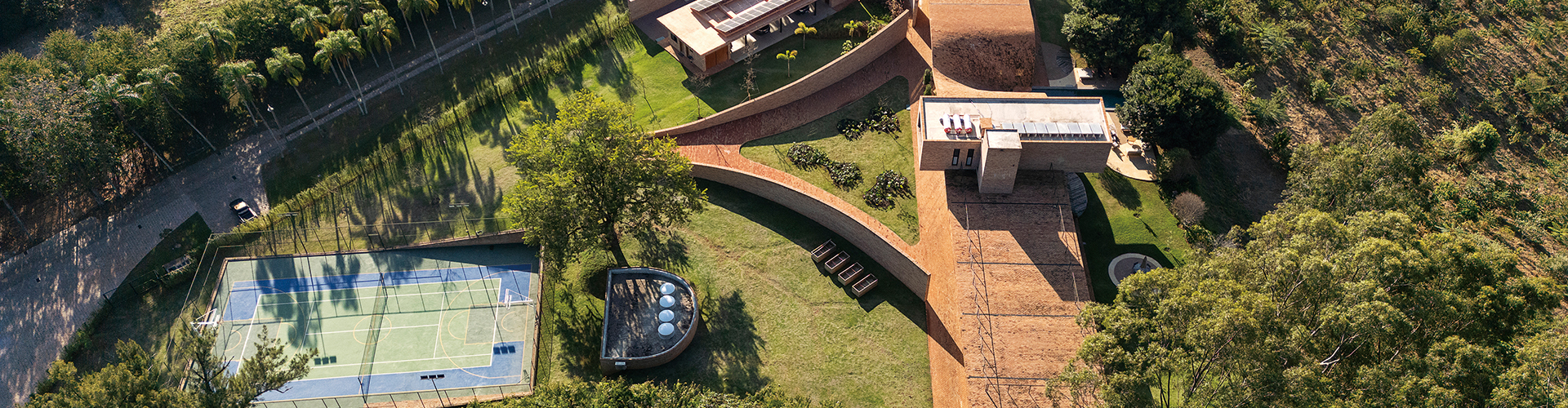
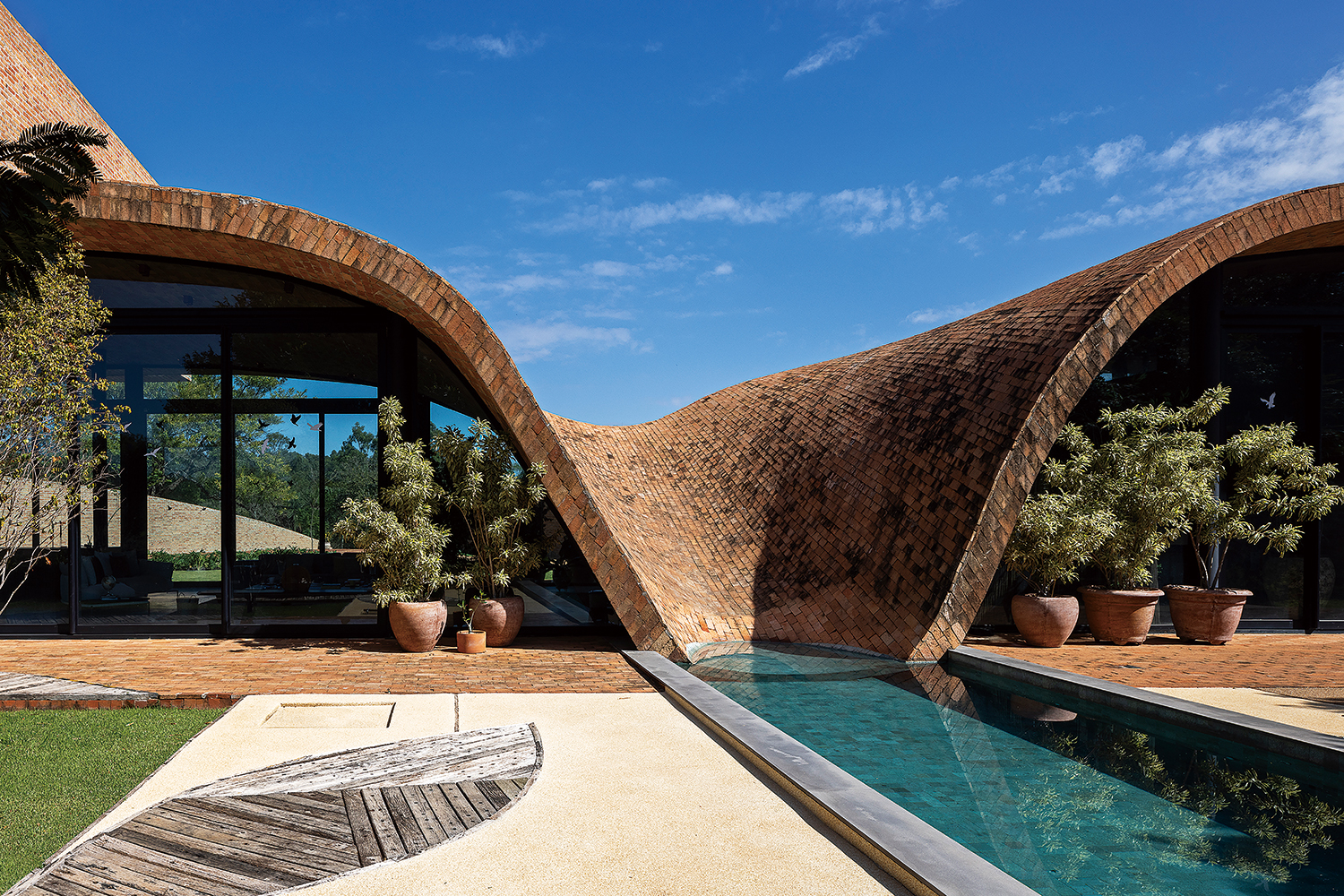
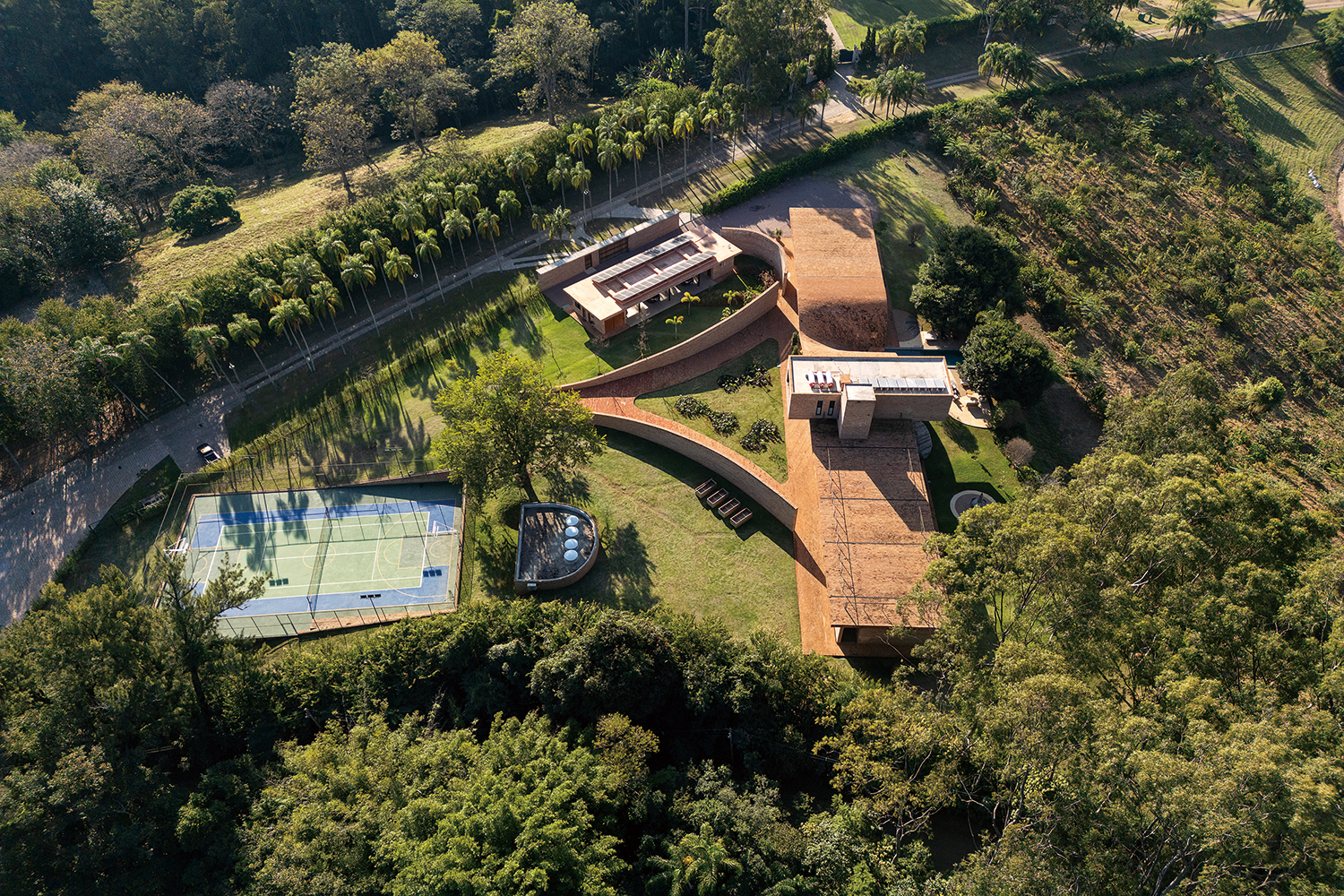
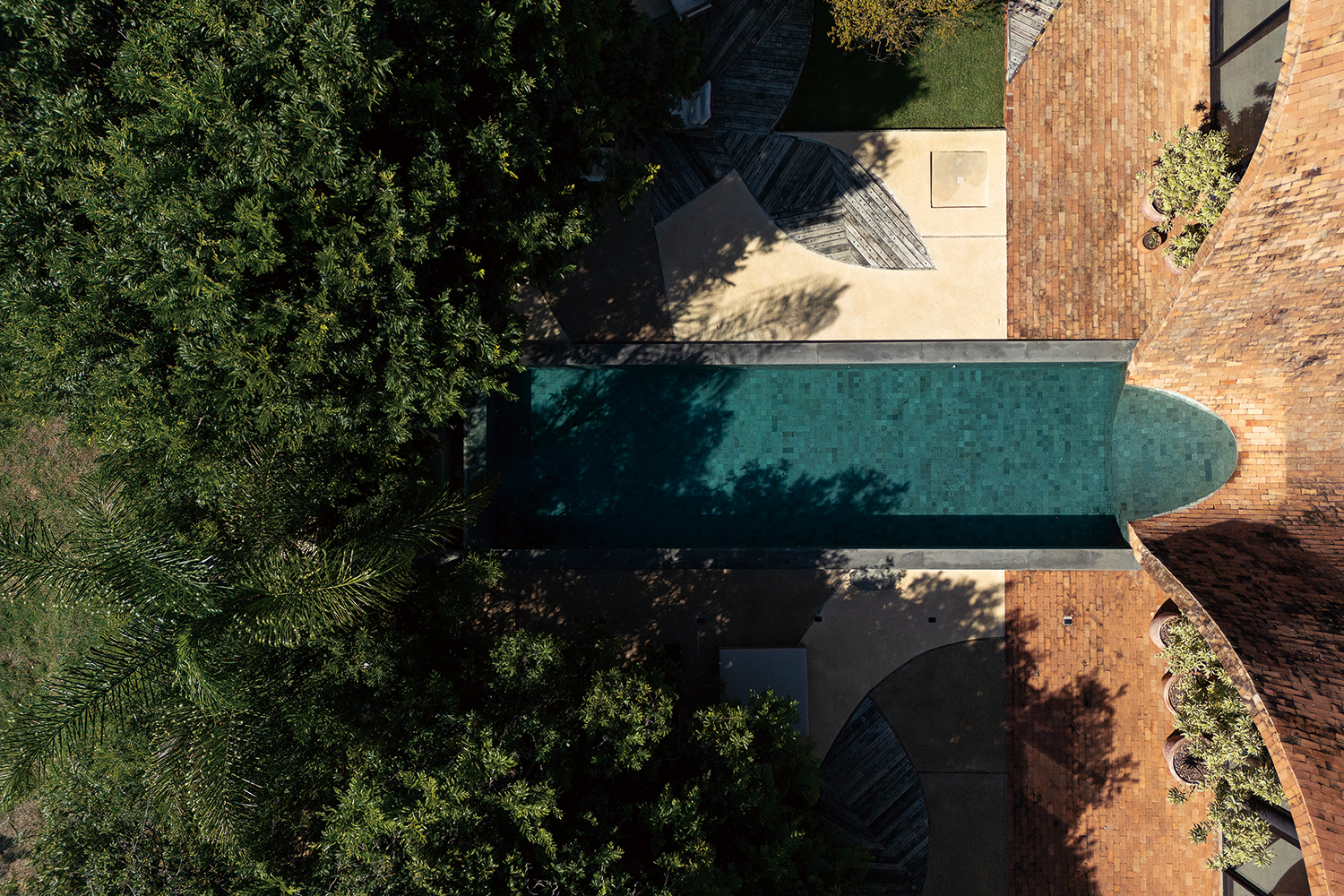
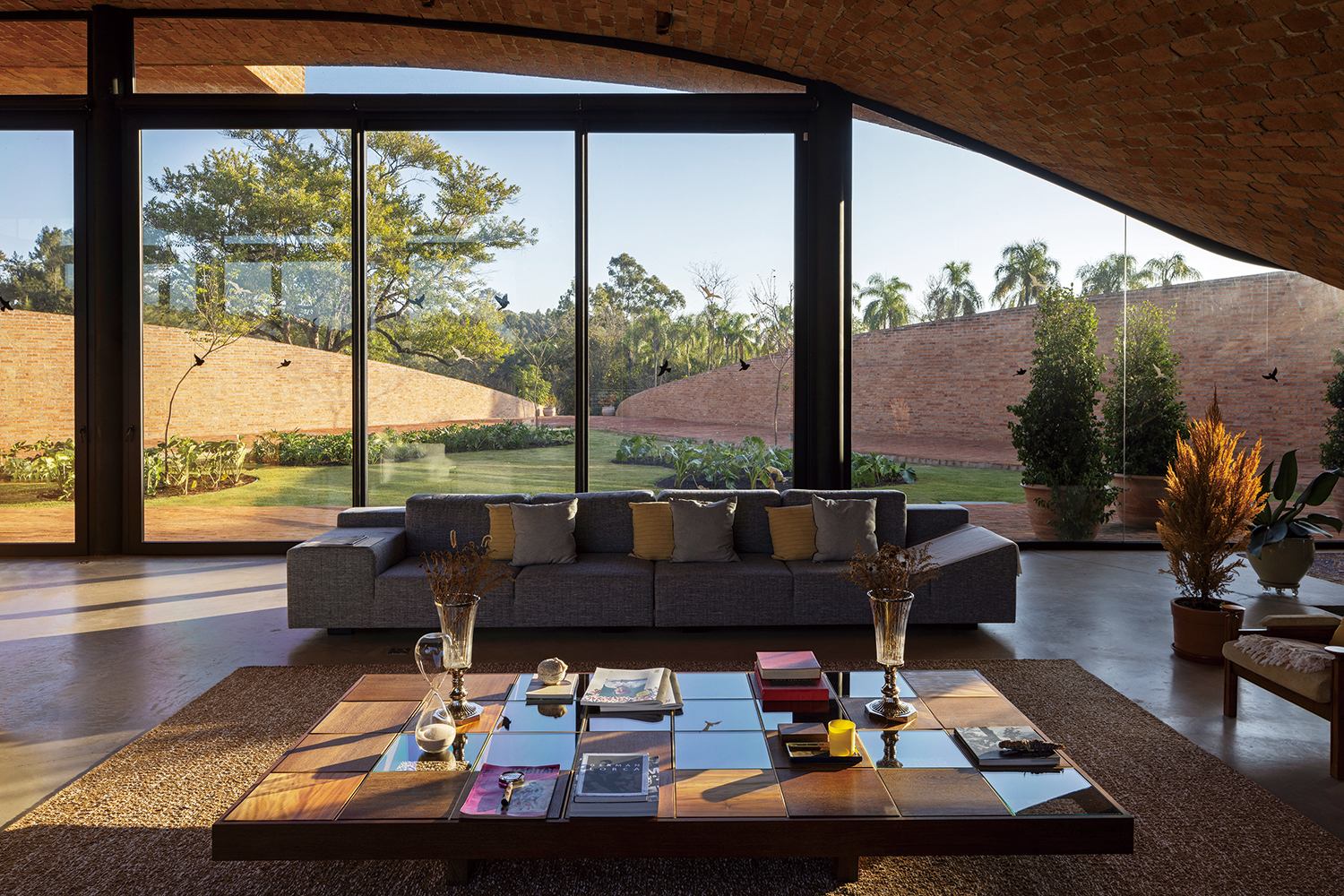
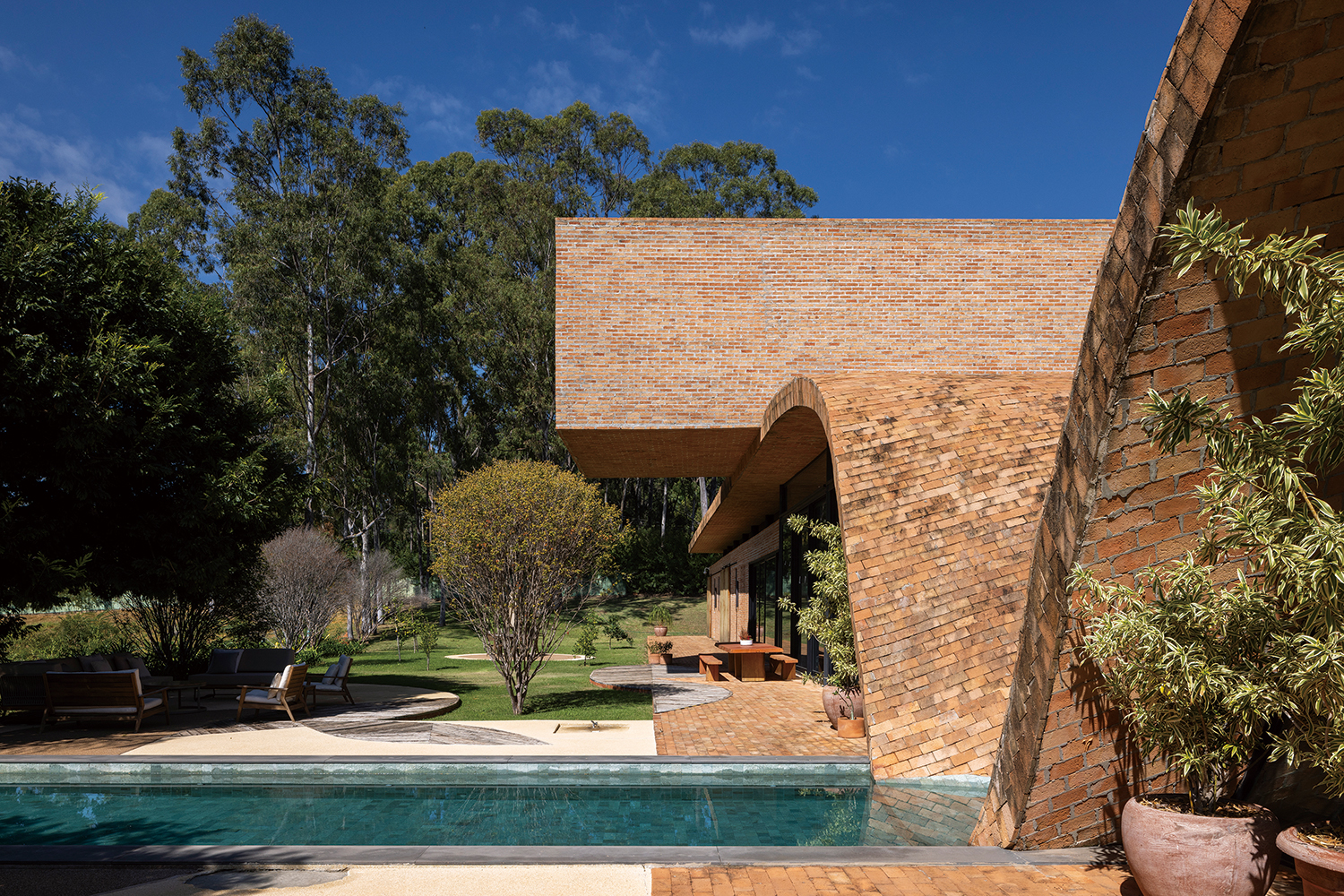
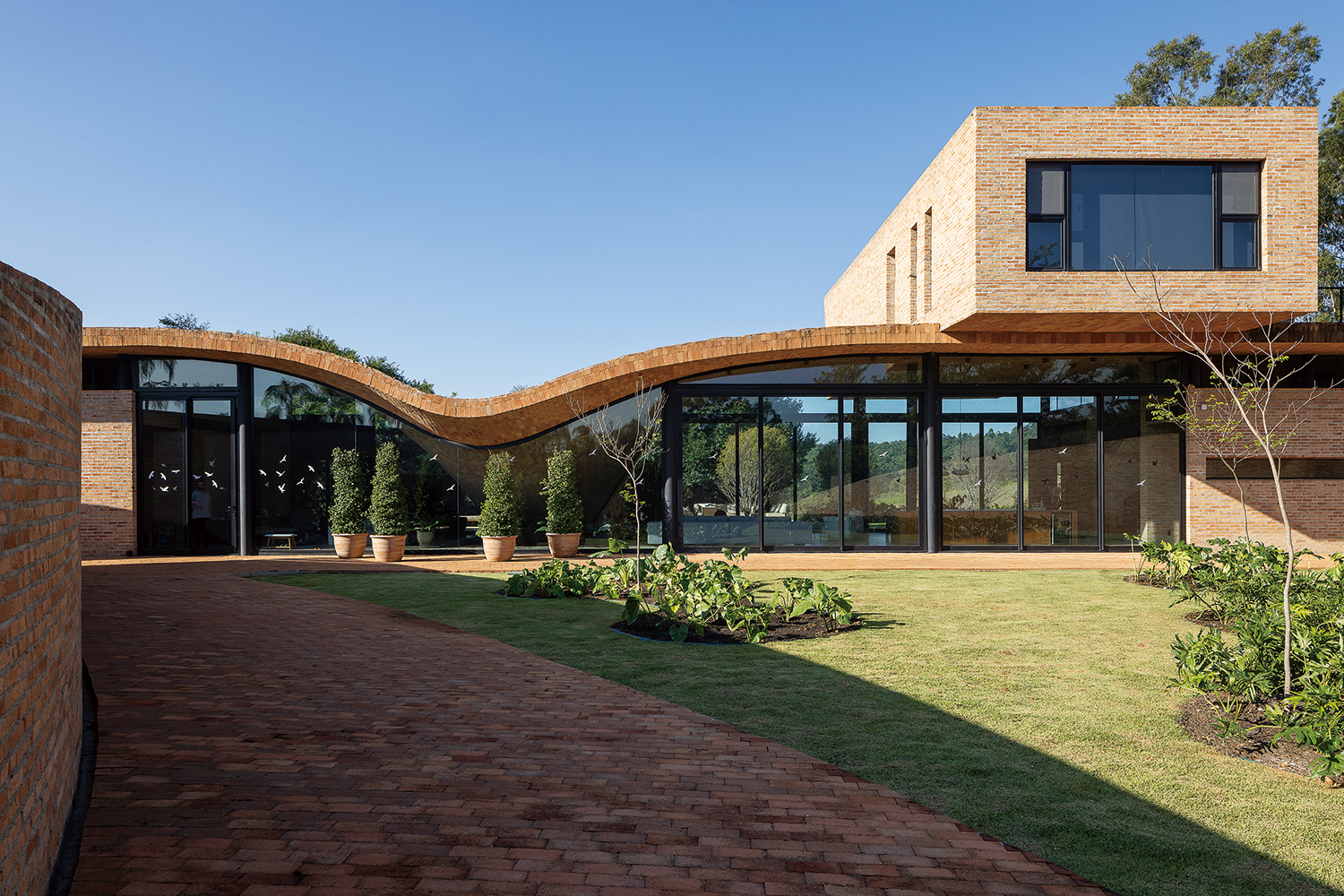
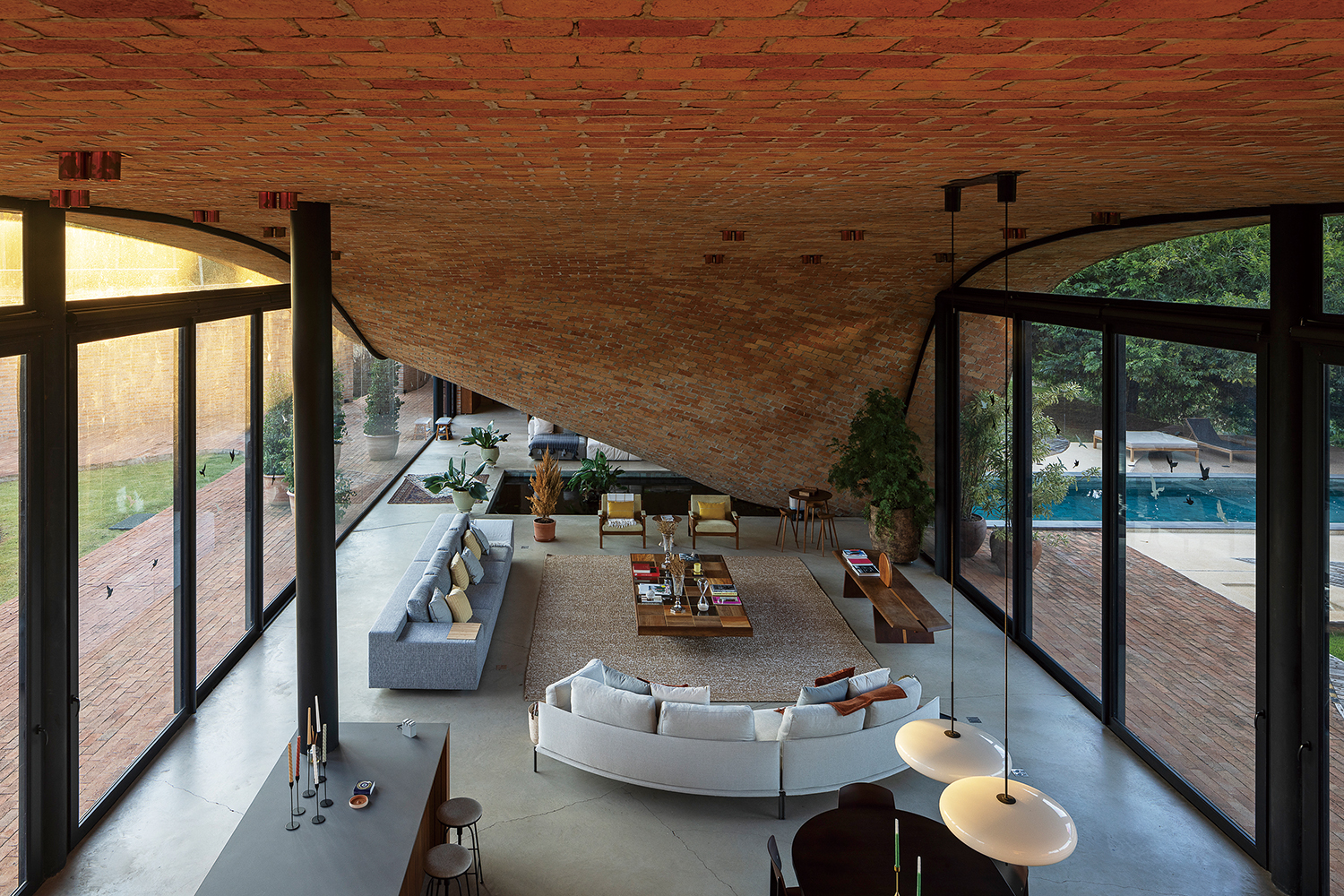
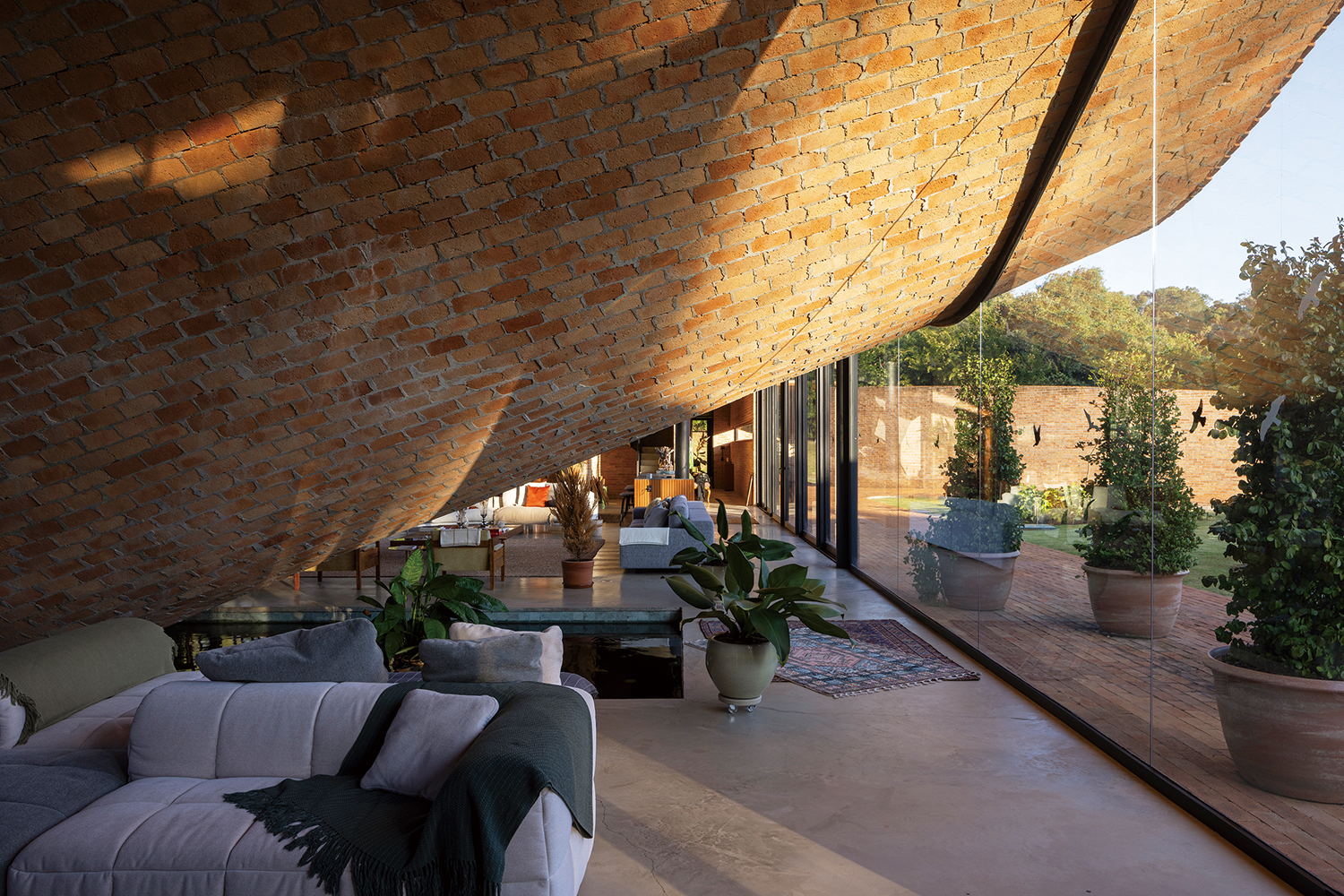
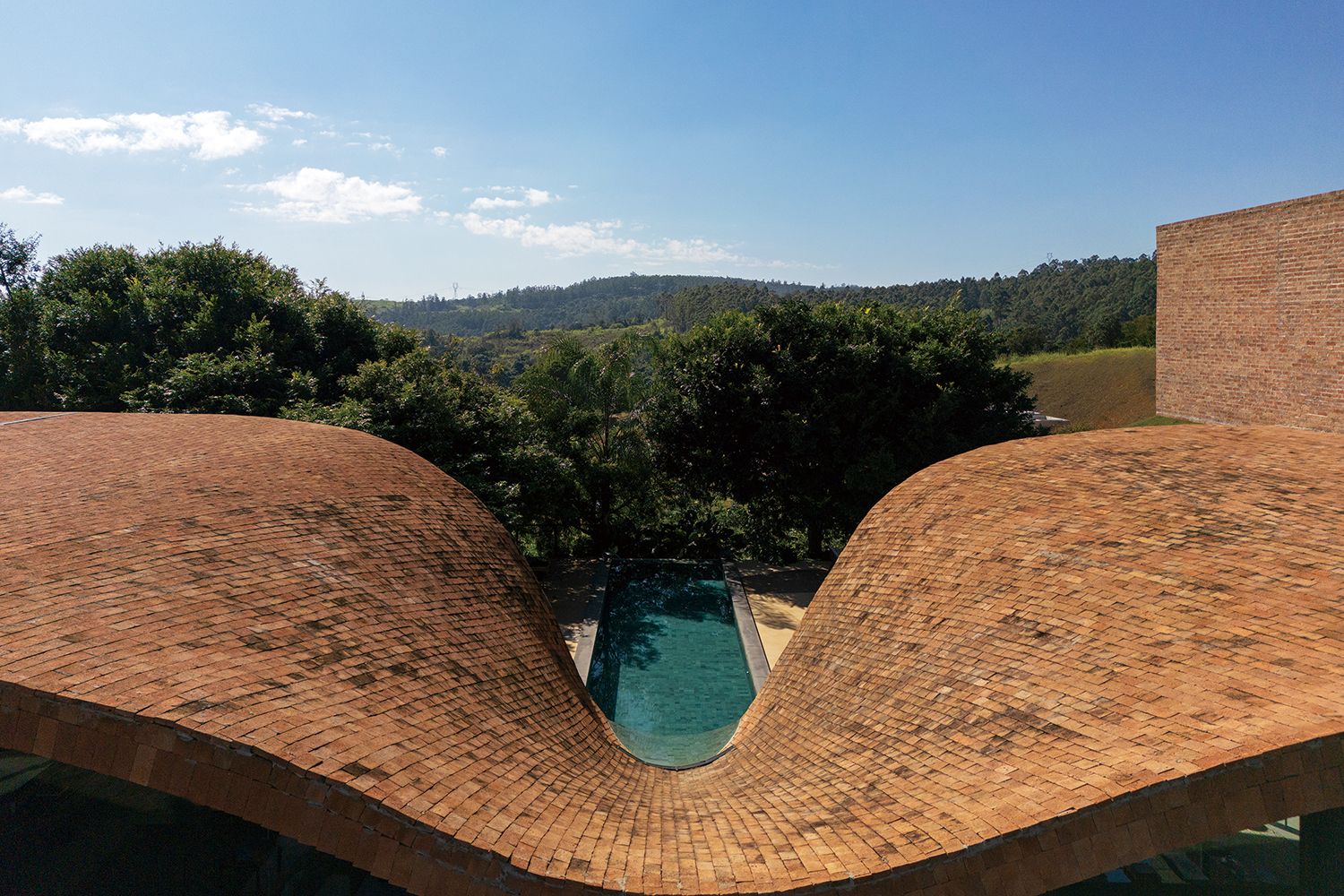
Mareines, Van Beneden: The strategy is simple and even minimalist in terms of materials. The earth bricks are present throughout and were produced just a few metres from the construction site. As for the form, I would say that, aside from the wide curve that dips into the ground, it is a linear architecture, with all rooms offering both visual and physical access to the surrounding landscape. This curve defines the richness of the spatial journey, as it radically transforms the space with each new step. The outdoor pool merges with the indoor pond, reinforcing the idea of not knowing where the house begins and where the garden ends. The only construction other than the ground floor is a cube that floats above the double slab, containing the couple’s suite and offices. The central garden (still in formation) recreates the idea of a triangular cloister, slowing down the arrival and contributing to the calm and peaceful atmosphere of the house.
Kim: The roof structure is particularly striking. While it stands out as a sculptural element, it also serves functional purposes within the Passive House system. What specific role does the roof play in the overall performance of the house?
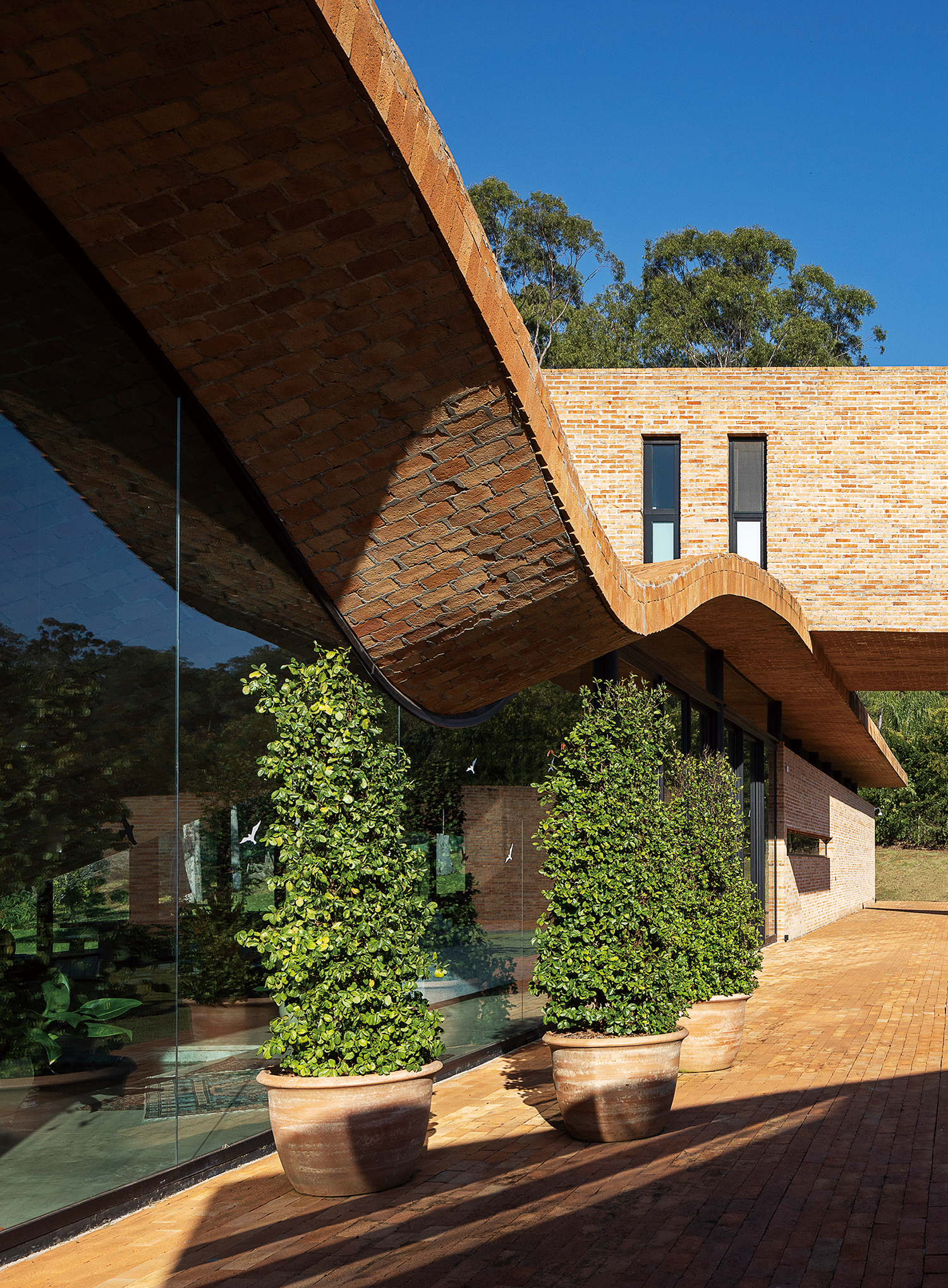
Mareines, Van Beneden: The climate of this region does not differ much from the typical conditions of the Atlantic Forest: humid tropical. The idea was to create a double roof, forming an air cushion between the two slabs. This would greatly reduce heat and the need for mechanical cooling systems. It is important to note that the upper slab serves as a beautiful open terrace overlooking the surrounding mountainous landscape.
Kim: Beyond the roof structure, what other architectural features contribute to the sustainability and self-sufficiency of this residence?
Mareines, Van Beneden: Solid brick is a good thermal insulator. The use of this material not only on the roof but also throughout the walls is essential for the house’s energy efficiency and environmental comfort. The living areas feature large glass panels which, although not ideal thermal insulators, bring people closer to the natural environment. As mentioned above, beautiful trees will assist in shading these glazed areas. The positioning of the house in relation to the sun and prevailing winds is a low-tech strategy of very low cost, yet it proves to be decisive for proper natural ventilation and lighting. In addition to these features, the property also includes rainwater harvesting, waste treatment, and photovoltaic energy production.
Kim: Based on the Passive House principles adapted to the Brazilian climate, how did you organise the interior layout of the house?
Mareines, Van Beneden: The layout of the house is very simple. It has two ‘wings’ that contain the private areas, with three suites in each wing. All of the private spaces in the house are fully or partially protected, depending on the user’s needs. The central part includes the common spaces: the kitchen, living room, reflecting pool, and ‘cloister’ garden. As mentioned earlier, this arrangement was based on the microclimate. Private areas such as the bedrooms were positioned to avoid direct solar exposure, while the living room, dining room, and kitchen open toward the garden and terrace, with eaves and projections designed to regulate sunlight. Service areas – including the garage, mechanical room, and storage spaces – are located in a separate mass on the northwest side, ensuring they are screened from external views while remaining functionally accessible.
Mareines Arquitetura (Ivo Mareines, Matthieu Van
São Paulo, Brazil
residential
24,131.18m²
810m²
2F
6
10.3m
aprox. 4%
concrete structure
brick, glass, rammed earth
brick, wood
Enplatec, TJ7 Engenharia e Construtora
Engeplot
MS Construções
2020 – 2021
2021 – 2023
Lightworks
Isabella Slawka
Vistara Paisagismo