A Memorial Without Monuments: Mangyeong Church Martyrsʼ Memorial
AEV Architectures + TONN architects
written by
Lim Woojin
photographed by
Park Woojung
materials provided by
AEV Architectures
edited by
Lee Sowoon
SPACE March 2026 (No. 700)
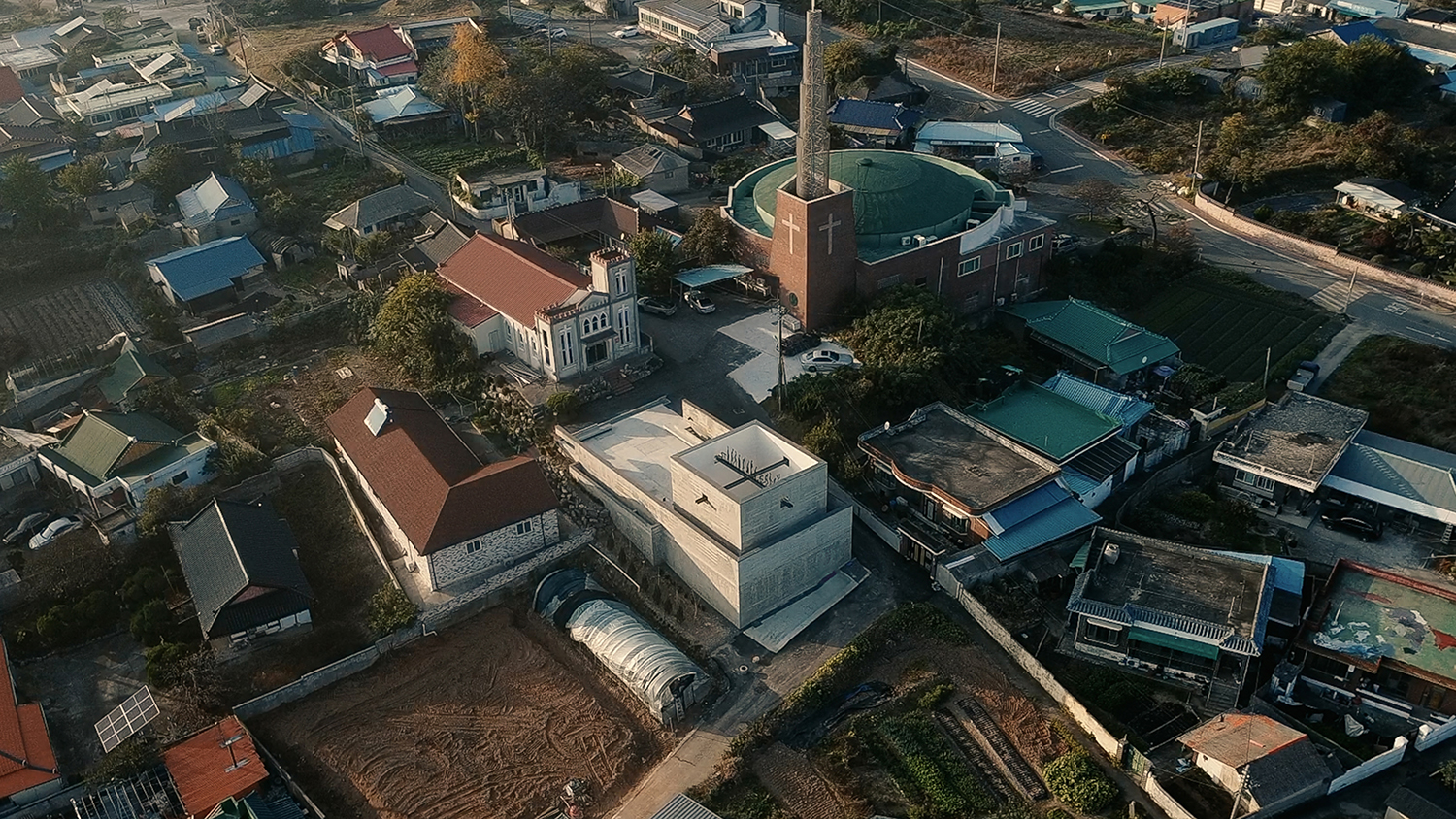
Memory Built upon Erased Traces Mangyeong-eup, Gimje, is a place where the typical Korean rural landscape unfolds. Situated on a low hill in a village, where time seems to have long stood still, this project is a memorial dedicated to Pastor Kim Jonghan and the 15 congregants of Mangyeong Church who were martyred during the Korean War. Beginning with a total absence of physical traces – such as belongings or records – the project faced the profound challenge of ‘reconstructing memory’. Because memory is formless and multivalent, the design opts to confront this troubling history through evocative sensory experience within its spaces rather than the reproduction of concrete forms. Composed simply of two external plazas (upper and lower), the building is designed so that the presence of the martyrs is revealed within the space through the play of light and shadow over the passage of time.
A Narrative of Martyrdom Written in Light and Shadow
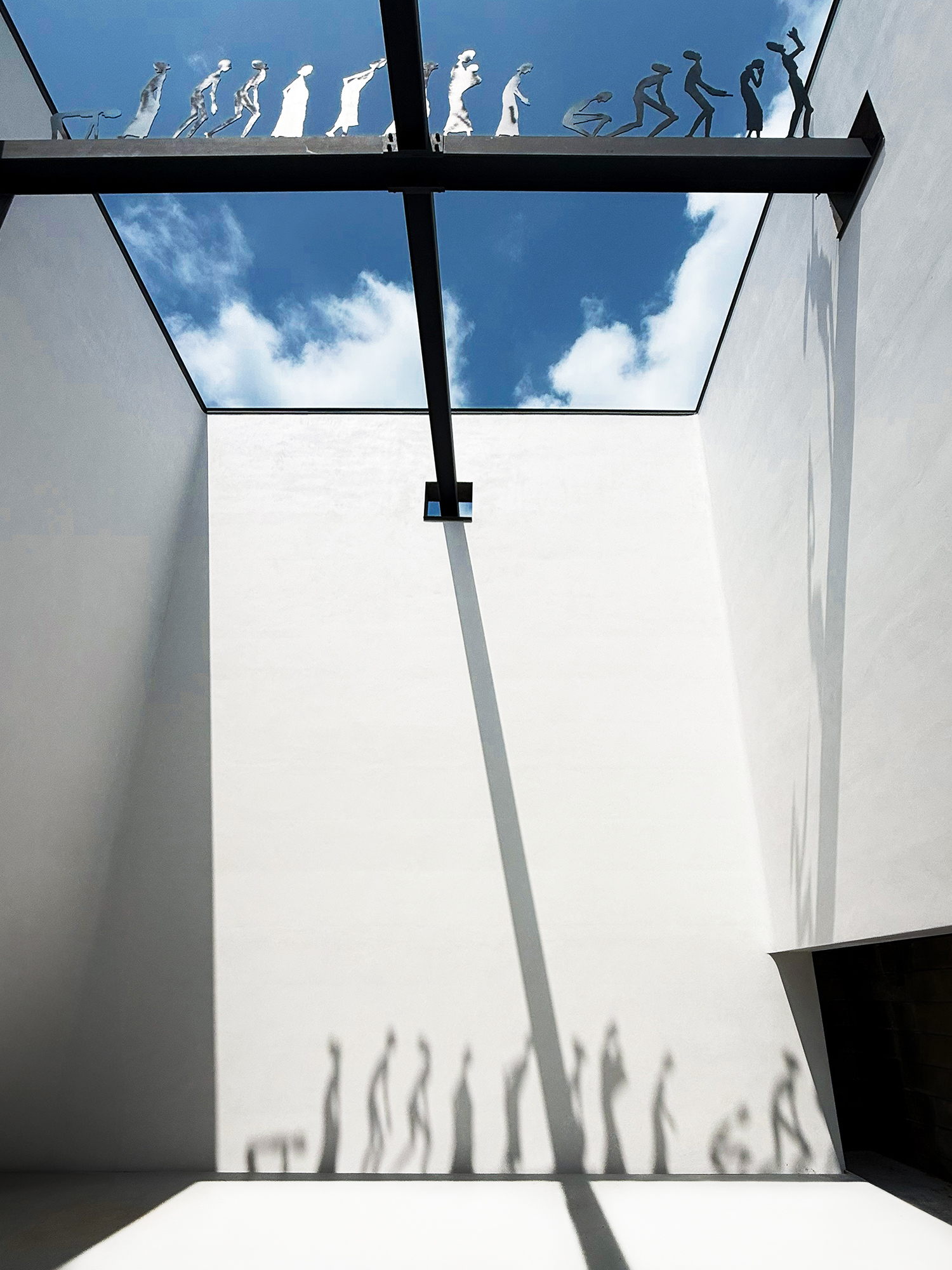
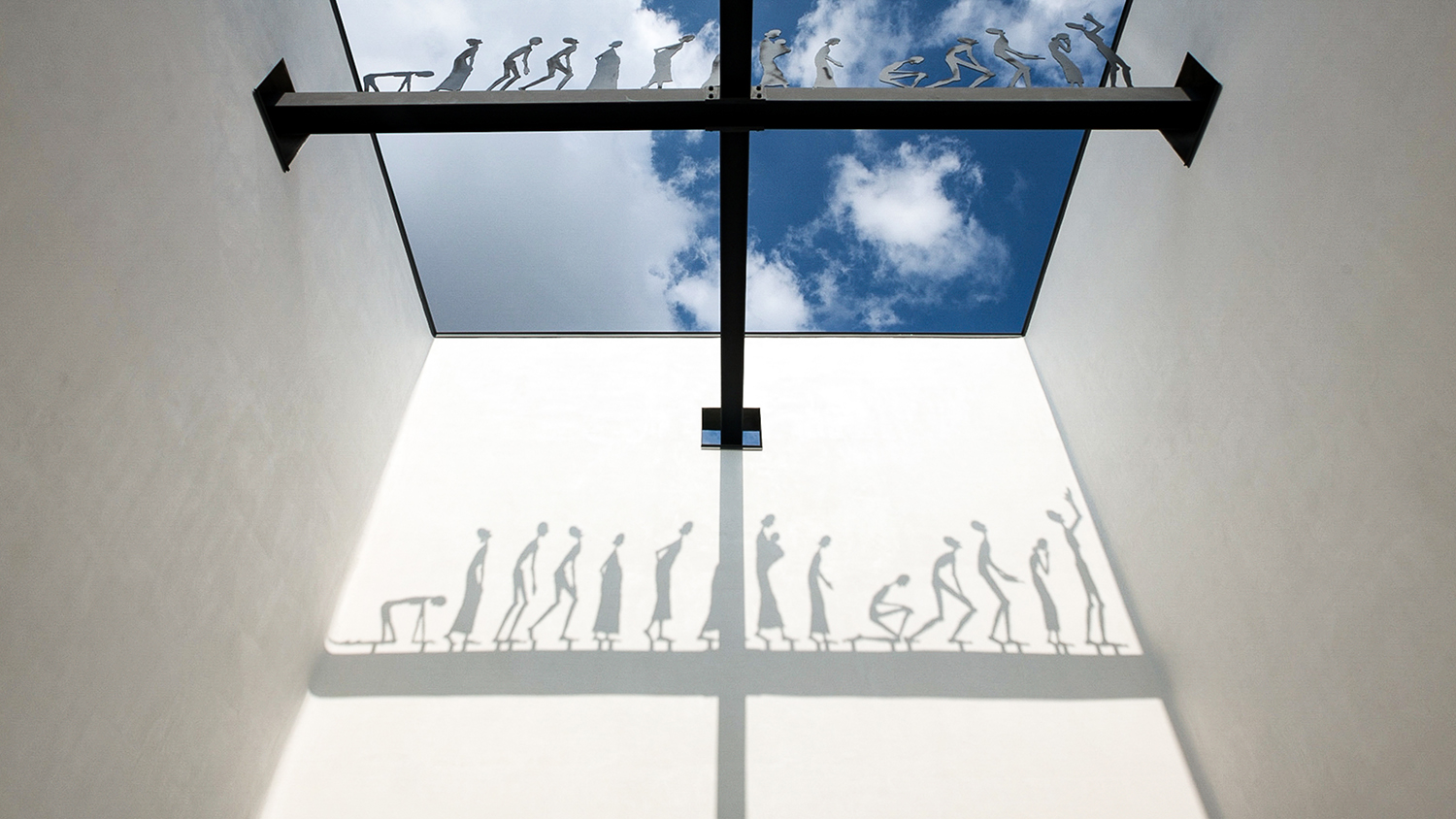
The architectural highlight of the memorial is the rectangular Martyrs’ Patio, aligned with the meridian. This plaza, open to the sky, functions as a timekeeping device operating on the sun’s trajectory; it was precisely positioned according to the site’s latitude of 36.5°N. A cross-shaped steel beam is installed over the void, topped with metal sculptures by France-based artist Shim Jeeyean, symbolising the 15 martyrs.Depending on the sun’s altitude and the changing seasons, the shadows of these 15 figures repeatedly appear on the walls and then vanish. Notably, at noon on the summer solstice – when the solar altitude is at its peak – the silhouettes of the martyrs are cast at life-size at the visitor’s eye level. Unlike a static bronze statue, these shadows reveal themselves only temporarily ‘when heaven permits’, granting the space a spiritual presence and symbolic resonance.
Contrast of Materiality
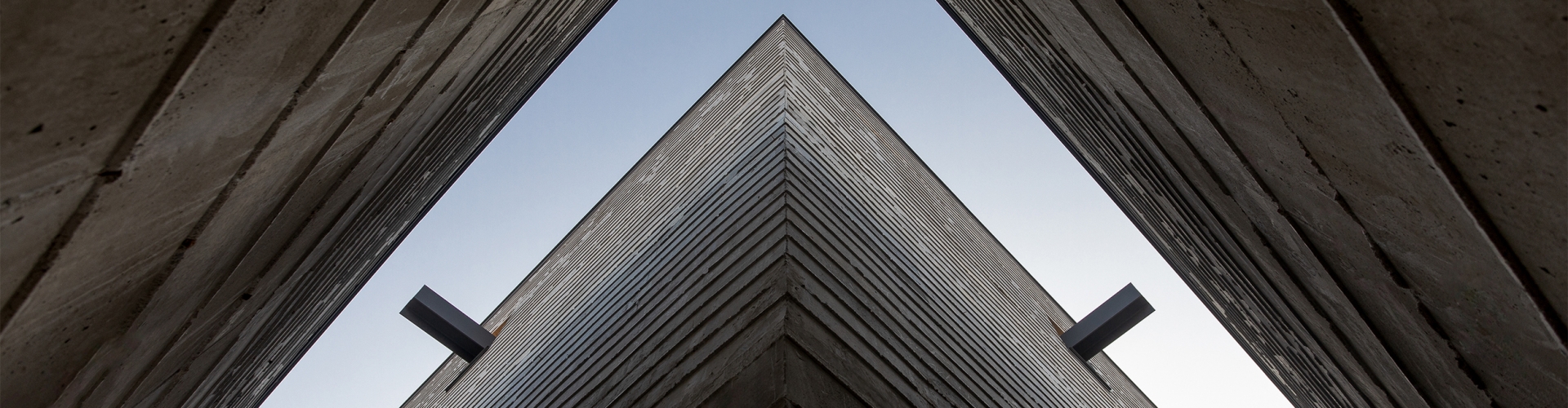
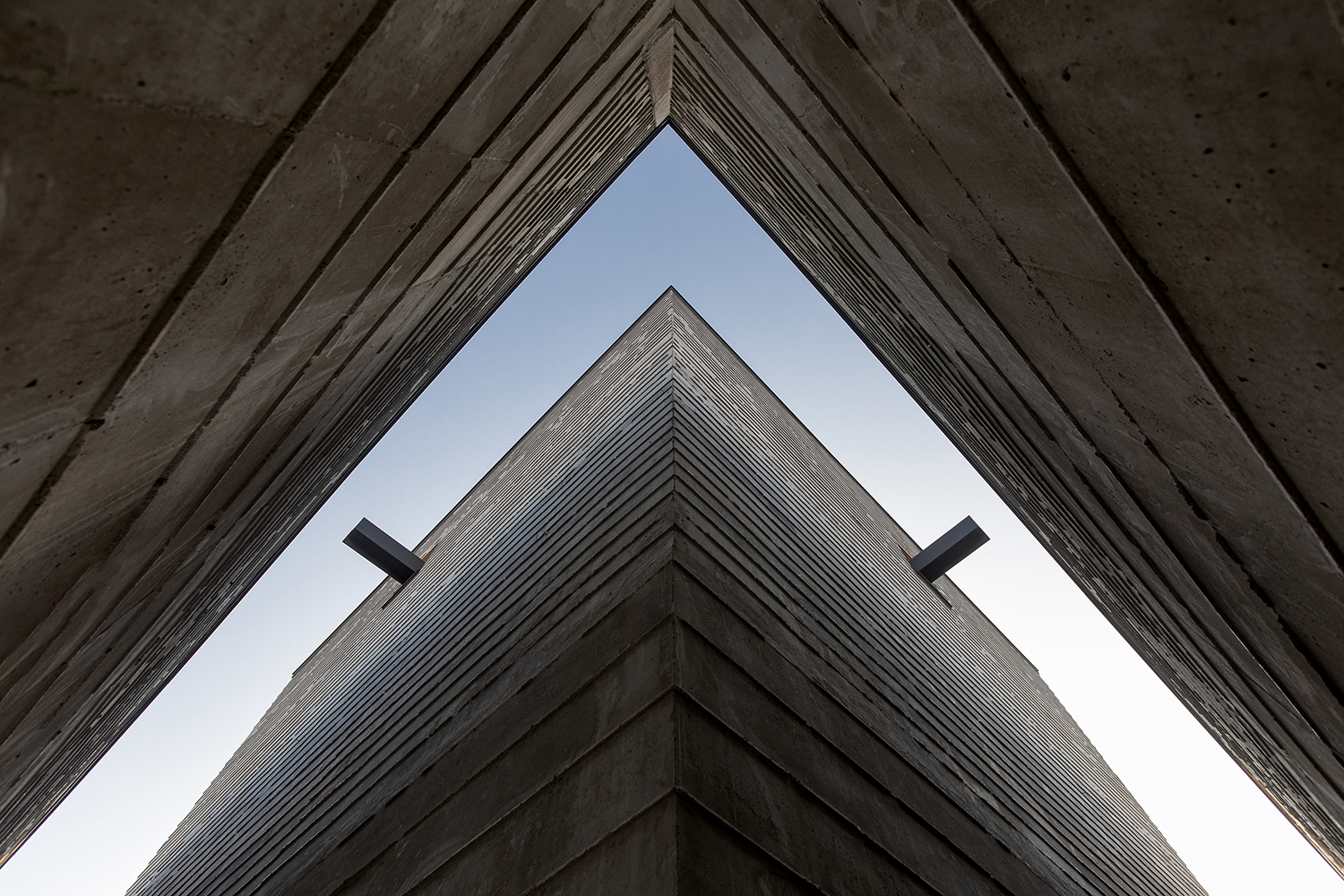
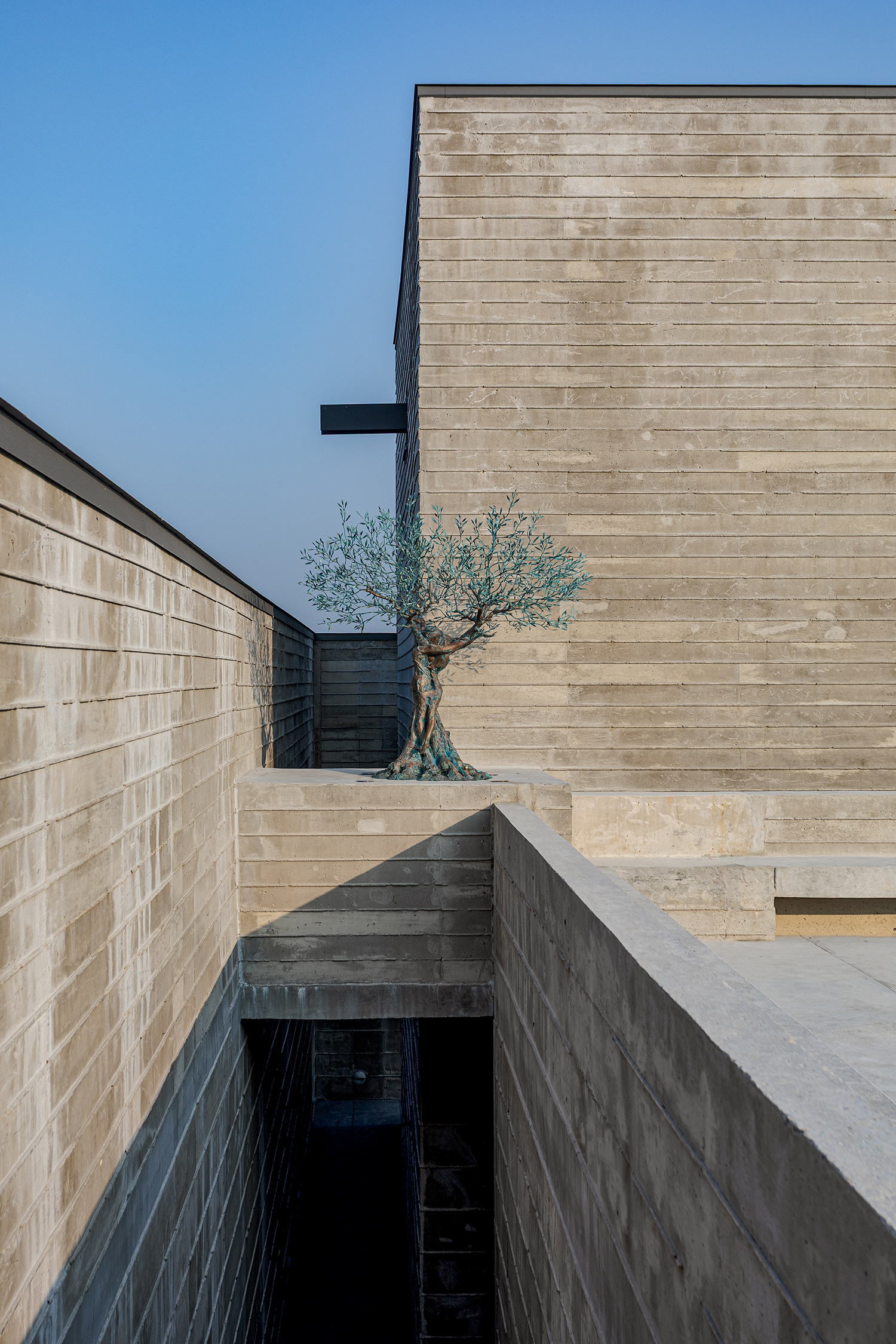
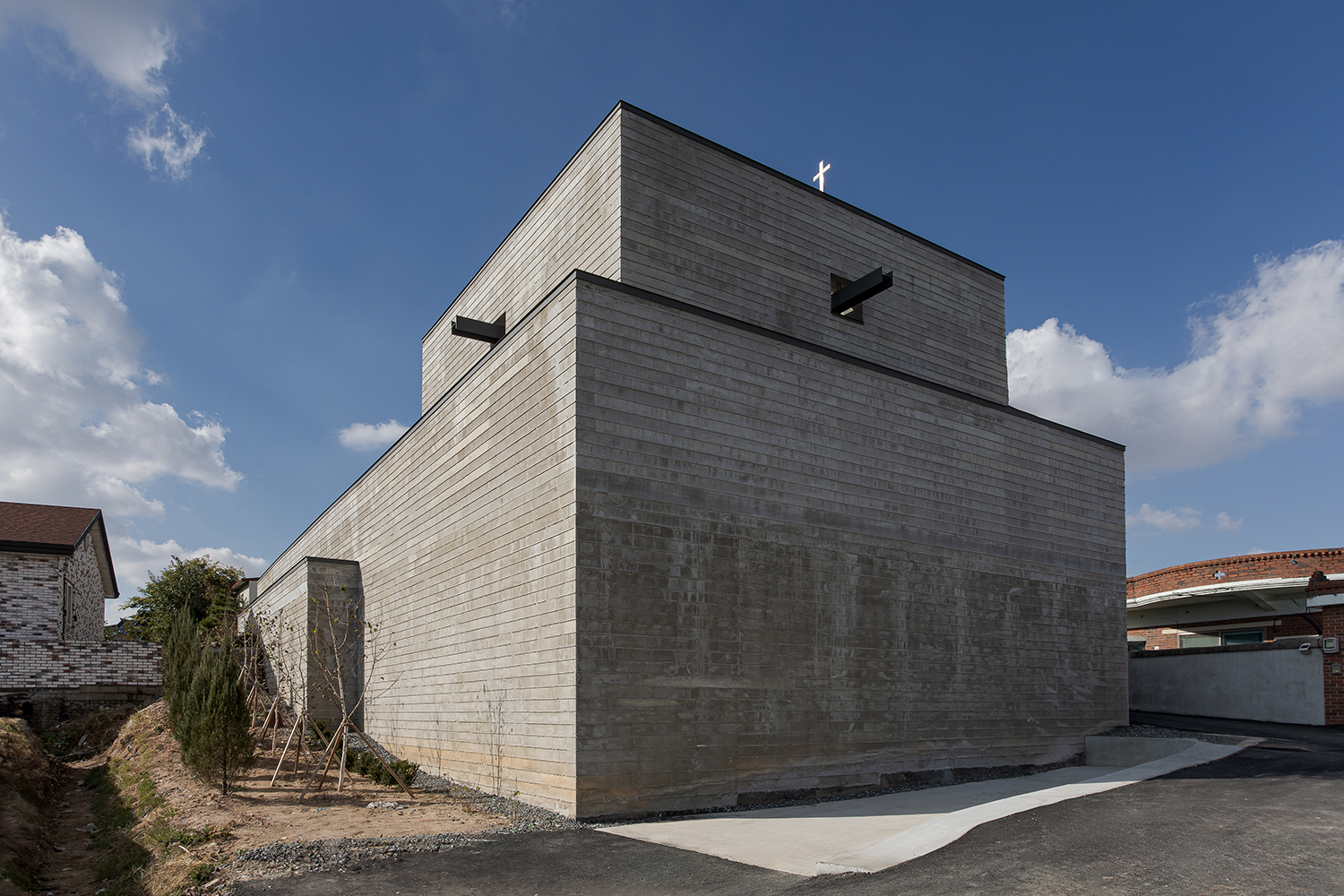
The Martyrs’ Patio pays homage to the well and the air-raid shelter where the martyrs’ remains were discovered, and architectural intervention here is extremely restrained. Chosen within the constraints of a public-sector budget, the materials convey meaning through their inherent properties. The exposed concrete exterior, bearing the textures of pine wood formwork, is as rough and rugged as an excavated bunker. This creates a tactile connection to the construction process and human labour, serving as a vessel that accepts the flow of time.
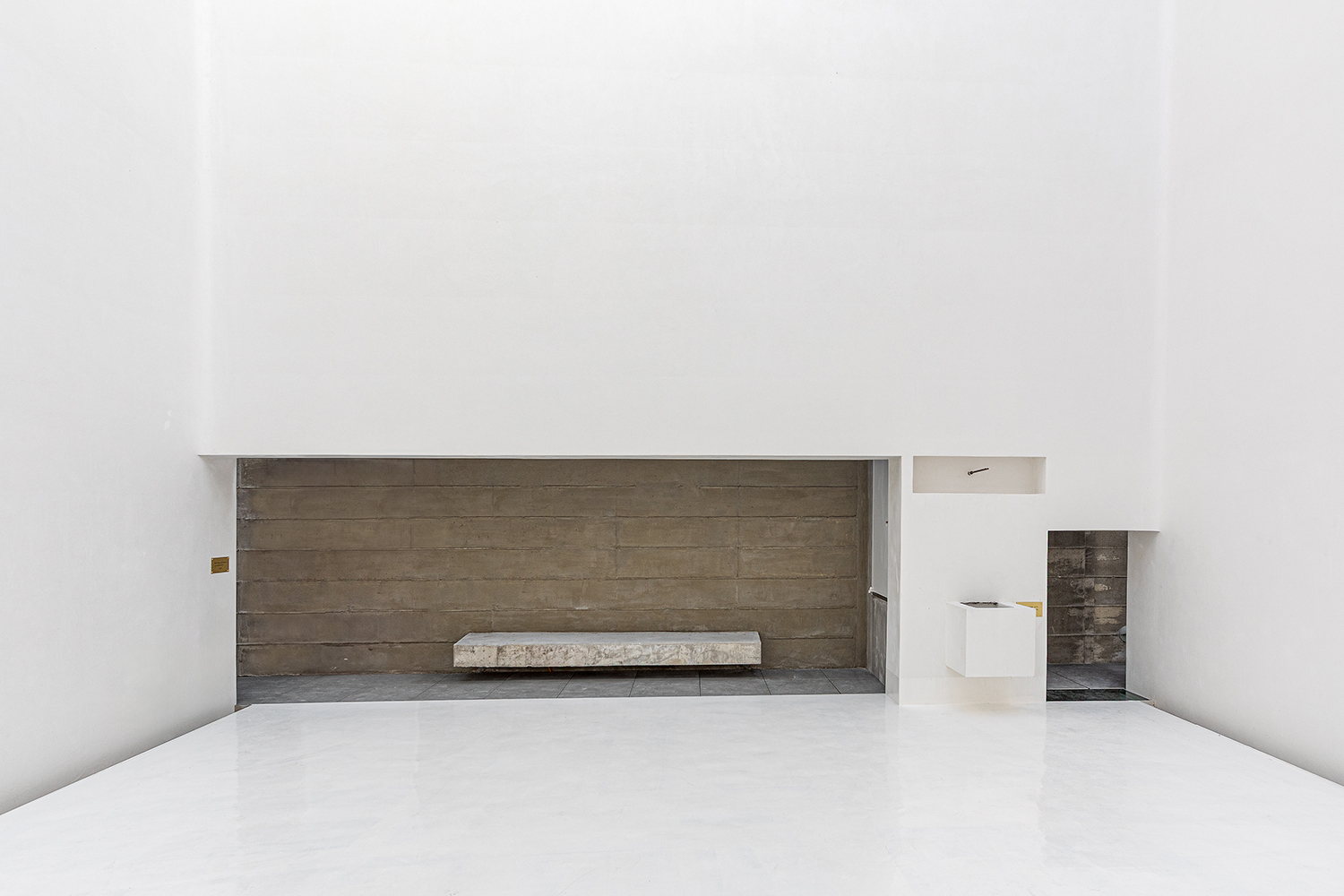
In contrast, the interior of the Martyrs’ Patio shifts to an entirely different sensory register. Representing the interior of the well – the site of the event – the floors and walls are finished in pure white plaster and urethane paint. The glare caused by the excessive reflection and diffusion of natural light offers visitors a visual shock alongside a penetrating association with purification. The sense of mystery reaches its peak with the addition of a white concrete sculpture by Italian sculptor Ignazio Campagna.
Memories Remain Within the Community
The local government’s official justification for supporting this project was ‘regional revitalisation’. There was an expectation that a striking landmark would attract outsiders and revive the town’s economy. In this project, rather than defining the region’s identity through architecture, we focused on providing the conditions under which that identity could form. The theme of ‘light and shadow’ was chosen not only to pique visitor curiosity but also to invite the voluntary participation of local residents. During construction, we encouraged local artists to create works based on the shadows of the martyrs. We believed that by using the indirect form of a shadow – rather than a direct representation of a tragic event – there would be room for individual interpretation, potentially becoming a cultural code for the village.
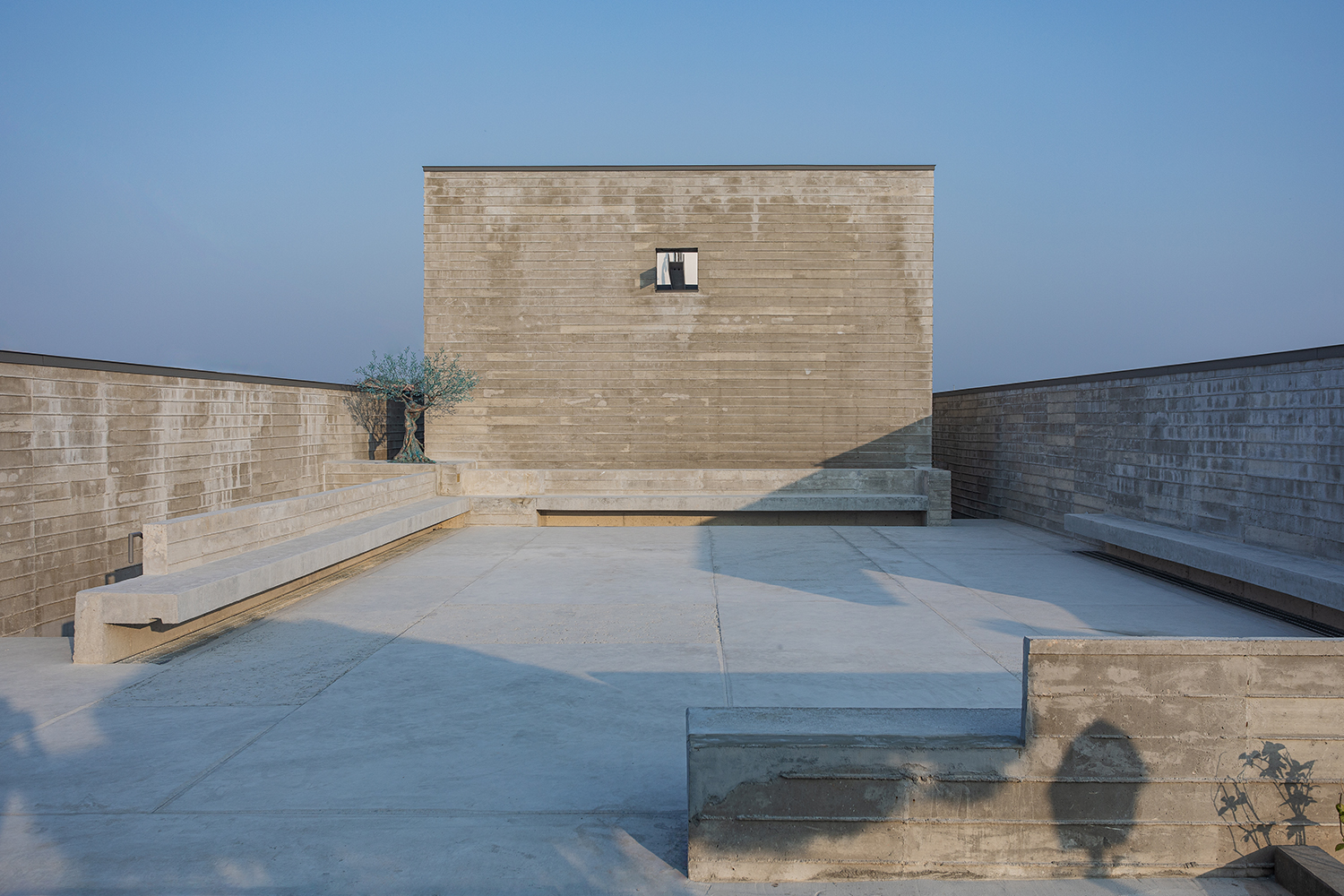
Between the old church building and the subterranean Martyrs’ Patio lies the Sharing Parvis, created for residents and visitors. It is an open space that simultaneously evokes the inner courtyard of a hanok and a small Italian urban piazza. On opening day, the Sharing Parvis was hung with works created by resident artists, and the silhouettes of the martyrs were reimagined as souvenirs, drawing visitor interest. Artist Andrea Roggi, who installed the Tree of Life statue in the Sharing Parvis, even purchased several pieces on the spot. This serves as an example of how an architect’s intervention and communication can trigger engagement and use long after construction is finished. It remains to be seen whether the accumulated interest and effort of the residents will establish a unique identity for the area as a ‘Shadow Village’.
You can see more information on the SPACE No. March (2026).
Architect
AEV Architectures (Lim Woojin, Kwak Yunseok) + TON
Lim Woojin is a French government-certified architect (DPLG) who has been active, primarily in Paris, for the past 25 years. The Mangyeong Church Martyrs’ Memorial is his second work realised in Korea, following the Goseong residence Inwhite in 2017. Through bold yet delicate experiments that move across the boundary between technology and art, he has consistently explored new possibilities for architecture. These efforts have been internationally recognised with two consecutive Grand Prizes in the design category – the Leonardo da Vinci Award – at the Florence Biennale of Contemporary Art. In addition, he engages in various writing activities, including columns, in order to lower the perceived threshold of the study of architecture and communicate with the public. His major publications include Invisible City (2022).