




SPACE February 2026 (No. 699)
interview Edoardo Giancola, Federico Zarattini Co-Principals, Zarcola Architetti × Park Jiyoun
Park Jiyoun (Park): This project, and the Lodola House (2024), involve renovating a small warehouse and barn in the Verona province of Italy into residential spaces. First, how would you characterise the Verona?
Edoardo Giancola, Federico Zarattini (Giancola, Zarattini): Verona represents a complex and distinctive context; beyond the city itself, it includes a vast province historically shaped by agriculture and widely known for its wine production, which remains one of its most significant cultural and economic assets. Compared to other Italian regions, the local approach to contemporary architecture is still developing, and a deeply rooted conservative mentality, present across different scales, can often pose challenges to architectural experimentation and innovation.
Park: In terms of the exterior, you retained some of the existing stonework while supplementing certain parts with new materials. Was this decision based on the landscape regulations in Italy or specific to the Verona?
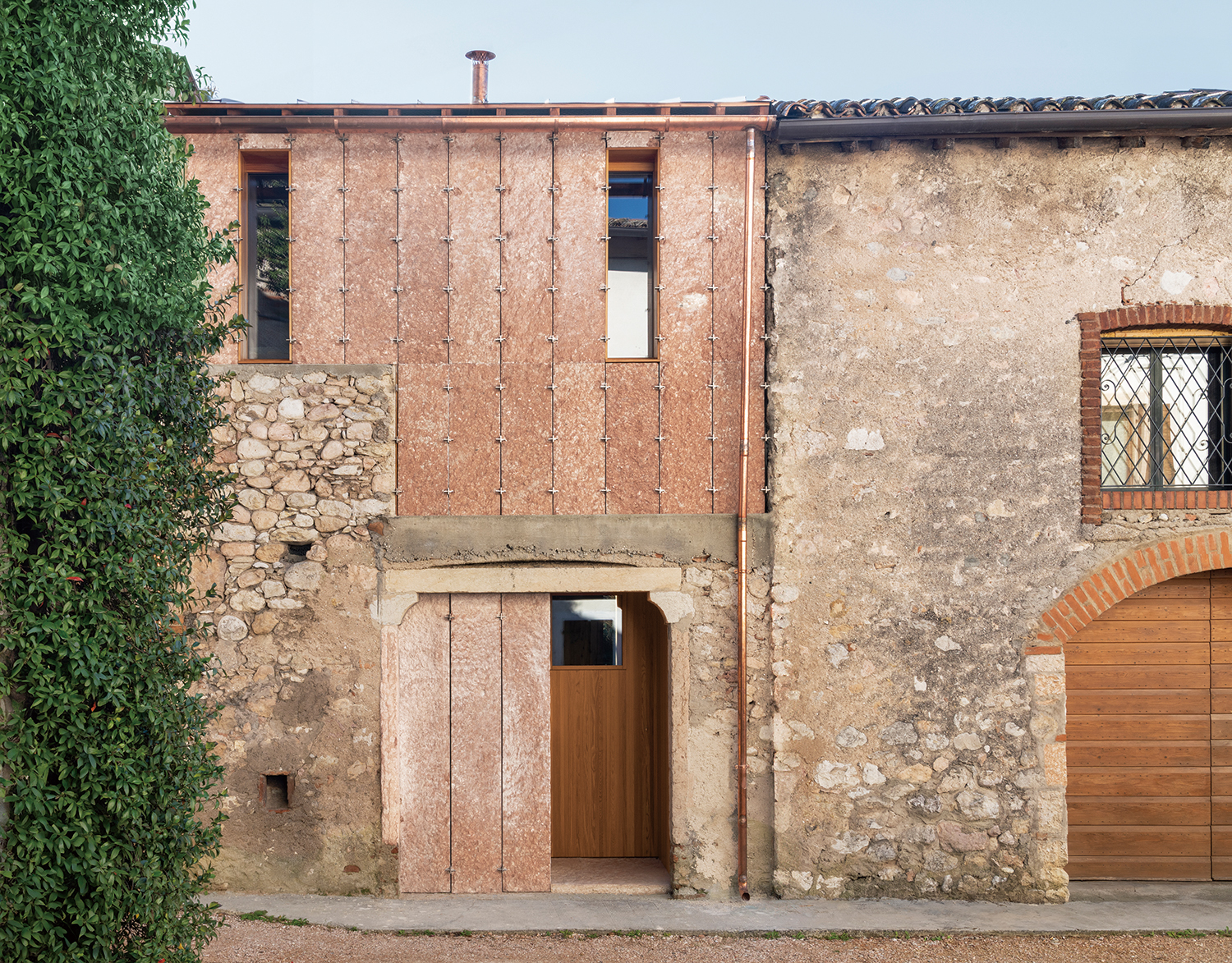
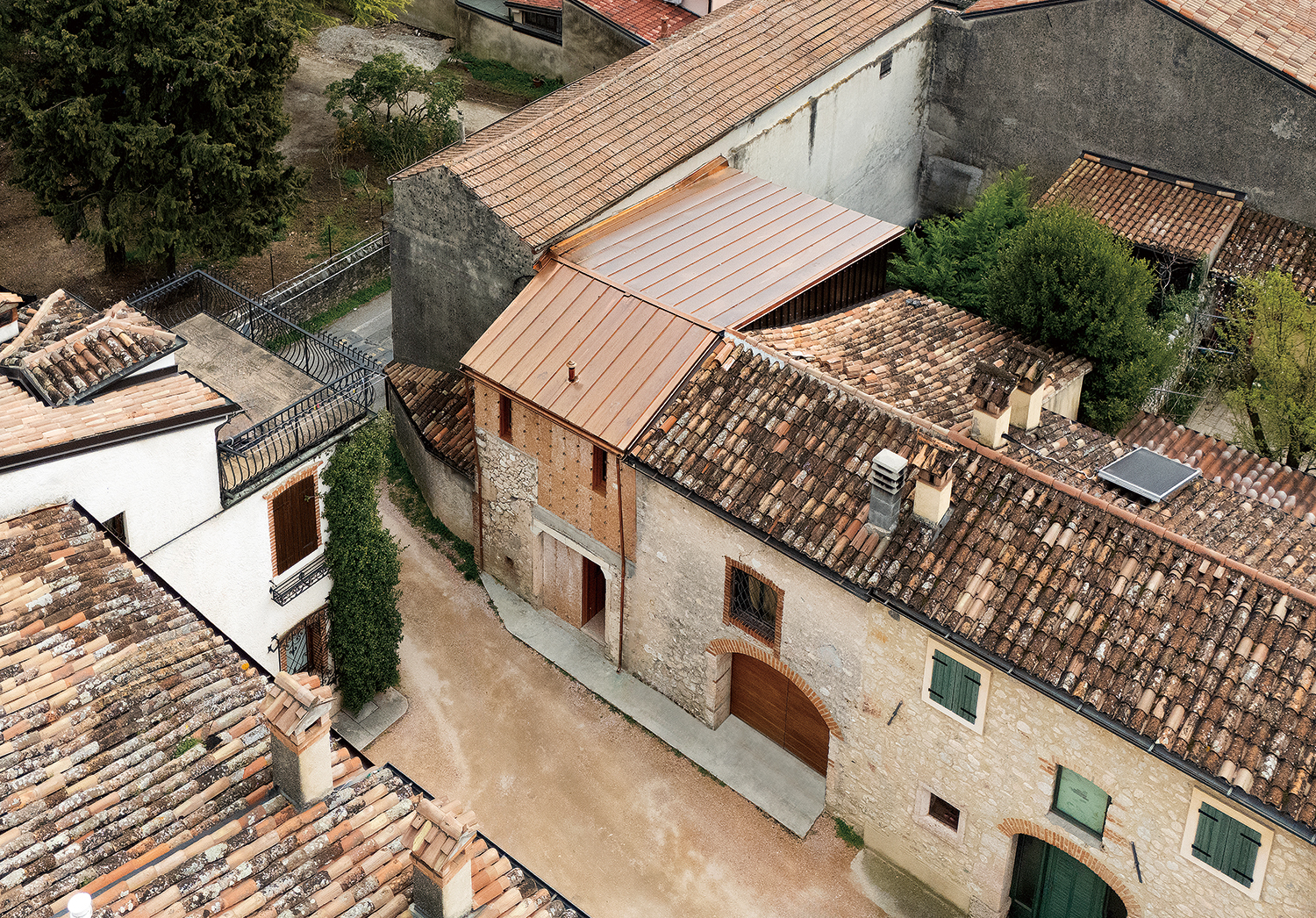
Giancola, Zarattini: The design choices were not driven by landscape or regulatory constraints but by a deliberate intention to work with a local material while reinterpreting it through a different technology. Our reference was the vernacular architecture of the Verona province, and more specifically the Lessinia Mountains area, with particular attention to its traditional construction methods.
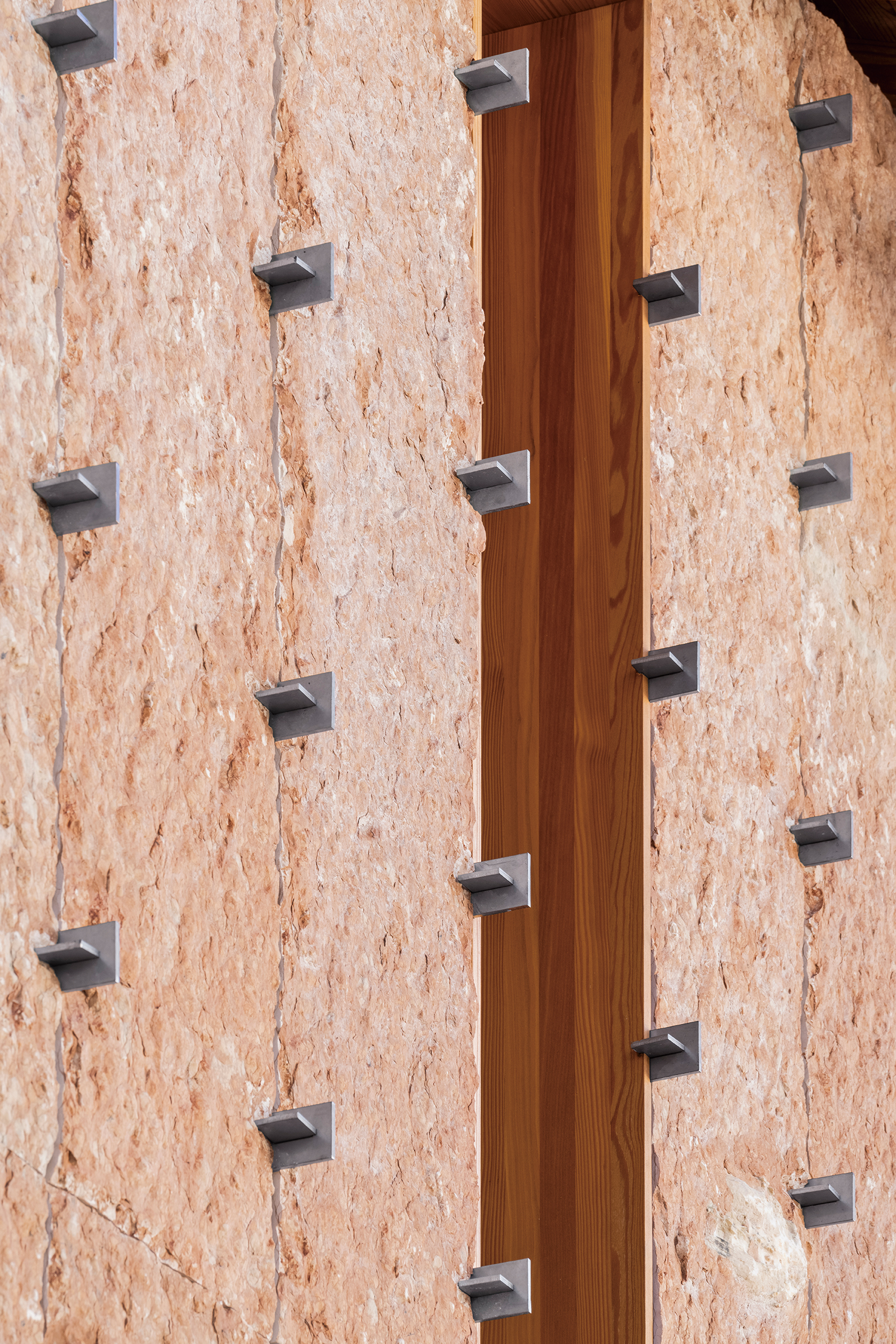
Park: I was intrigued by the façade details of the Larun House, which are composed of thin, wide stone panels secured by steel. Why did you choose to make these thin stone panels and fix them with steel rather than stacking or attaching them to one another as before?
Giancola, Zarattini: The approach to the stone façade stems from our long-standing interest in the construction typologies of the nearby mountain landscape, particularly the Lessinia area. Verona stone, known as pietra di prun, has been widely used throughout the city and province from Roman times to the present day, and was also employed by Carlo Scarpa. It is a sedimentary stone that naturally forms in stratified layers, already divided into courses of varying thicknesses, each traditionally associated with a specific use, such as roofing, walls, or flooring.
Steel was introduced primarily for reasons of safety, allowing the stone slabs to be dry-fixed in a reliable way, while at the same time turning the construction method itself into an architectural ornament.
Park: In this project, the existing structure appears to have functioned both as a constraint and as a mediator.
Giancola, Zarattini: Our intention was to preserve the original perimeter structure and to work within the constraints it imposed, without erasing the atmosphere of the existing building. From a construction standpoint, the existing perimeter walls played a central role, acting as bracing elements within the new structural system. We aim to keep the atmosphere of the untouched parts unchanged, while anchoring new interventions to them through reinterpreted material and construction traditions, where architectural detail becomes a direct expression of how the building is made.
©Barbara Corsico × Klimahouse
Park: Unlike the exterior, the interior establishes a new architectural logic from within the building itself.
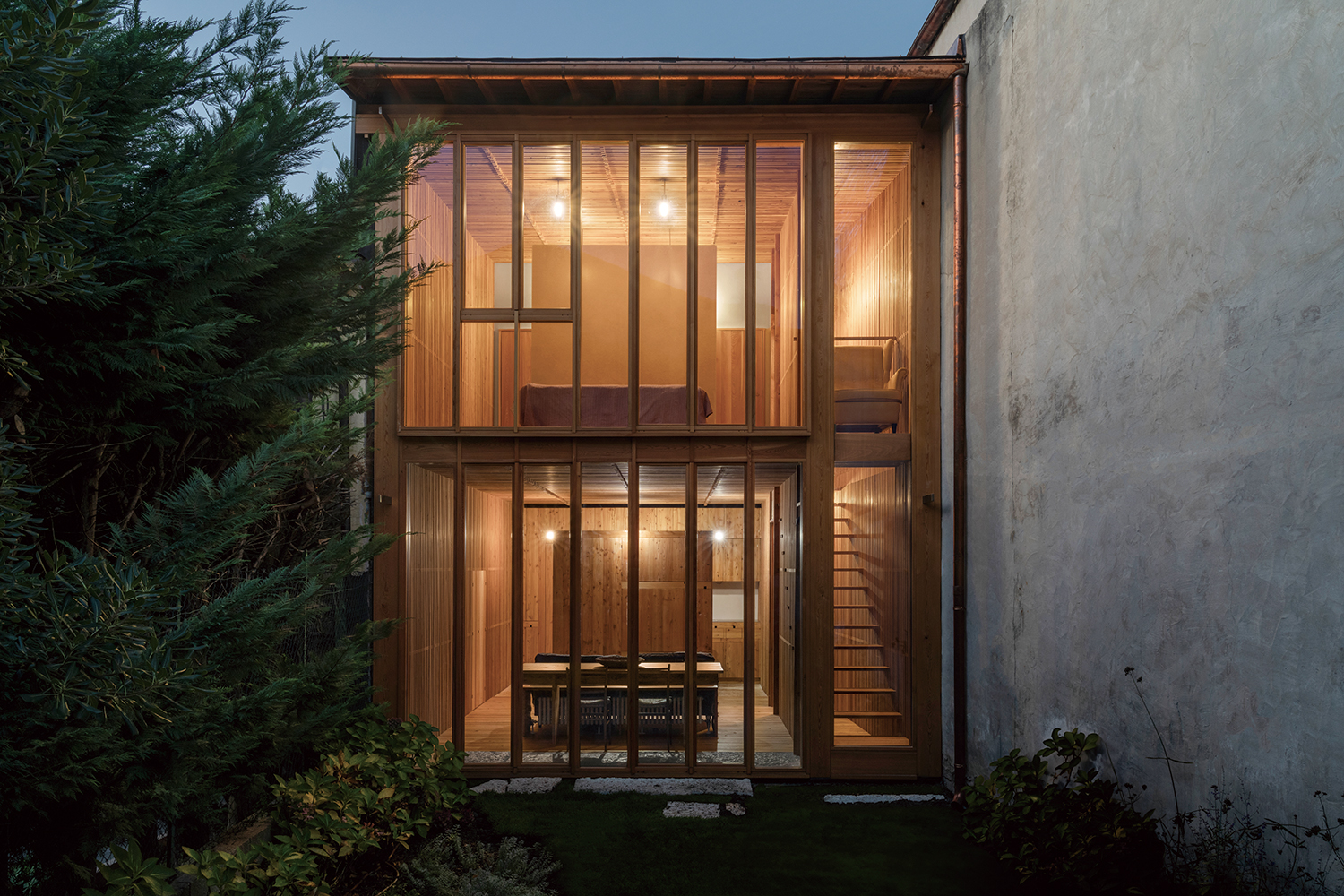
Giancola, Zarattini: In the case of Larun House (originally a small barn with a trapezoidal floor plan) the existing internal structure and floor heights did not allow for the building to be properly inhabited. For this reason, we decided to increase the volume in relation to the pre-existing structure; the new volume is externally expressed through the use of pietra di prun. The specific geometry of the house offered the opportunity to experiment with a new construction method based on timber, allowing us to rethink the internal structural system in a way that was both spatially and technically coherent with the project.
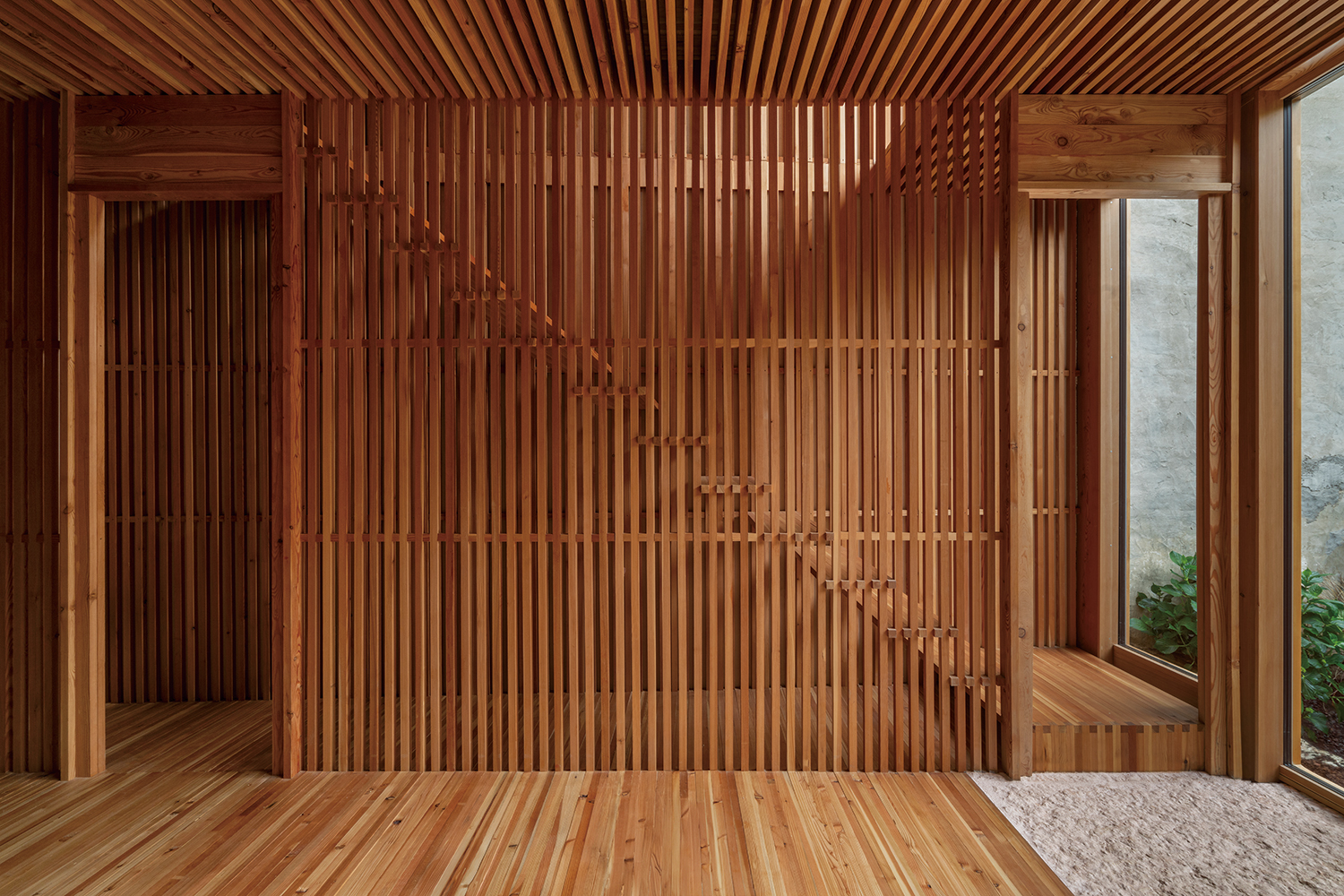
Park: 3 × 3cm wooden modules form Larun House’s structural and aesthetic internal system. What led you to choose a timber structure?
Giancola, Zarattini: The decision to work with timber stemmed from two main considerations. On one hand, it relates to the material culture of traditional rural houses, typically built using stone and wood. On the other, there was a strong intention to engage in a process of self-construction, for which timber is particularly suitable due to its adaptability and ease of transformation.
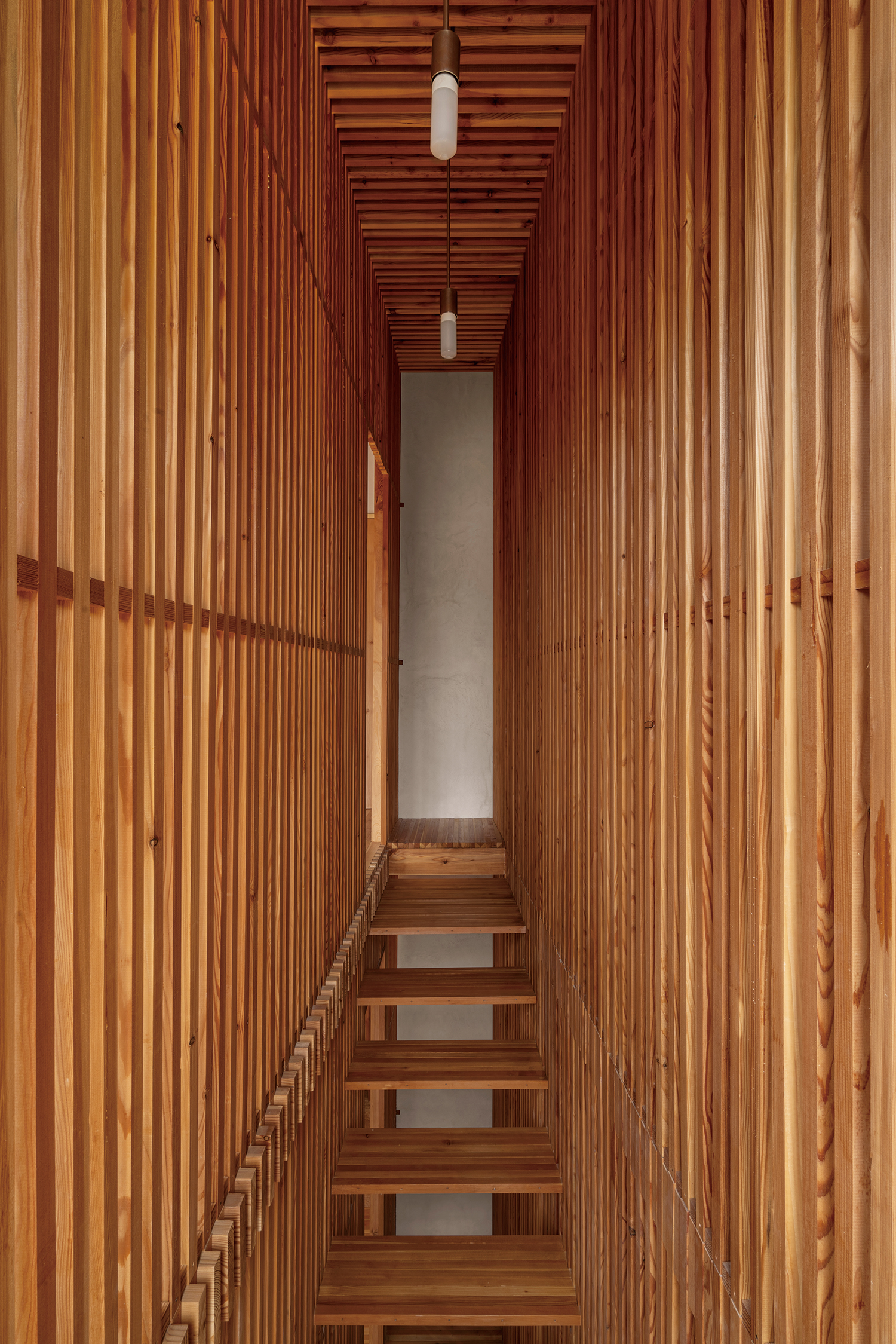
Wood also allowed us to work with a lightweight structural system, especially given the small sections we employed. This approach enabled us to push the structural limits of the material while maintaining control over the construction process with relatively simple means. The repeated timber modules not only support the structure but also create a seismic cage, with the existing stone perimeter walls acting as bracing for the entire system. Even the staircase functions both as a connecting element and as a structural brace, reinforcing the integrity of the house.
Park: Architects approach renovation by means of a certain ethical reasoning, structural necessity, or architectural attitude towards time. Is there a certain approach or logic that you consistently follow in all of your renovation projects?
Giancola, Zarattini: It depends, and not always, but we are interested in introducing subtle interventions that make spaces livable today while preserving their original atmosphere. We aim not to manipulate the existing structures excessively, in order to retain their inherent charm. For us, it is a challenge to maintain a sense of ‘ruin’ alongside the new, creating a continuous dialogue between past and present. Old and new do not necessarily have to contrast; rather, it is fascinating to let them coexist, telling a story of layering that has taken time to reach the form we see today.
Zarcola Architetti (Edoardo Giancola, Federico Za
Tregnago, Verona, Veneto, Italy
single house
90m²
36m²
70m²
2F
6.5m
40%
78%
wooden structure
stone, wooden window
wood
Opera Mista SRL
Marchi Immobiliare SRL, self-construction
2019 ‒ 2021
2021 ‒ 2024
160,000 EUR