
SPACE May 2026 (No. 702)
Like many young architects, a significant portion of the early work of AGIT STUDIO (Co-Principals, Seo Jamin, Huh Guenil) consisted of renovation projects. This is because, in Korea, buildings left behind by rapid urbanisation ‒ now aged and in need of repair ‒ remain ubiquitous. This interview addresses Muke Deungchon-dong, a renovation of a factory-type building located in a residential area, and Muke Samcheong-dong, a renovation of architect Kim Heon’s Vortex. There are no flamboyant extensions. Instead, AGIT STUDIO confronts these buildings with a question: why should it be preserved, and how? Using their answers as a beacon, they seek to read the layers of time embedded in small interventions, interpret the circumstances under which the buildings were constructed, and translate the cross-section of the contemporary city into architecture. Ki Jun Kim (Professor, Korea University) and AGIT STUDIO come together to discuss these two projects and the underlying attitude that informs them. Editor
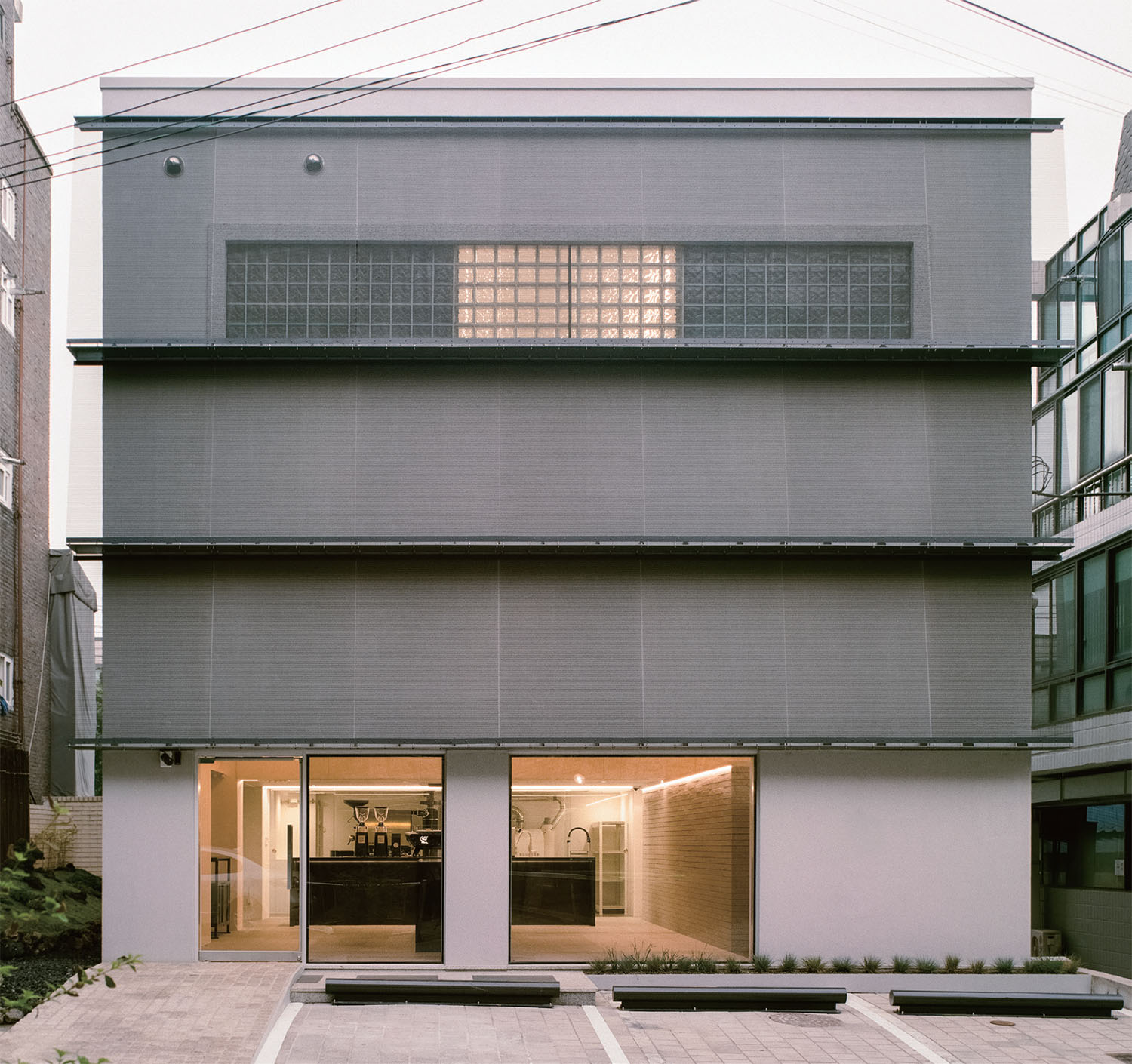
Muke Deungchon-dong [2025, Architect – AGIT STUDIO (Seo Jamin, Huh Guenil), Construction – J Construction (Site Manager, Jung Jangsu)]
A steel-framed factory building constructed in the 2000s within a low-rise residential neighbourhood dating from the 1970s and 1980s was converted into a roastery café and antique gallery. Not a single existing finish was removed; instead, only the newly intervened elements are distinguished by colour and material, making the boundary between different periods of time visible. The steel structure is left exposed inside, while granite flooring cut to intentional dimensions establishes the spatial datum. Custom-made furniture is arranged in accordance with the grid the granite floor creates. On the exterior, a metal fabric façade was added to bring the materiality of the steel building to the outside.
Interview Seo Jamin, Huh Guenil Co-Principals, AGIT STUDIO × Ki Jun Kim Professor, Korea University
Renovation as Condition or Obligation
Ki Jun Kim (Kim): For AGIT STUDIO, is renovation a choice or a given condition?
Seo Jamin (Seo): It varies by project. When clients come without a precise understanding of the legal conditions. In some cases, clients request renovation with clear reasons. In all cases, we spend a considerable amount of time setting the direction, carefully weighing multiple possibilities before making a decision. Beyond the early stage after independence, when we would typically take on small renovation projects and struggle to make them meaningful, I now think renovation has become an important task and perspective for architects today.
Huh Guenil (Huh): In fact, we are currently working on more new construction projects. However, the reason we wanted to assemble our renovation works and discuss them is that unless architects expand on the discourse and discussion surrounding renovation, the buildings of previous eras will once again be reduced to mere objects consigned for demolition. The narrative we wish to extend includes not only the temporal and urban interpretations of existing buildings, but also constructive methods and processes for the ways in which they should be transformed.
Kim: What was the gap between the architecture you learned in school and the architecture you first encountered in practice? During my undergraduate years (1999 ‒ 2005), renovation was not taught at all. If you did learn renovation, how was it taught, and how did the renovation you encountered in practice differ from that during your studies?
Huh: Renovation was also not included in the curriculum during my studies (2003 ‒ 2011); our teaching privileged new construction as the guiding premise of design. However, the concept of heritage restoration was included in our coursework assignment. As a result, although it differs from AGIT STUDIO’s current approach, I recall that in our first renovation project, I first examined whether new construction was possible. Since it was a site on which new construction was not permitted, even extensions and additions were not allowed, so we had to carry out a substantial repair.
Seo: I attended university during a similar period (2005 ‒ 2011), but in my fourth-year undergraduate studio I worked on a renovation project. The assignment was to renovate the former Seoul Station, and as a reference point I studied the renovation of the Musée d’Orsay in Paris. I just realised that my graduation project was also a renovation project (laugh): a renovation of the Nakwon Sangga. However, the renovation projects undertaken in school always targeted buildings of historical and cultural significance. By contrast, the subjects of AGIT STUDIO’s renovations require us to begin with questions such as: ‘Should this be preserved?’, ‘Why should it be preserved?’, and ‘What should be preserved?’ Such value judgments were issues we had never even considered, nor discussed.
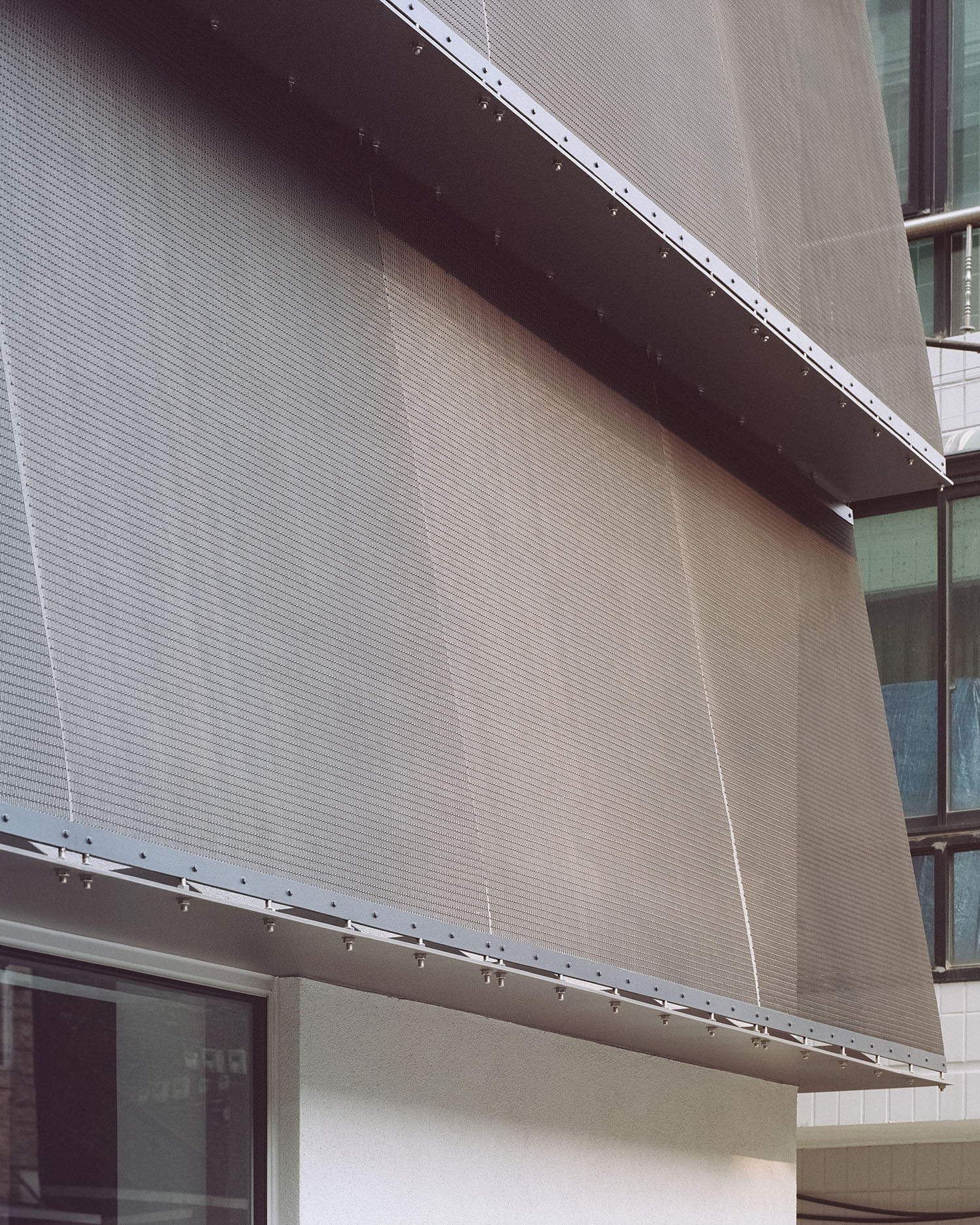
Muke Deungchon-dong(2025)
Kim: You must have experienced firsthand that in Europe renovation typically deals with buildings of historical and cultural value, often situated within urban fabrics that are hundreds of years old. In contrast, in Korea, the buildings architects encounter for renovation are mostly 30 ‒ 50 years old, constructed rapidly during the period of rapid urbanisation, and renovation is often chosen for economic or rational reasons. While it is not necessary to compare every aspect of architectural practice in our country with that found in the Western world, do you think this fundamental difference produces a distinctive attitude toward renovation?
Huh: I stayed in a rural village called Rancate in Switzerland for a year in 2021. Unlike Berlin or Zurich, Rancate felt like a place shaped more by necessity than by an urban planning order. Contrary to the common impression that European architecture is governed by logic and systems, here the reasons why each building was constructed were intuitively apparent, and each carried its own narrative and sense of time. This sensibility is not limited to a specific region. The ‘architecture without architects’ in Korea during the 1970s and 1980s was likewise shaped by necessity under economic and social conditions, fully embodying the choices and traces of that era. Therefore, in renovation, what matters is not altering the form, but reading the reasons for a building’s creation and the traces it has left behind, and considering how best to reveal them within the present context.
Seo: Although we experienced many things in Switzerland, AGIT STUDIO’s renovation work is not based on what we learned in school, nor on what we have encountered abroad. We approach our work by examining this territory and the current conditions of our country through our own perspective, and bringing that into the project. Renovation, more than anything, is a way of looking at a cross-section of the city. Even if renovation in Korea is often driven by economic logic, it is natural for architects to address the immediate realities they face. Unless they are historical buildings that have developed over centuries, buildings inevitably change according to their society and era. Within such transformations, our task is to move beyond merely repairing buildings for reuse, and to create architectural and aesthetic meaning through them.
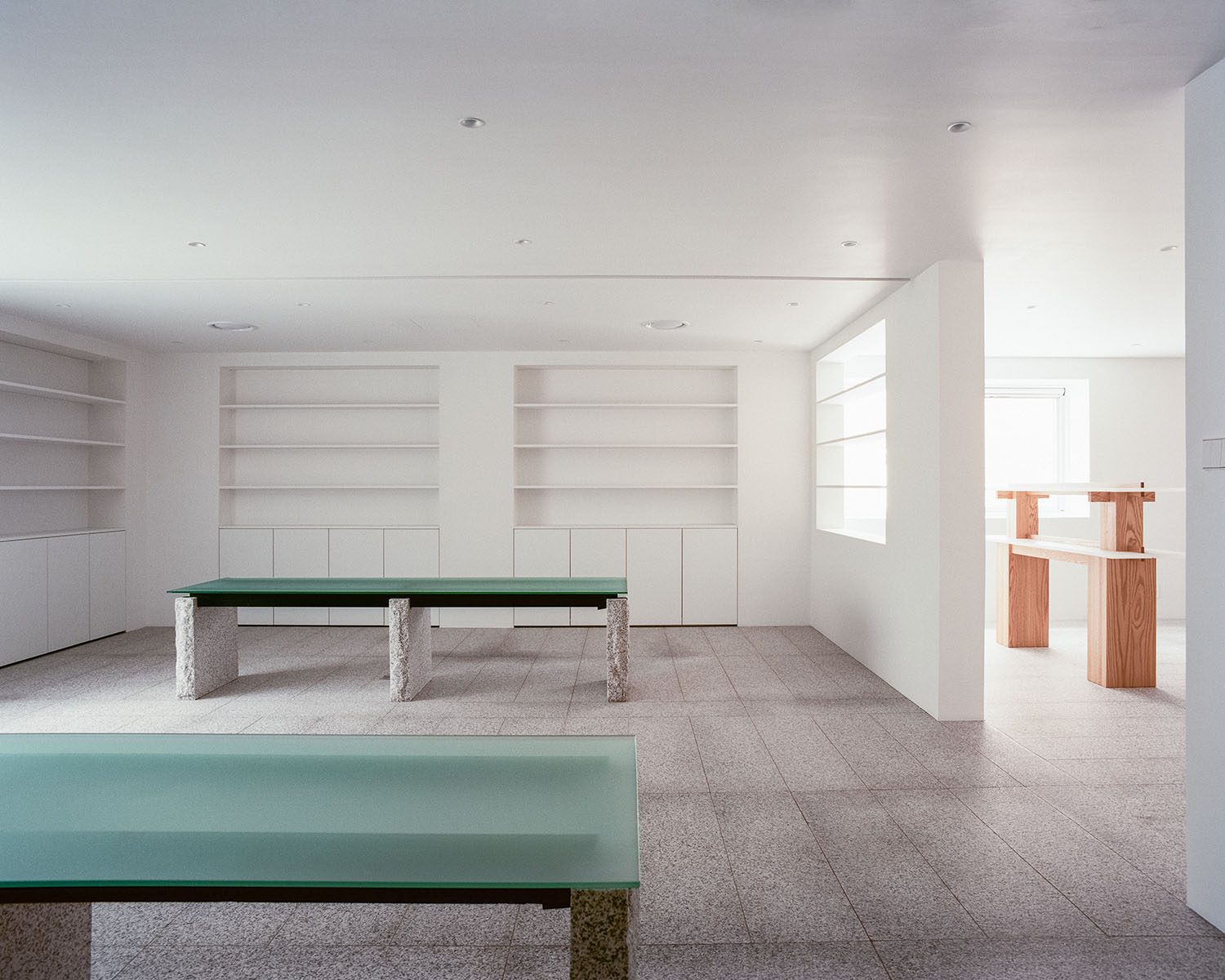
Muke Deungchon-dong(2025)
Criteria and Attitudes of Intervention
Kim: When you received the Korea Young Architect Award in 2023, you used the expression ‘the aesthetics of ugliness’. At the time, that ugliness referred to an attitude of accepting the ugliness of the completed building itself. In this field visit, however, you spoke about the ugliness of the buildings encountered as subjects of renovation. When the object an architect engages with is not beauty, how do you work with that ‘ugliness’ and translate it into the project? How is ‘respect’ for the existing building concretely reflected in design?Huh: The ugliness that Seo mentioned when receiving the Korea Young Architect Award in 2023 was, I believe, a kind of courage—the idea that approaching architecture with the mindset that ugliness is acceptable allows one to come closer to its essence. Having proposed the word ‘ugliness’ as informing our attitude, we have continued to reflect on it and develop the concept further. I think one of the roles of the architect is to establish their own criteria. As architects, we try not to passively accept these universal standards, but instead to expand the range of what can be considered ugly, or beautiful. We tend to pursue this actively, especially in renovation projects.
Seo: Not only in renovation projects, but also in our new projects, the process is not about creating something beautiful; it requires more robust and fundamental questions or intentions to sustain the work through to completion. Of course, we have an architectural sense of beauty we pursue, but what is necessary is the courage to confront ugliness as well. And the buildings we encounter for renovation are, in fact, truly ugly. Architects are not observers but those who must produce work with these buildings. When we look at existing buildings without nostalgia, they become quite problematic. There are often serious structural issues, and they can be far removed from the architectural tools and vocabulary of our time. Yet these results, far from beauty, are also elements that have constituted the city—they are part of who we are. Viewing ugliness as a potential may itself be a form of respect, and it is also the point at which the project begins.
Kim: I am curious about what you feel when you first encounter existing buildings. It seems related to your criteria for deciding what to preserve and what to change.
Seo: We do not work in a way that directly preserves and juxtaposes elements from the past, as if their mere existence guarantees meaning. Rather, we consider preservation, newness, and difference through our own interpretation. In Concrete Library (2020), for instance, the superficial characteristics ‒ the fake tiled roof and the red tiles on the façade ‒ were all removed, but the new structure emphasises and sustains the existing one. What was preserved was the way the site was used at the time and the plan layout. In Project: re-interpret (2021), a new core in red concrete was introduced to distinguish and reveal the time in which the building was constructed. In Archived mass (2022), we refocused on the most fundamental elements that constitute a building—windows, gates, walls. It was a process of discovering or assigning a kind of DNA from elements created out of necessity.
Huh: It seems clear that what we aim to preserve is not material characteristics. In the 1960s and 1970s, cement bricks were used; later, red bricks or brick tiles became common, simply because those were the materials available in Korea at the time. In addition, the frequent use of semicircular plans in buildings from the 1980s is said to stem from the fact that such areas were excluded from floor area calculations. To replicate the materials, construction methods, or plan layouts of that time today holds little meaning. Rather, we see aesthetic potential in the narrative of why these elements were created in response to certain needs, and that is what we seek to preserve. At this point, I would like to borrow the phrase ‘An Archaeologist and Inventor’, which was the theme of the 2025 Junglim Architecture Awards for Students. In order to understand the narrative of an existing building, we formulated hypotheses from the perspective of an archaeologist. In Korea, records of urban architecture are often insufficient, so these hypotheses are not fully grounded in verified facts. Even without precise records, satellite images are often available. When examining satellite images of a given area, changes can be observed in five-year intervals. We construct narratives by asking, ‘Why was this part removed?’ or ‘This structure must have taken shape through such a process’. If such hypotheses by architects accumulate, I believe Seoul can become a more aesthetic city. Within the dense and chaotic context of Seoul, the coexistence of multiple aesthetic perspectives feels particularly appropriate.
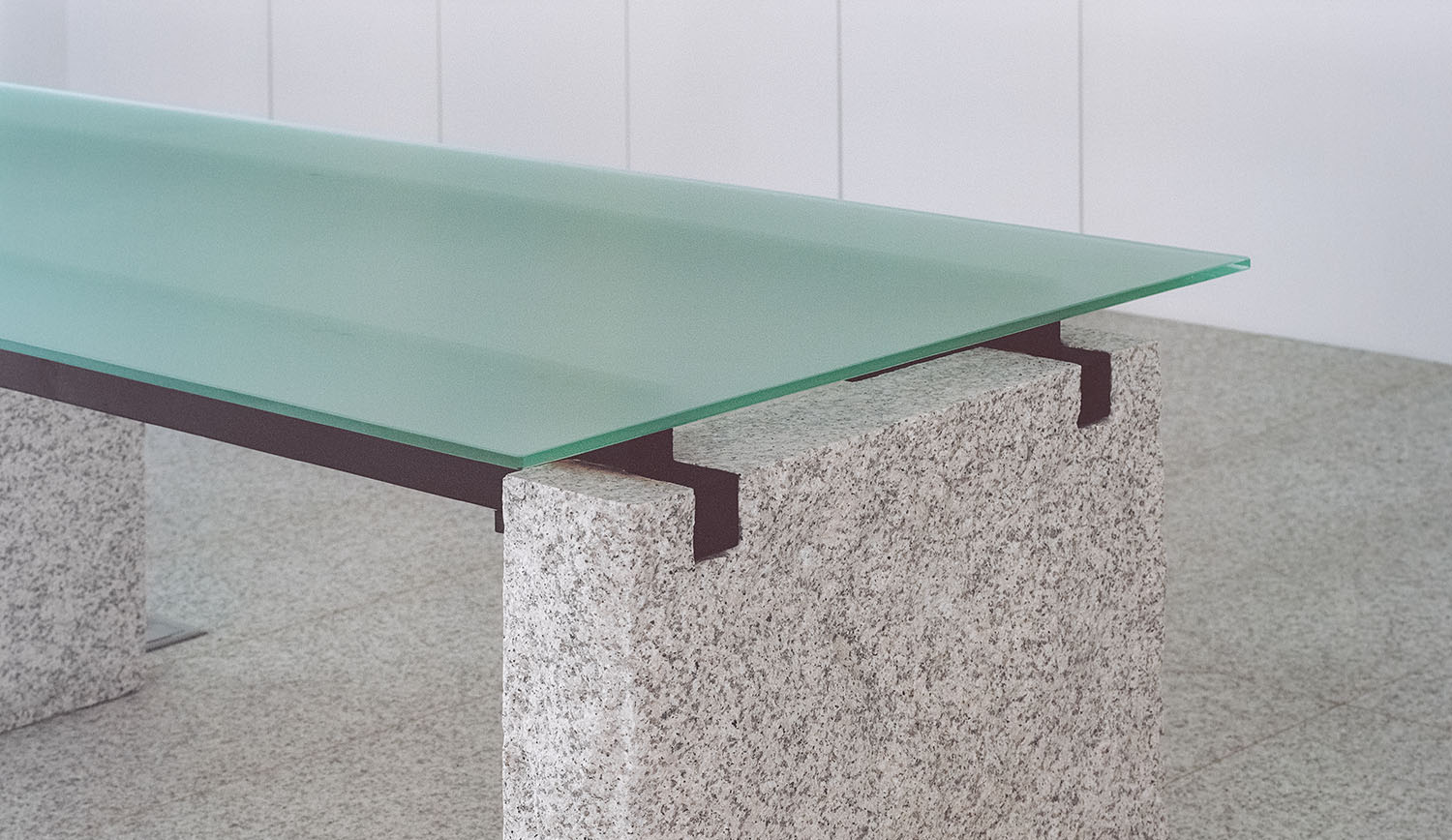
Muke Deungchon-dong(2025)
Kim: In Concrete Library, you made an active structural intervention by encasing the existing masonry in concrete, and in Project: re-interpret, you inserted a new red concrete core. In contrast, in Muke Deungchon-dong, you chose minimal intervention, removing none of the existing finishes. What determines the depth of intervention? Is it the condition of the building, the budget, or the architect’s will?
Huh: Budget is certainly an important factor in determining how much to intervene in a renovation – or whether to demolish and build anew – but ultimately, the depth of intervention is determined by the will of the architect as creator. The condition of the building and the budget have rarely been favourable anyway! (laugh)
Seo: That’s right. To add more from the perspective of the architect as creator, while urban interpretation is important in renovation, AGIT STUDIO has also had the strong intention to present each project as an architectural work in its own right. Looking at our early projects, even under limited budgets and adverse conditions, we worked intensely to embed what we consider architectural meaning. In Concrete Library, we struggled significantly to establish a new structural system from the foundation using cast-in-place concrete construction. Of course, we do not let the architect’s desire override necessary interventions, nor do we impose excessive interventions arbitrarily. As professionals, it is fundamental to diagnose the renovation subject accurately. Each renovation project proceeds through a combination of new observations of the existing building and what we seek to attempt as architects. Recently, I have also come to think that while there has been much discussion about minimal or cautious intervention, there is a lack of discourse on how to approach maximal intervention. We are also reflecting on what criteria and attitudes should guide us when significant transformations of existing buildings are required.
Kim: It seems that AGIT STUDIO often proceeds with projects by establishing its own sense of architectural essence or criteria. What, concretely, is ‘essence’ for AGIT STUDIO?
Huh: We view architecture as a process rather than a result, focusing on the point where construction methods and narrative intersect. As architecture, structure, civil engineering, and building systems are coordinated, criteria are formed regarding why a particular method is selected. Thereafter, the project progresses rapidly along a unified logic. Drawing plans becomes less a sequence of complex decisions and more a process of following an already established rationale. In this sense, the essence of architecture lies in a state where diverse conditions converge into a single direction ‒ where nothing more can be added or removed ‒ creating a clear reason and order.
Seo: Ultimately, the most important thing is to establish what we will do in a project, and why. At AGIT STUDIO, we persistently interrogate our intentions during the planning stage. As a shared understanding is formed internally about what and why we are doing something, and as that becomes more precise, the entire complex process is absorbed into the architecture and proceeds with remarkable clarity. Whether addressing clients, construction teams, or ourselves, we can always persuade with confidence. There is a sense of exhilaration in the moment when what and why become clear, and the vast and complex process of architecture is rendered lucid.
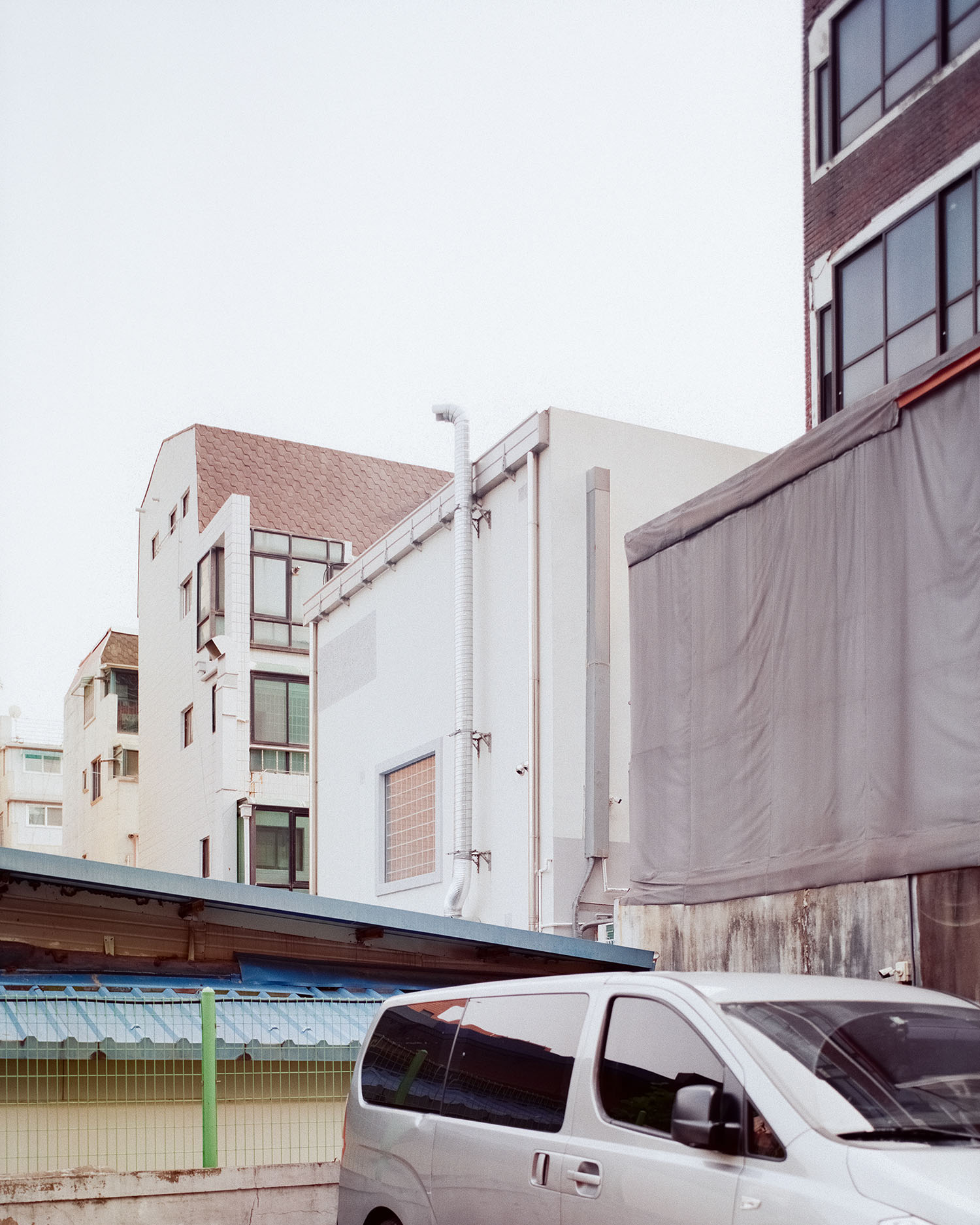
Muke Deungchon-dong(2025)
Muke Deungchon-dong
Kim: In small-scale renovation projects in Korea, work is often carried out within a scope that can proceed without requiring permits. In Deungchon-dong as well, the project was carried out as a substantial repair without a permit, under the conditions of being under approximately 99m² and without changes to the façade. How do such regulatory conditions affect the design? Huh: Constraints become very important conditions for developing a design. They do not necessarily grant freedom, but setting given conditions is the first task of an architect. Once conditions are clearly defined, they can actually help focus the narrative in a single direction so I tend to view constraints positively.
Seo: In my case, I see it somewhat differently. Of course, we try to deploy strategy and energy within the given scope and conditions, and there is certainly the practical convenience of not having administrative procedures. However, I personally feel that freedom lies in being able to attempt more architectural explorations or to approach the project with a wider range of possibilities open.
Kim: In Muke Deungchon-dong, you chose not to remove any of the existing finishes, instead distinguishing only the newly constructed elements through colour and material. During the previous site visit, it was mentioned that many of the surrounding buildings in this area will inevitably become subjects of renovation in the near future. What, in your view, should be the architectural vocabulary and formal direction when renovating such buildings?
Seo: The street where Muke Deungchon-dong is located was formed by low-rise residential buildings constructed in the 1970s and 1980s. The existing building we dealt with is a second-generation structure, built later in the 2000s as a typical factory-type steel frame building, and through our renovation it has become a third-generation building.
Huh: Personally, I find the act of simply coating over something without removing it somewhat awkward. Conceptually, it feels more natural for something new to be attached using a different construction method. I think I became accustomed to this through observing very old buildings in Rancate, where new elements were added using different techniques or colours. Rather than interfering with the aesthetics that emerged from past necessities, I believe it is aesthetic to create something new in response to our own needs. Also, if I do not exhaust everything this building has to offer at once, but instead intervene only as much as needed now and leave the rest for the future, perhaps this kind of patchwork could continue into a fourth generation and beyond.
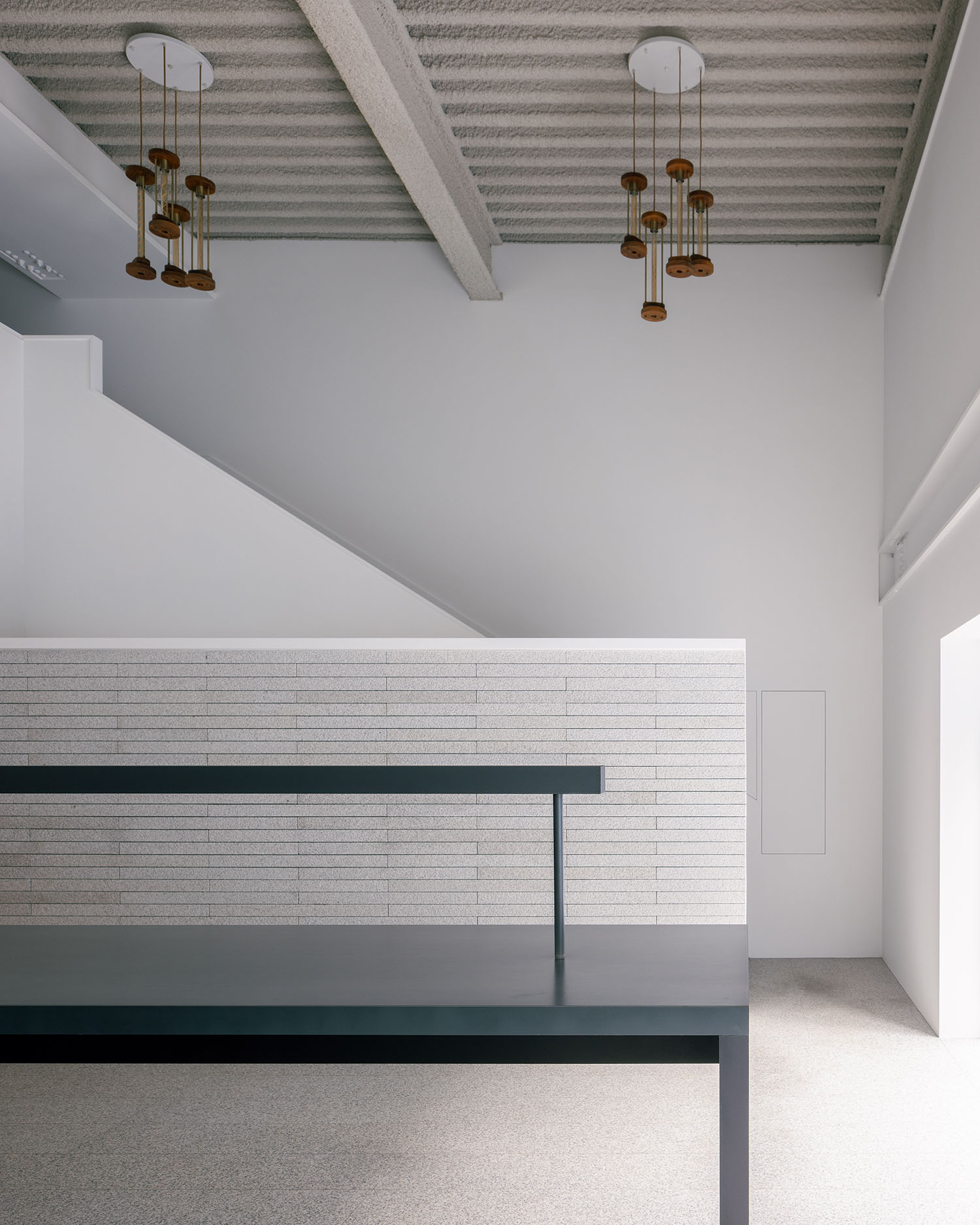
Muke Deungchon-dong(2025)
Kim: What led you to use a steel façade?
Huh: From the architect’s desire to intervene, we introduced the concept of ‘bal (Korean traditional blind)’, choosing to wrap the building with a steel façade in a way that does not damage the existing structure. However, due to practical constraints such as construction costs, we reduced its extent somewhat, as we considered it an adjustable element rather than the core of the overall narrative. In this project, the metal façade and the planned metal furniture were executed through metal fabrication work, made feasible by the Korean context—where steel is readily available through companies like POSCO and skilled welders are widely accessible.
Seo: In fact, we had quite a bit of internal debate about that façade. The existing building was a steel structure, and we intentionally exposed it in the interior rather than concealing it. This is because we believe that structure, regardless of its type, touches upon the essence of architecture—or should. The metal fabric façade brings the sensibility and materiality of the steel structure outward. Previous works by AGIT STUDIO have tended toward a tectonic approach that speaks through mass, often using cast-in-place concrete construction, and for that reason I have always felt uneasy about a façade operating independently. In this project, which develops a dry façade from a dry structural system, I was able to move beyond that discomfort.
Kim: Previously, the mass had been cut diagonally, and in the process of restoring it, there was also a functional need for a canopy. Personally, I interpreted it as pushing that necessity further within the given budget—like Sou Fujimoto extending a rotating bookshelf all the way to the ceiling in Musashino Art University Museum & Library.
Huh: Any architect, over the course of multiple projects, sometimes imposes strong intentions and at other times deliberately steps back. For AGIT STUDIO, I believe it is not yet the time to step back.
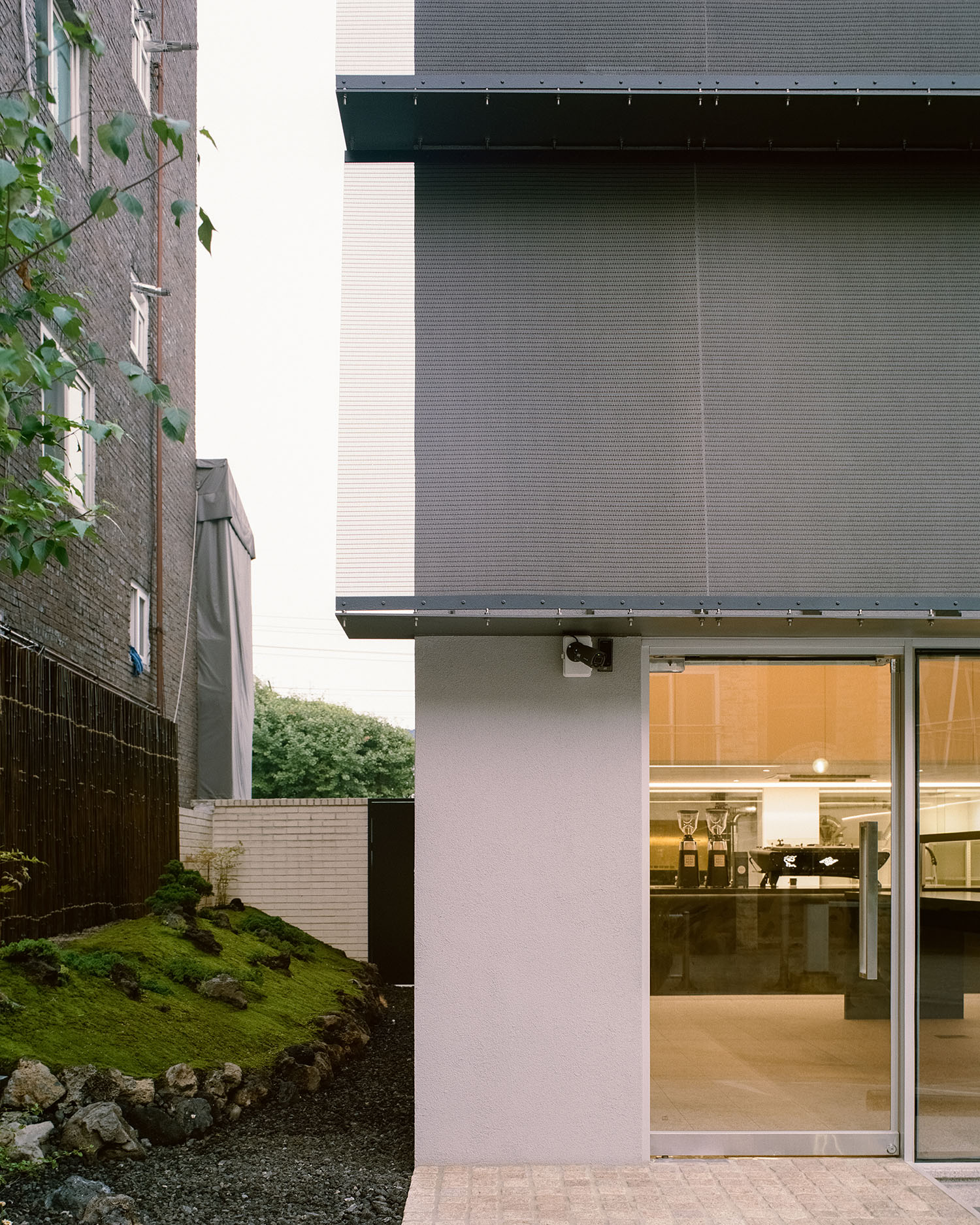
Muke Deungchon-dong(2025)