
SPACE May 2026 (No. 702)
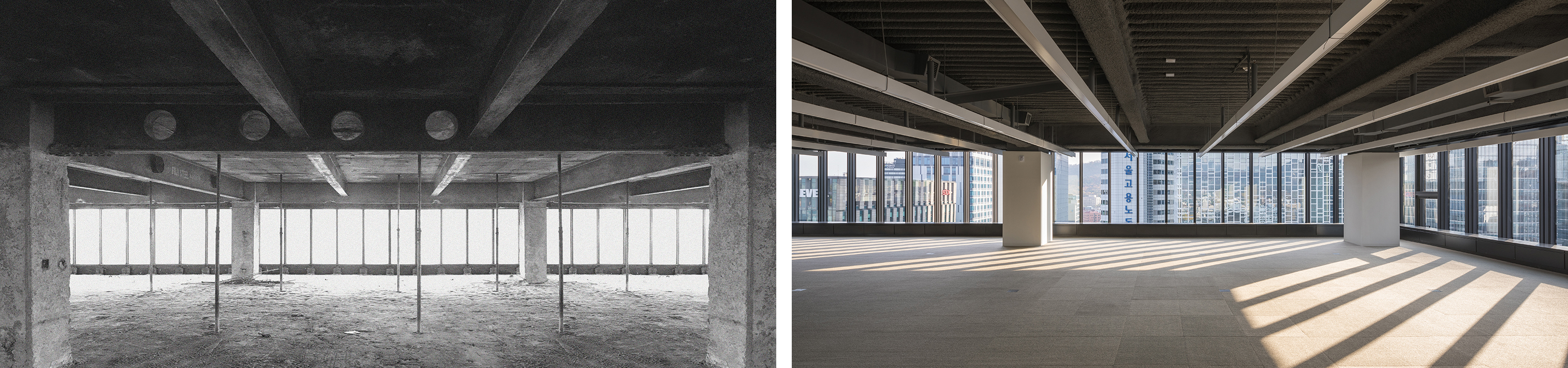
The typical floor before (left) and after (right) renovation
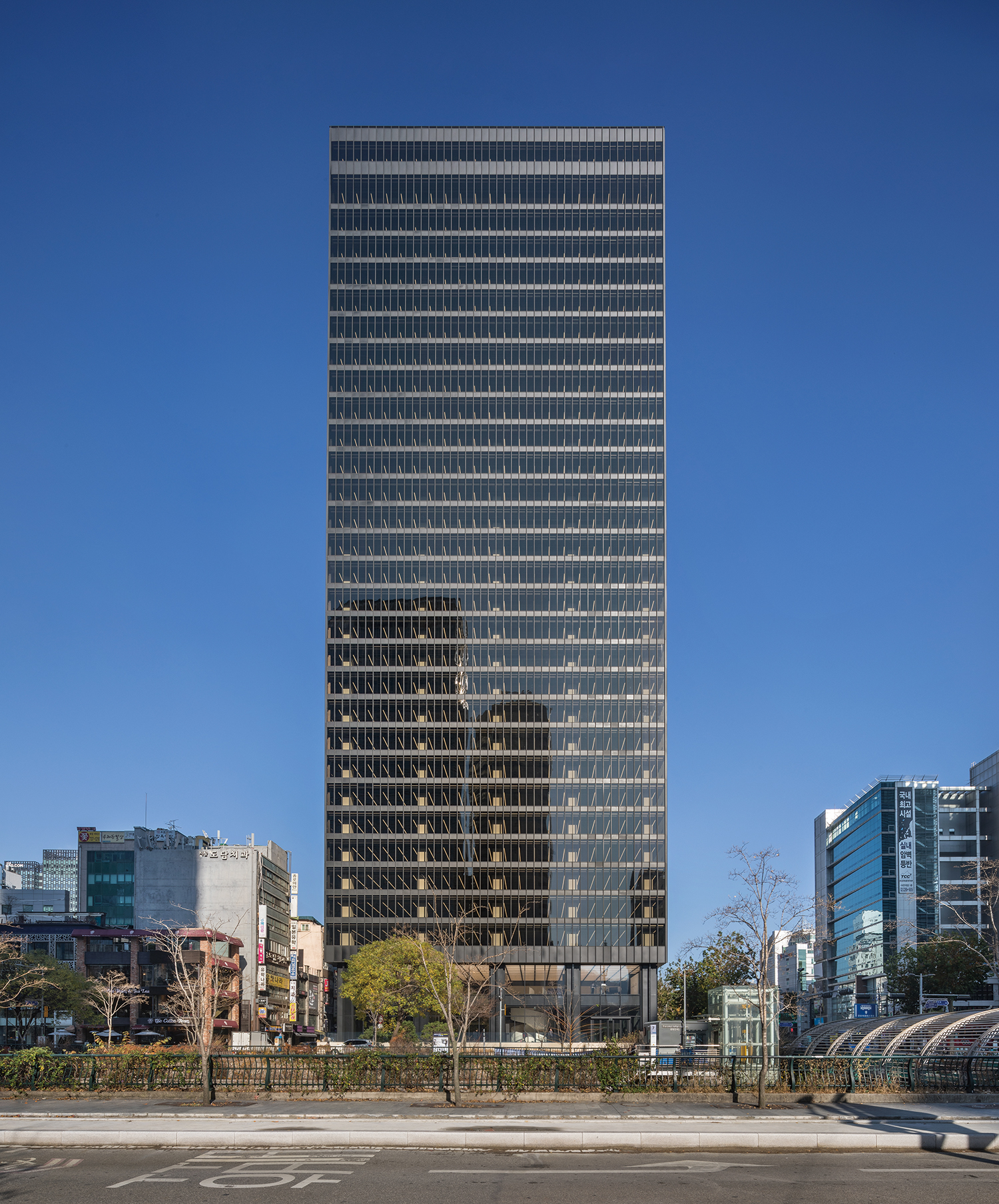
Completed in 1970, the Samilro Building (currently Samil Building) holds immense historical significance as a symbol of Korea’s modernisation and as architect Kim Chung-up’s first office project. As the nation’s first high-rise, it had aged significantly over 50 years and urgently required upgrades to serve as a modern office space. The design team pursued a renovation focused on preserving the building’s heritage while complying with current regulations. The goal was to maintain Kim’s original vision while reinforcing the internal structure and upgrading the curtain wall façade.
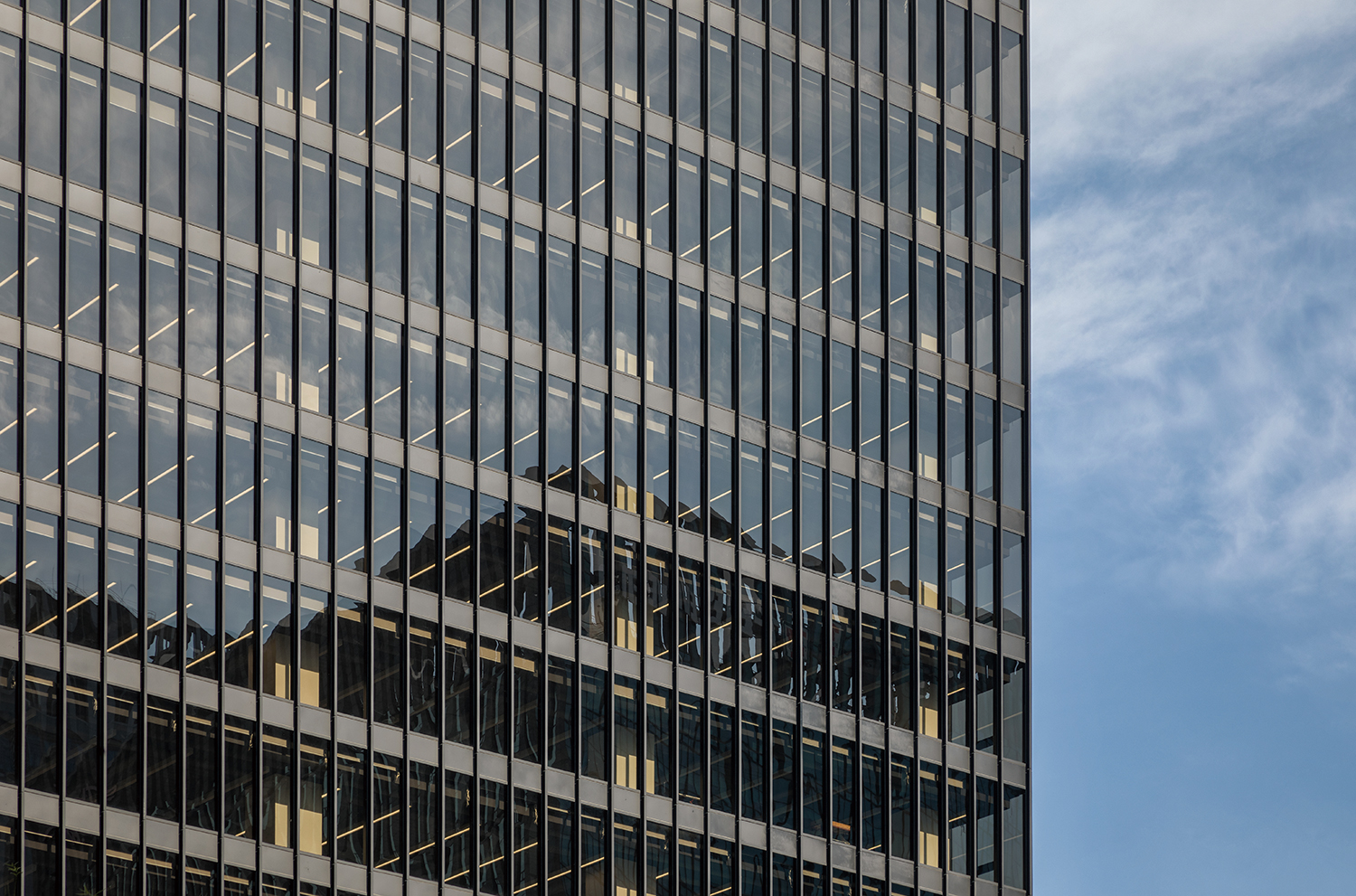
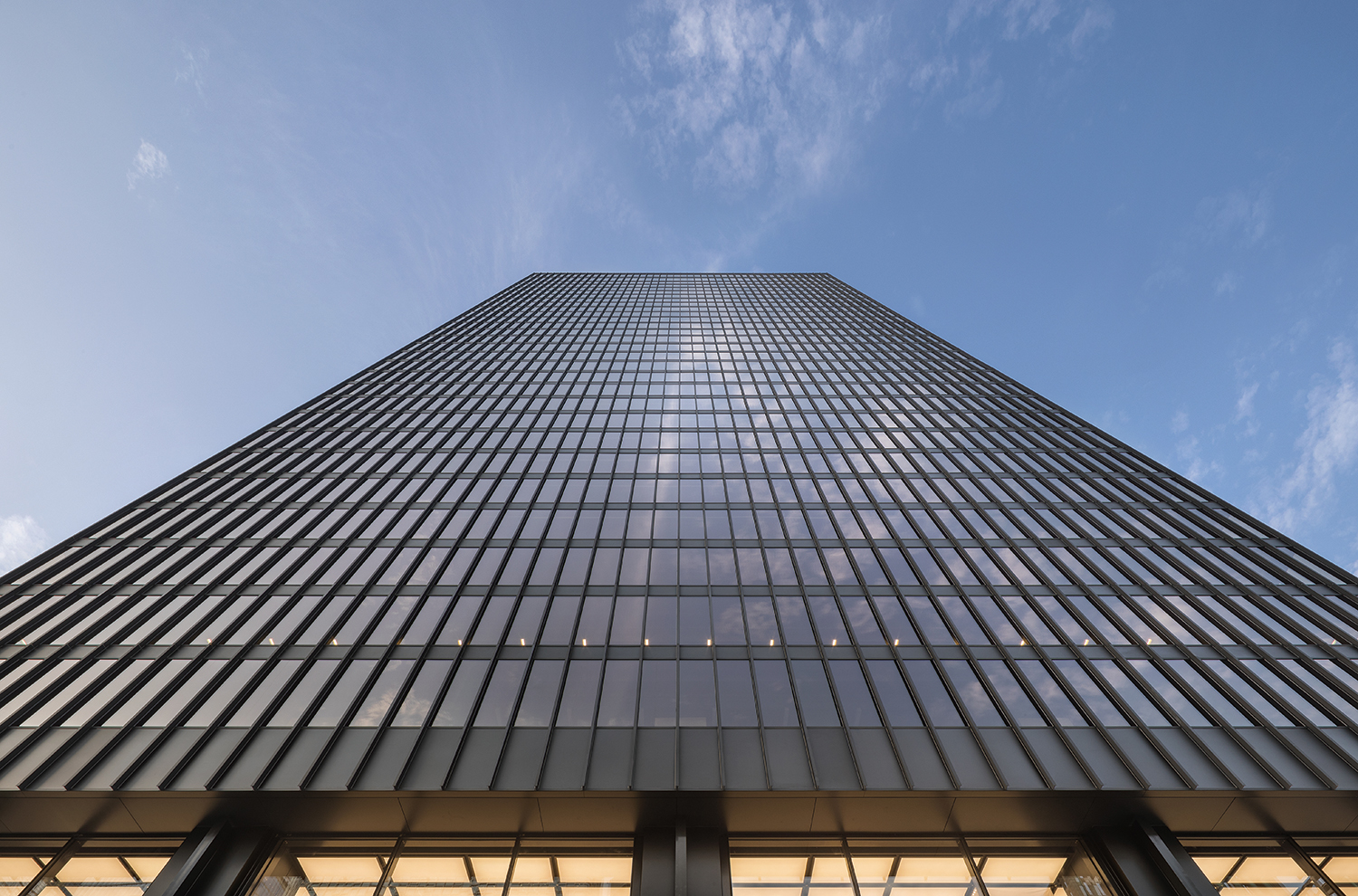
the restored façade
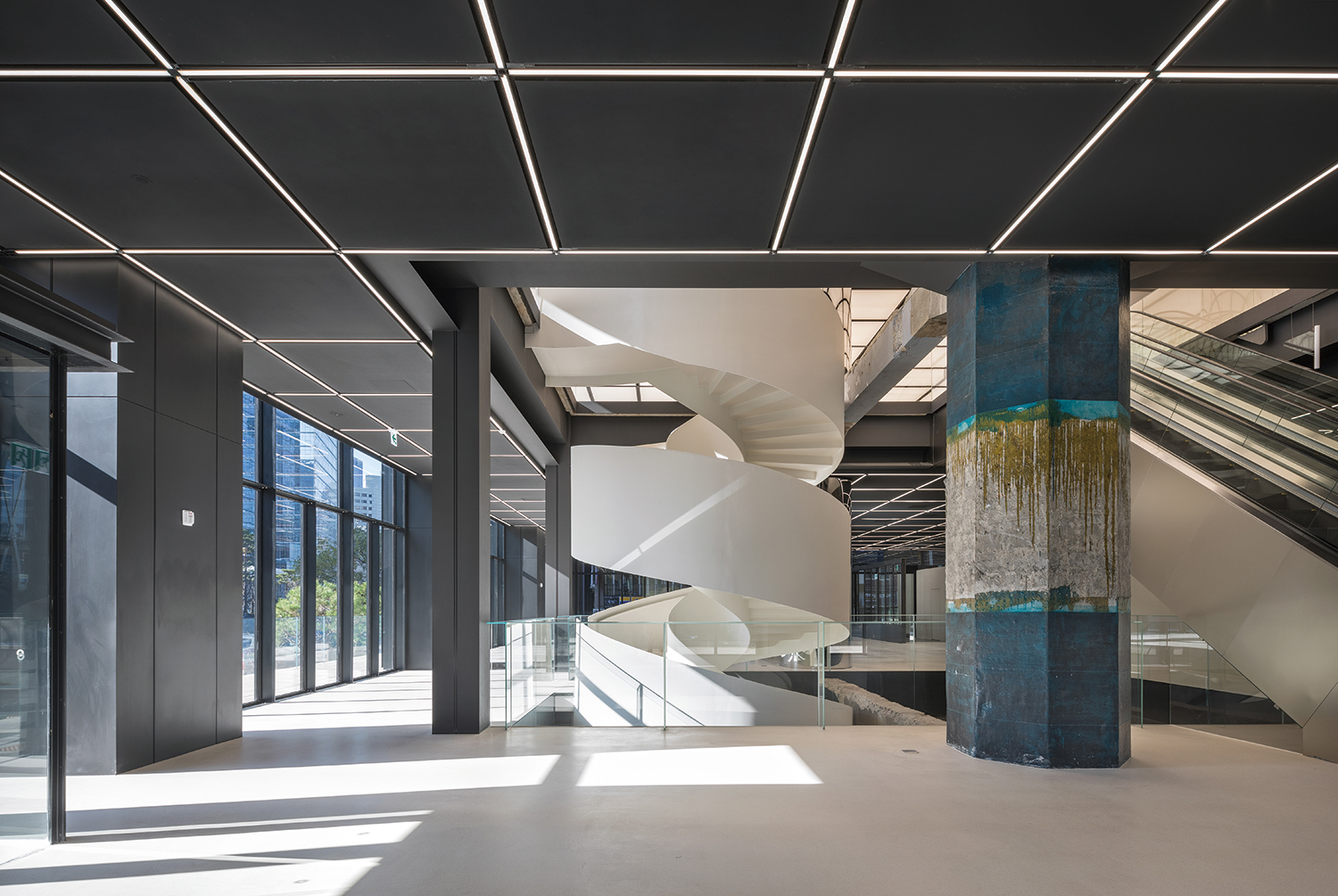
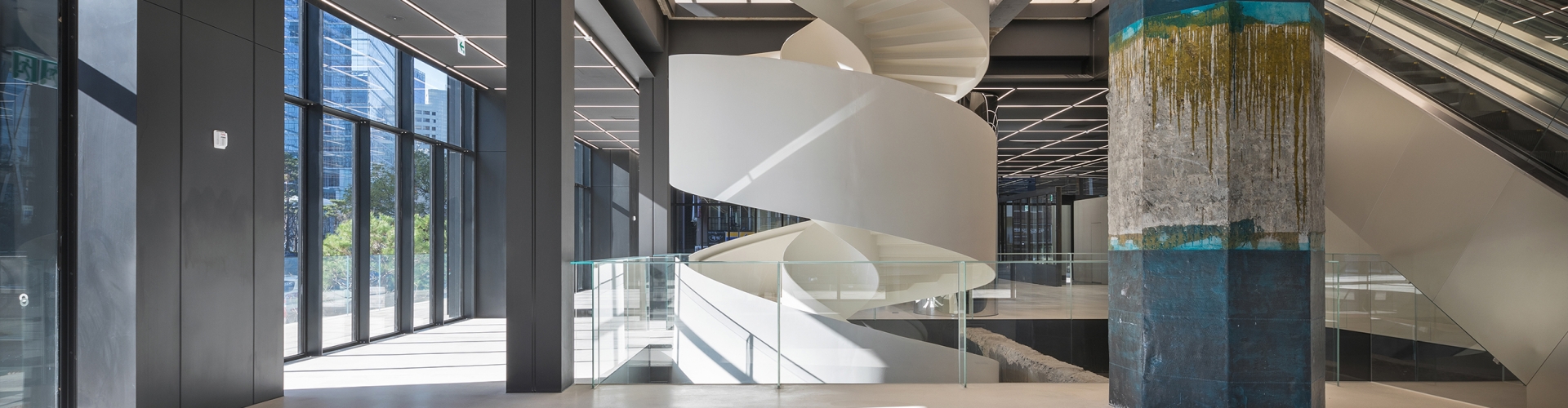
The existing corten I-beams were replaced with modern materials of identical specifications and design to preserve the original form, with a special coating applied to prevent future discolouration. The façade’s frontality, enhanced by the removal of the Cheonggye Overpasses, was emphasised by eliminating the base-level massing and integrating the first two floors for greater openness. Inside, the ceilings were exposed, using honeycomb beam systems and integrated ductwork, to maximise the height, and the floors were upgraded with high-strength lightweight concrete and recycled resin OA Network Floors. While the core, altered during the 1980 remodelling, was restored to its original state, the elevator performance was enhanced while maintaining the independent core structure.
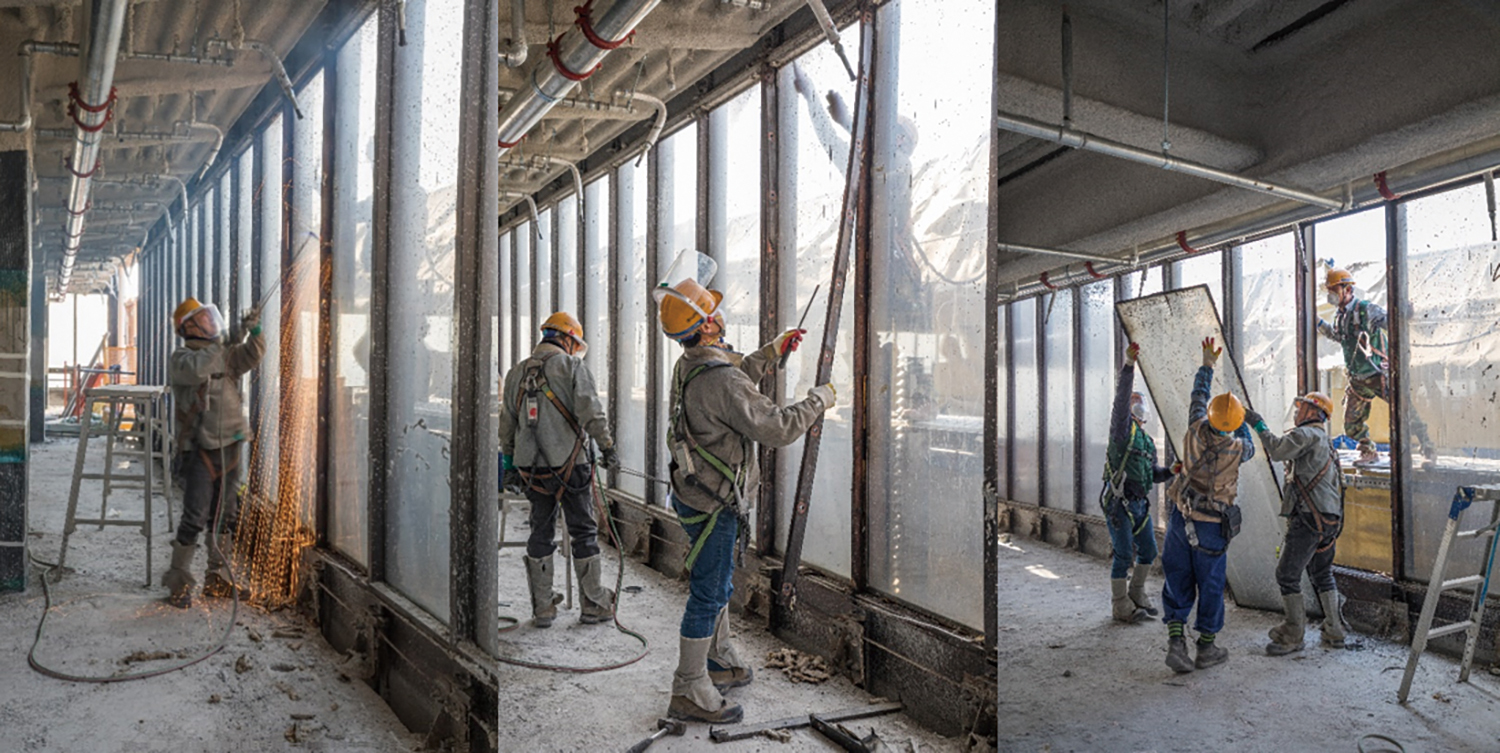 The process of removing the glass from the curtain wall
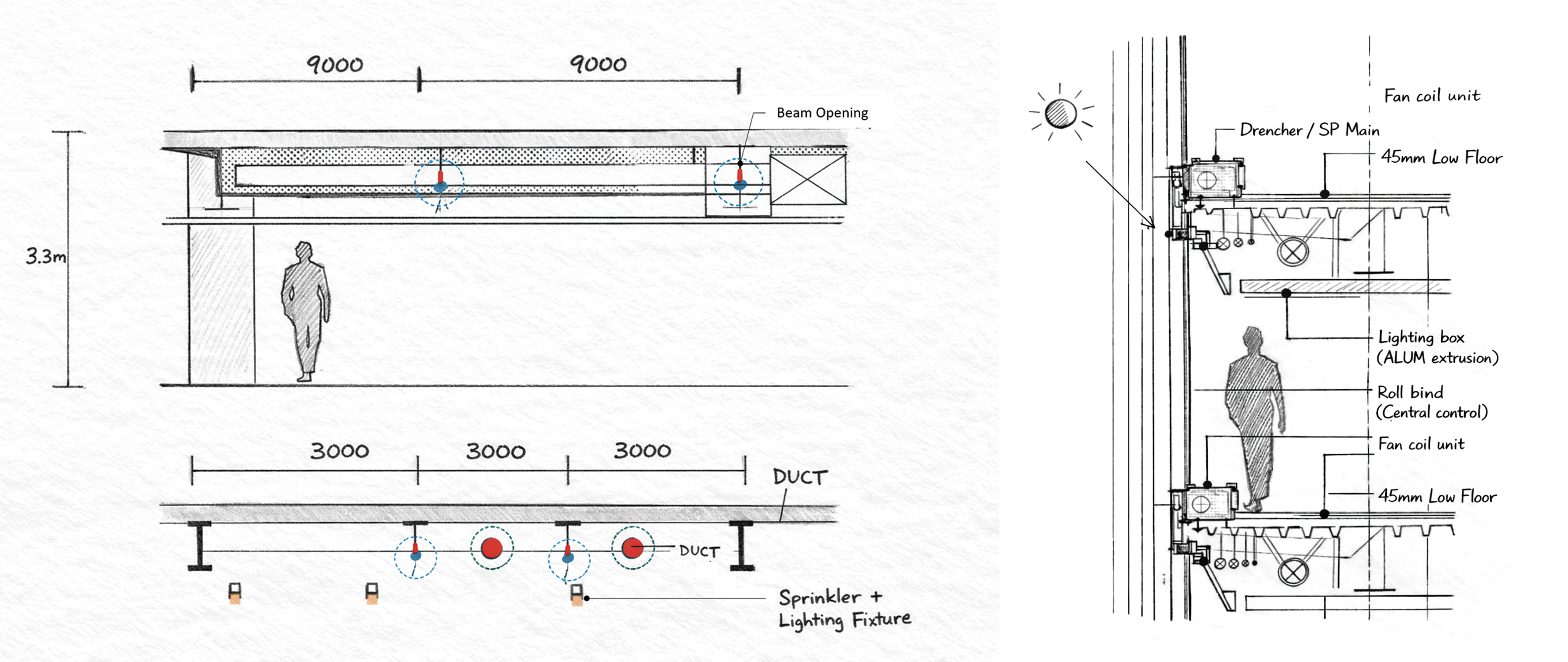 Study sketch of the honeycomb beam and its application (left), Façade section sketch (right)
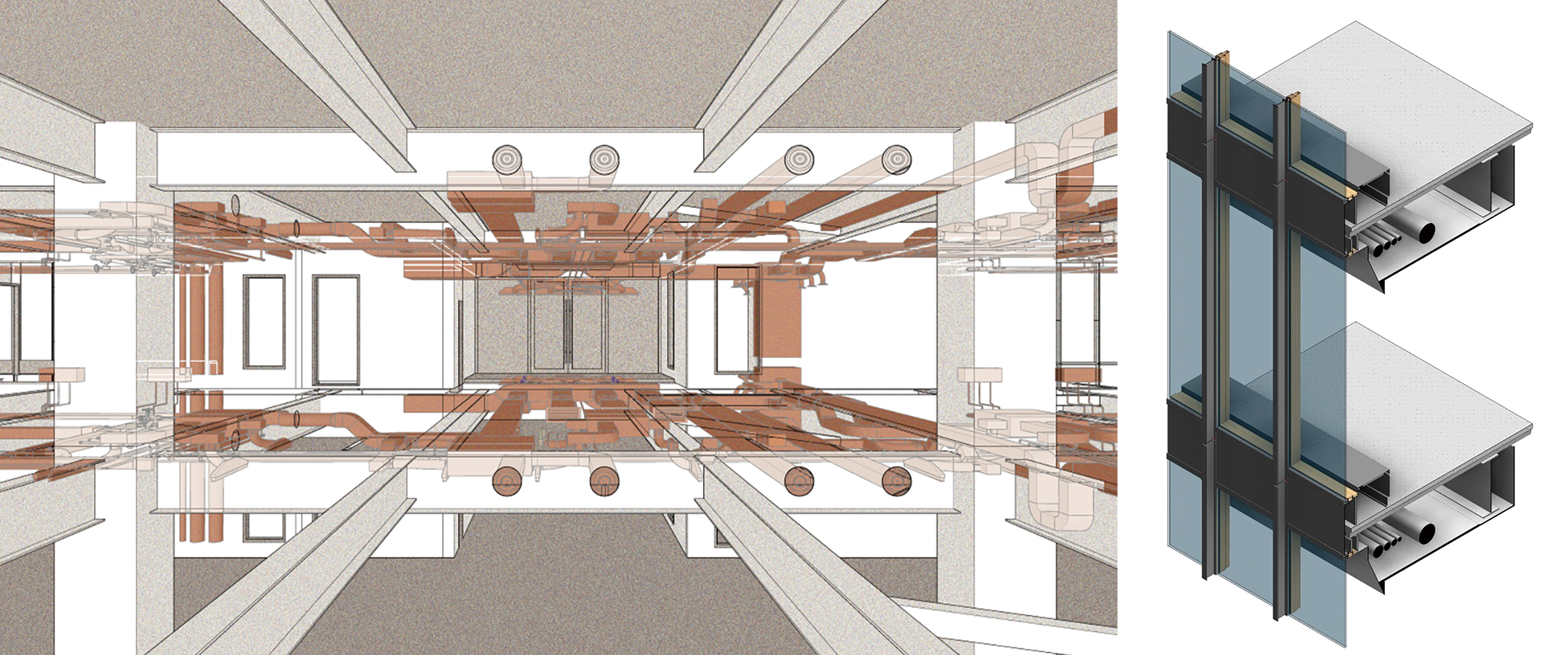 BIM model image of the typical floor service duct and honeycomb beam (left), BIM model image of the curtain wall (right)
Junglim Architecture (Jeong Yongkyo, Lee Myungjin), ONE O ONE architects (Choi Wook)
Junglim Architecture – Kim Haejin, Park Jaewan, E Eujin, Kim Hyunsam, Cho Sungwon, Son Dongki, Kim Jaehyun, Jang Dongchan, Kim Jungyeon, Baek Hyejung, Kim Seungtaek, Jeong Bogeun, Jeon Sangwoo, Chung Mokjo
85, Cheonggyecheon-ro, Jongno-gu, Seoul, Korea
office, neighbourhood facility
1,877.4m²
1,090.58m²
35,010.61m²
B2, 31F
52
110.82m
58.09%
1,704.87%
steel frame, RC
THK28 colour low-e pair glass, steel curtain wall
terrazzo tile, OA floor + carpet tile, exposed c
Neo-Cross Structure Engineering Co., Ltd.
Jungdo ENG
NARA Engineering consultant
KCC E&C
Mar. 2018 – Mar. 2019
May 2019 – Sep. 2020
SK D&D, BentallGreenOak, IGIS Asset Management
SOLTOS Landscape Architecture