I was studying contemporary art when the retrospective exhibition of Gabriel Orozco, a Mexico-born artist, was held at the Museum of Modern Art in New York City. One afternoon, I rode the escalators to the top floor, the special exhibitions area. I was reading the exhibition description when I felt something at my feet. A crumbled shoe box. ‘Who would throw away a shoe box in an art museum?’ Confused, I walked into the exhibition hall where I found a caption: ‘Gabriel Orozco, Empty Shoe Box, 1993’. This roused new trains of thought as goosebumps appeared on my arms. The boundary lines concealed in the everyday have expanded. The line between artwork and waste has collapsed.
From a Space of Appreciation to a Garden of Engagement
At what point does our experience of an art museum begin? Once known as the treasuries or the burial tombs for collections, in the late twentieth century museums and art museums gained new identities
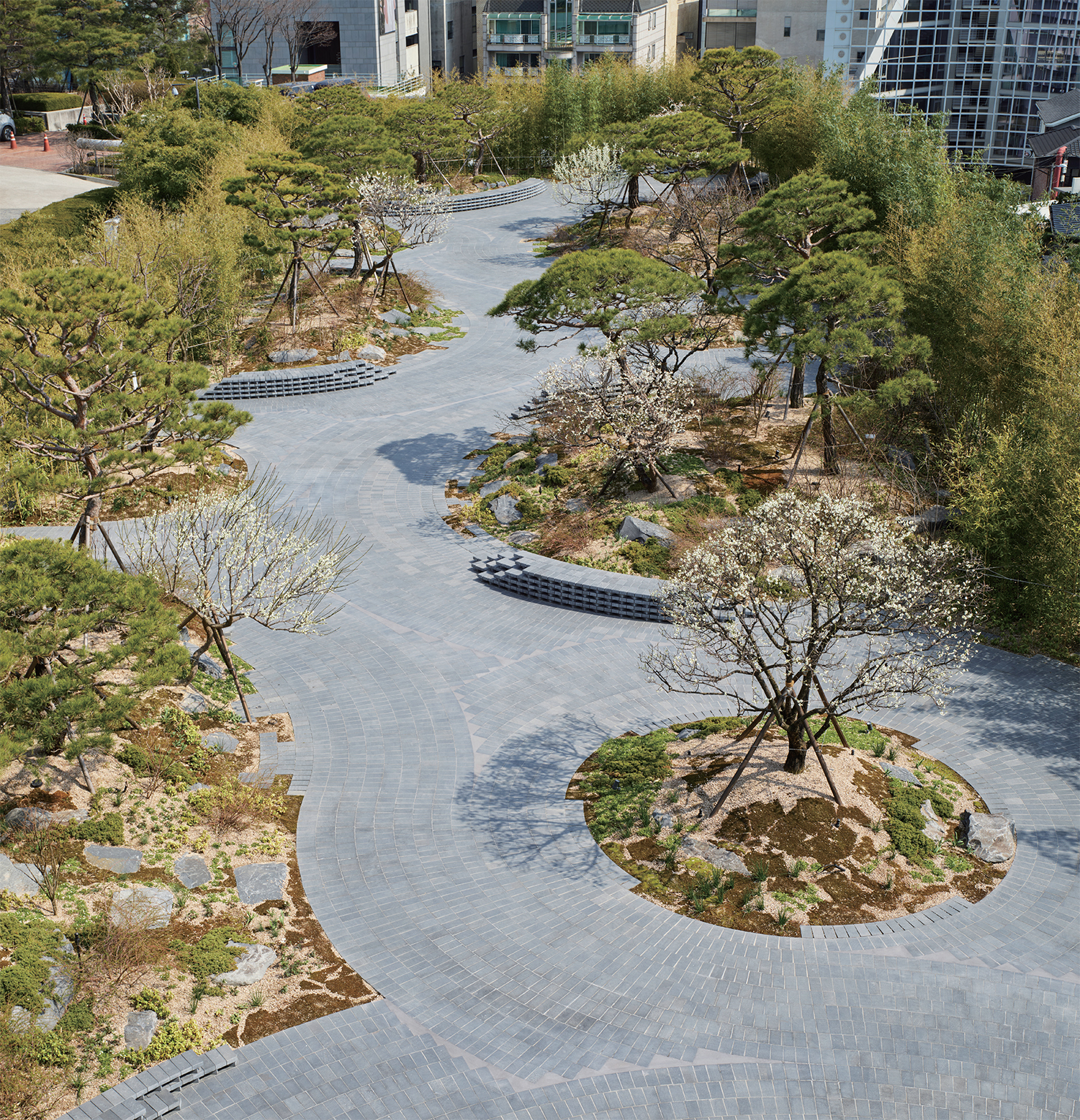
as spectacles and destinations in their own right through the incorporation of architecture and outdoor installations. Leeum Museum of Art features an architectural expo-like landscape created in 2004 by three wings, each designed by Mario Botta, Jean Nouvel and Rem Koolhaas. A monumental sculpture by a renowned artist, such as Alexander Calder, Louise Bourgeois, or Anish Kapoor, occupied the Outdoor Deck above the parking lot. These works functioned as landmarks that strengthened the monumental properties of the museum’s architecture and as thresholds to an uncommon (as opposed to everyday) experience of the...
*You can see more information on the SPACE No. June (2026).
*Subscribers can browse through E-Magazine right now. >> Available Here
Shin Myungjin
Shin Myungjin studied art history at New York University and landscape architecture at Seoul National University. She is currently working as a researcher at the Environmental Planning Institute, exploring the confluence of landscape architecture, art and city. She recently compiled and translated, Frederick Law Olmsted’s records, titled Birth of a Park, into Korean.