
SPACE April 2026 (No. 701)
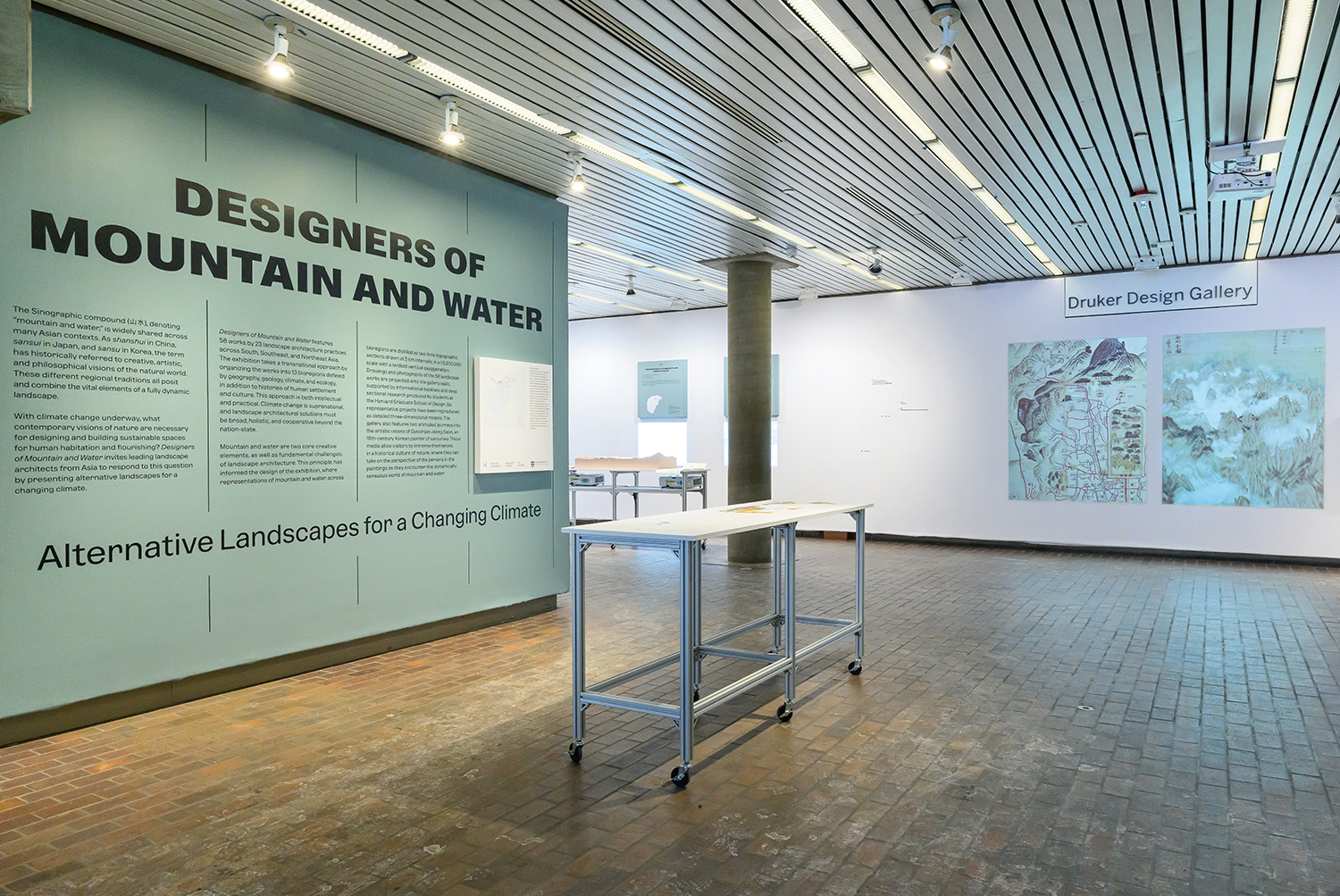
Exhibition views of ‘Designers of Mountain and Water: Alternative Landscapes for a Changing Climate’
‘Designers of Mountain and Water: Alternative Landscapes for a Changing Climate’▼1 – an exhibition that repositions Asian landscape practices, long relegated to the margins of modern architectural discourse, within a broader framework of knowledge – is currently on view at Harvard GSD’s Druker Design Gallery. While reintroducing sansu (山水, mountain and water) as part of an Asian conceptual vocabulary, the exhibition resists reducing it to a marker of cultural identity and instead proposes it as a methodology for reading landscape practice in the face of climate change. In conversation with Kim Jungyoon (Associate Professor, Harvard GSD; Co-Founding Principal, PARKKIM Seoul & Boston), the Curator of the exhibition, we discussed its background and curatorial strategy.
Interview Kim Jungyoon Associate Professor, Harvard GSD × Lee Sowoon
Lee Sowoon (Lee): ‘Designers of Mountain and Water: Alternative Landscapes for a Changing Climate’ was developed on the basis of your research at the Harvard Graduate School of Design (GSD), together with the participation of students. The conference held alongside the exhibition also expanded on discussion through collaboration between several institutions at Harvard. Can you explain why a sense of urgency emerged within the GSD concerning Asian landscape architecture at this moment, and how that was concretised in the form of this exhibition and conference?
Kim Jungyoon (Kim): At the Harvard GSD, one or two major exhibitions or conferences are held each year, and in terms of scale this exhibition and conference were quite large, even by that standard. Which professor will curate an exhibition and organise a conference is decided one to two years in advance through a competitive proposal process: faculty members submit formal proposals to the Dean’s Office, and selections are made from among them.
Landscape Architecture is the smallest department at the GSD, so the fact that this exhibition and conference received such significant attention and support internally is noteworthy. There may be many reasons for this, but above all, there was already a shared internal sense that research, teaching, and discussion on Asia had been insufficient. Against that backdrop, the idea of examining the role of landscape architecture in the era of climate change – especially the relatively under‑recognised practices of Asian landscape architecture – through the transnational framework of bioregions was compelling.
For the past three years I have been teaching a seminar on Asian landscape architecture, launched with the full support of our current Department chair, Professor Gary Hilderbrand. The research conducted for that course, along with the students’ investigations, formed a strong foundation for this exhibition and conference. Each week in the seminar, landscape architects and scholars from across Asia delivered guest lectures and engaged in discussion with the students, and all of this work contributed directly to the depth of the exhibition and associated conference.
Lee: In the context of contemporary landscape practice, how can sansu (山水, mountain and water) be understood as a concept, and how did the exhibition seek to interpret it?
Kim: As is well known, the word sansu has been shared and traditionally used across the Northeast Asia, yet it carries different connotations in each cultural context. These differences become especially clear when you ask landscape architects – the professionals who work with mountains and water every day – what the term means.
For example, when I asked the Japanese landscape architect Shunsaku Miyagi, ‘What is sansui?’, he replied without hesitation, ‘Sansui is garden.’ When I posed the same question, ‘What is shanshui?’ – to the Chinese landscape architect Yu Kongjian, he answered, ‘It is a high culture historically led by elites in China, one that excludes the field – the in‑between of mountains and water where people’s everyday life and labour actually take place.’ By contrast, Korean landscape architect Park Yoonjin describes sansu as ‘the reality we must confront every single day’.
These differences can be traced, first of all, to the very different topographies and scales of sansu in each region. In turn, those geomorphologies have shaped distinct ways of living and cultures for the people dwelling within them. It is therefore not surprising that landscape architects – whose task is to transform or construct those very terrains – arrive at such different answers.
From the standpoint of landscape architectural practice, this also means that there is no need to artificially ‘translate’ the concept of sansu into a new design vocabulary. Landscape architects have long been responding to mountains and water in their own ways. This exhibition simply proposes to look at 58 landscape projects as the materialisation of such responses, and has been curated with that intention.
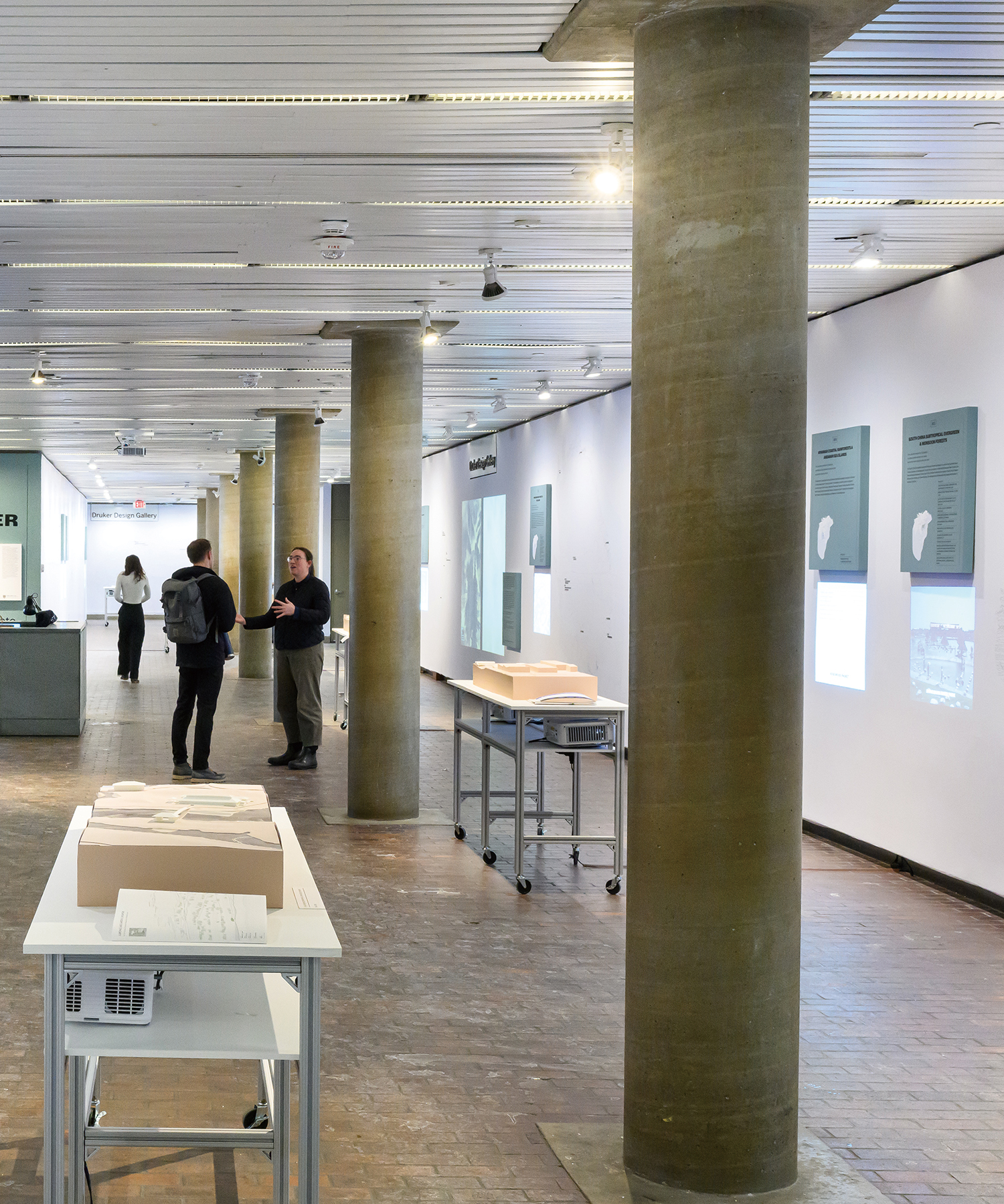
Exhibition views of ‘Designers of Mountain and Water: Alternative Landscapes for a Changing Climate’
Lee: Although the exhibition deals with landscape projects across South Asia, Southeast Asia, and Northeast Asia, it does not explicitly use the term ‘Asia’ in its title. How should the category of Asia be understood in this exhibition?
Kim: From the very beginning of this project, I was most wary of falling into the binary of the East and the West. Prior to the modern encounter with Western powers, no Asian language possessed a term equivalent to ‘Asia’. From its inception, ‘Asia’ has functioned as an antithetical, ‘othered’ category.
Above all, the entities grouped under ‘Asia’ are so heterogeneous that it is nearly impossible to identify meaningful common denominators. For this reason, I chose not to use the word Asia in the title of the exhibition. I wanted these projects to be read not as ‘exotically beautiful but spiritually opaque works’, but as systems that can be analysed, understood, and replicated. At the same time, the geographic boundaries of ‘Asia’ are themselves ambiguous. We selected rice as an indicator species for the exhibition’s scope because rice interacts not only with the climatic and geological conditions of a region, but also with class structures, cultural characteristics, and everyday ways of life.
Lee: The exhibition establishes biophysical, ecological, and climatic boundaries through the concept of the ‘bioregion’, within which it presents 58 works by 23 design offices. Why did you choose to reorganise and represent Asia through these environmental units, rather than through national borders or cultural identities?
Kim: Have we not already spent a great deal of time understanding and analysing landscapes through national identities, such as ‘Korean gardens’, ‘Japanese gardens’, and ‘Chinese gardens’? That approach remains necessary, of course. However, national labels risk trapping us all in the snares of identity and history.
Moreover, analyses confined within national borders tend to prevent landscape projects in Asia from being reorganised into a transferable body of knowledge whose processes and methodologies could be applied in non-Asian context. With this in mind, I began to look for another category of classification and came to believe that bioregions offer the most appropriate platform, in the era of climate change, for deriving a landscape architectural methodology.
The concept and definition of bioregions referenced in this exhibition are not my invention. Bioregions are defined by using 844 ecoregions as building blocks that have already been identified through the consensus of ecologists worldwide. For this project, we adopted the version of bioregions published by the organisation, One Earth.
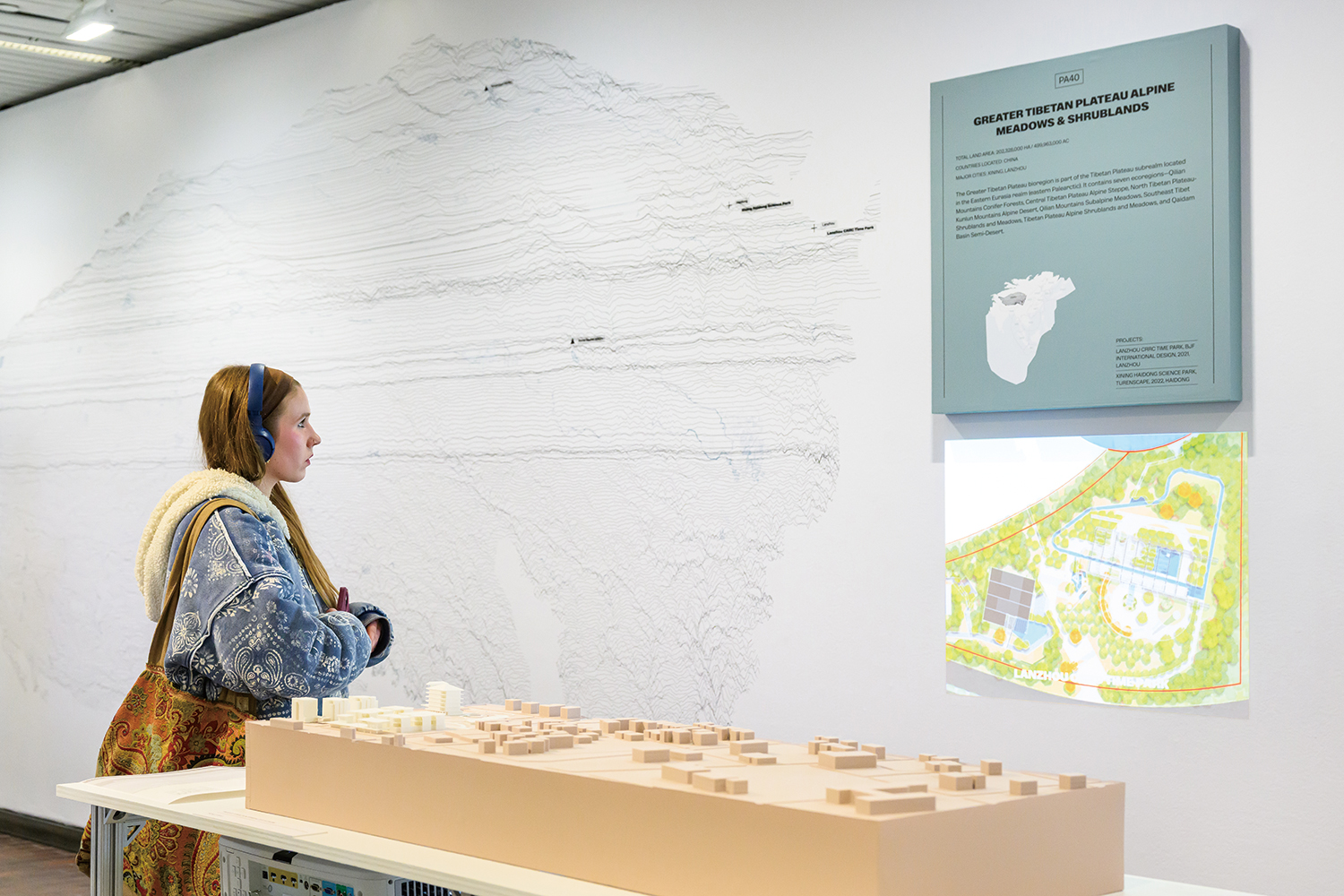
Installation view of ‘bioregion PA40’
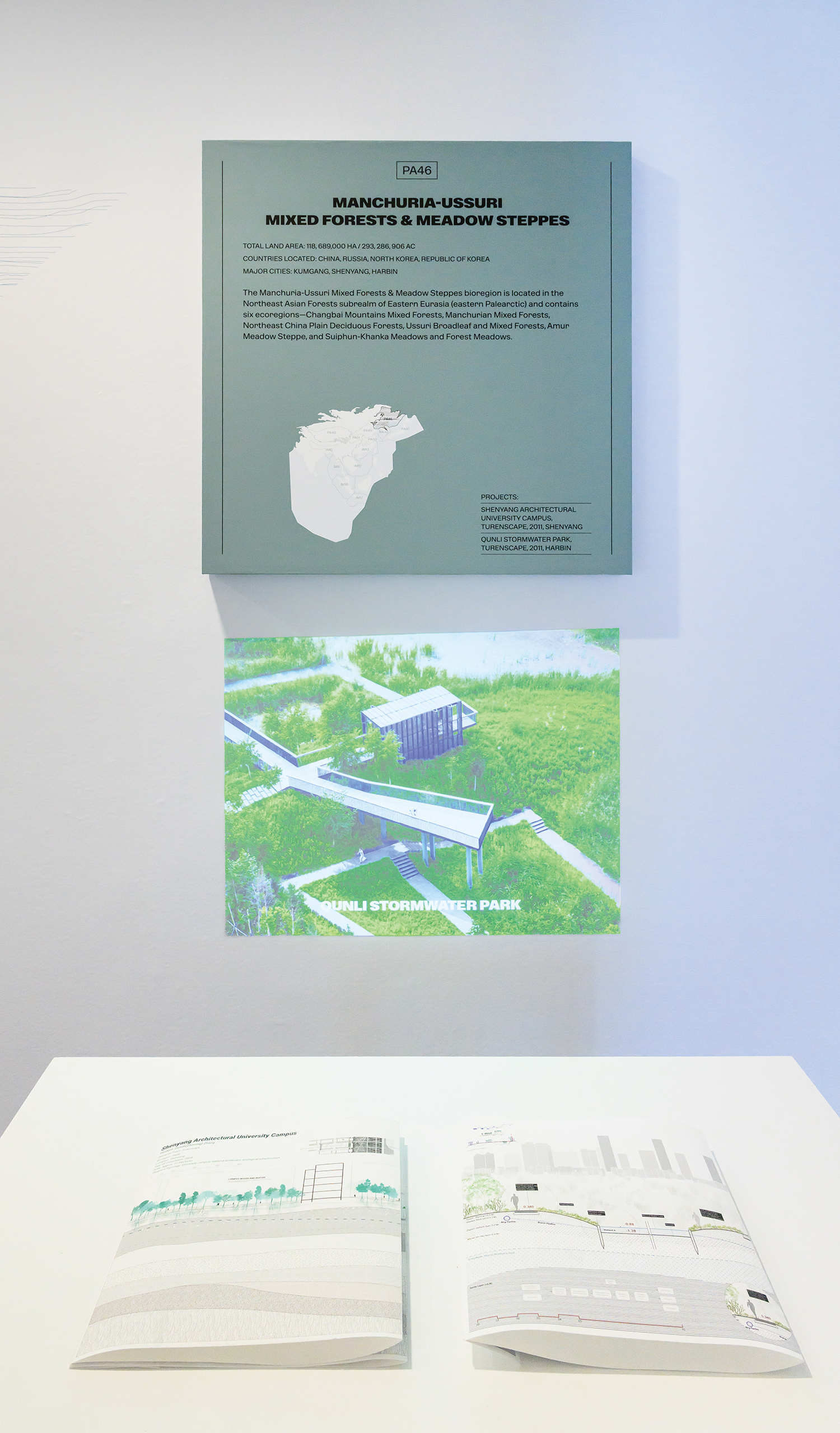
Drawings and photographs of the 58 landscape works are projected onto the gallery walls, supported by deep sectional research produced by students at the Harvard GSD.
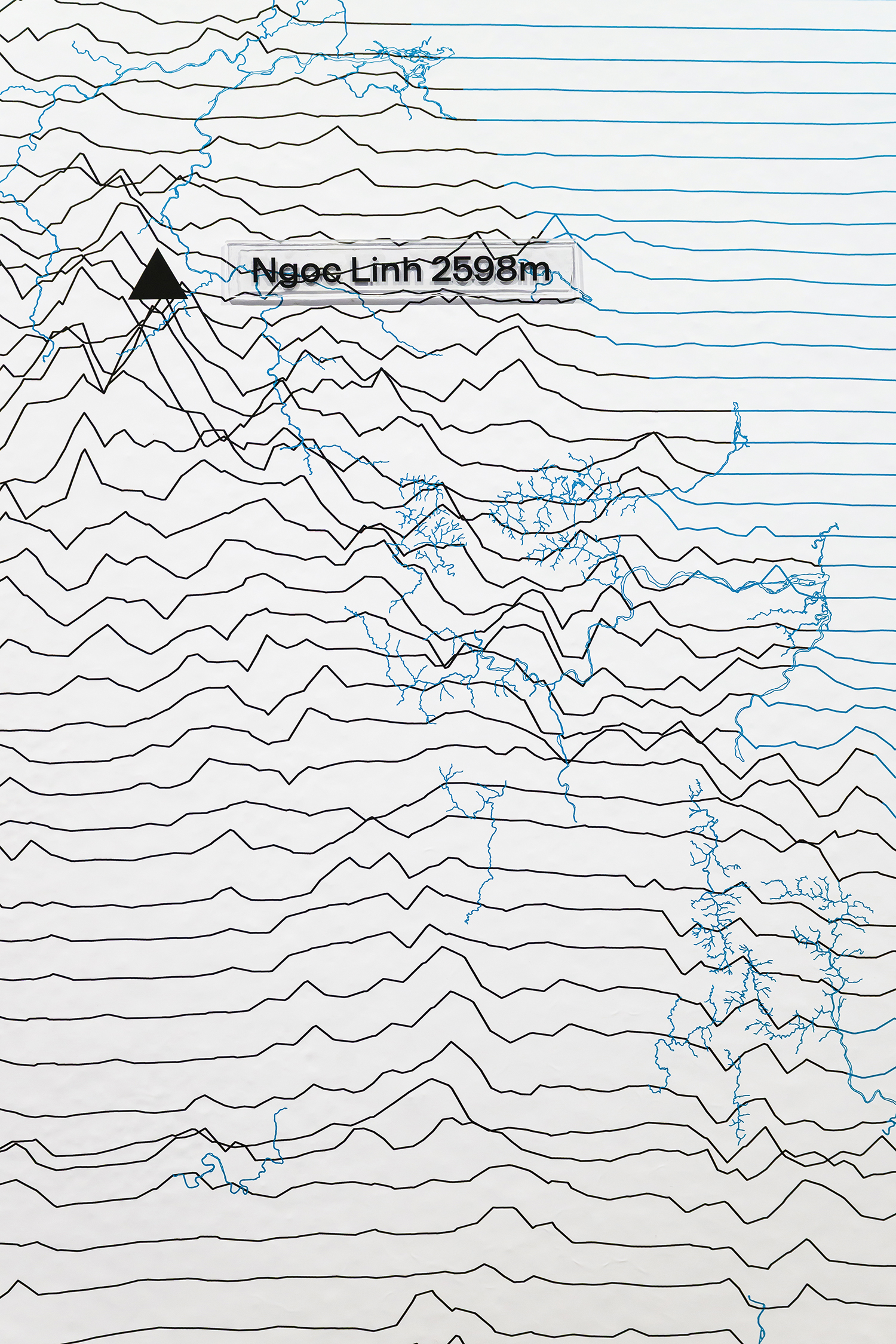
Detailed view of the two-tone topographic section drawing
Lee: Graphic representations of the mountains and waters of each bioregion, rendered in black and blue lines, form the visual framework of the exhibition. What was the intention behind this mode of representation?
Kim: These lines are highly precise sections, not an abstraction of any sort. The terrain of the 13 bioregions is cut at 5km intervals and drawn at a scale of 1:5,000,000, with land shown in black and water – seas and rivers – in blue. Only one adjustment was made: in order to represent vertical topographic fluctuation legible at this territorial scale, the vertical scale had to be exaggerated tenfold.
Both in my teaching and in the work of PARKKIM, I have always valued a design process based on exact line drawings with minimal use of colour. As final representations as well, I find few modes as beautiful as black and white drawings rendered solely through variations in line weight. And surely topography is the landscape architects’ eternal medium and challenge. For this reason, I felt that the true protagonist of the exhibition had to be the topography of sansu.
Lee: The exhibition seems to have focused primarily on works carried out by landscape architects within the bioregions to which they themselves belong. Was this a principle established from the outset, or did it emerge naturally from the fact that landscape design ultimately depends to a great extent on the designer’s understanding of the environment of that region?
Kim: In landscape architecture, especially in the early 2000s, it was hard to find a large American firm that did not have an office in Shanghai or Beijing. Today, however, the field in China is led primarily by Chinese firms, most notably Yu Kongjian’s Turenscape.
While teaching the seminar on Asian landscape architecture, I encountered far more outstanding projects and designers than I had anticipated. What they shared in common was that they were all working in bioregions to which they either belonged or were deeply familiar.
As Nicholas Harkness, Director of the Harvard Korea Institute and Co-Organiser of this conference, said in his opening remarks: ‘Landscape architecture has to meet the earth where it is’. In other words, to create landscapes that are both sustainable and both aesthetically and spatially pleasing, our work must be a serious response to the specific ground on which it is built.
This is why, in selecting projects for the exhibition, we chose only works designed by ‘designers of mountain and water’ rooted in those regions. For example, seven projects by Turenscape are showcased in the exhibition, but after much deliberation, we decided not to show their excellent Benjakitti Park project in Bangkok, precisely because it lies outside their home bioregion.
Of course, this does not mean that Asian landscape firms should work only within Asia. On the contrary, the real promise lies in distilling the core of the sansu‑based methods they have developed from close engagement with their own ground, and then applying those methods, as transferable systems, to projects in the U.S. or Europe. When that happens – when such methods are used to create robust landscapes in other bioregions – this exhibition and conference will, I hope, have served as a meaningful starting point.
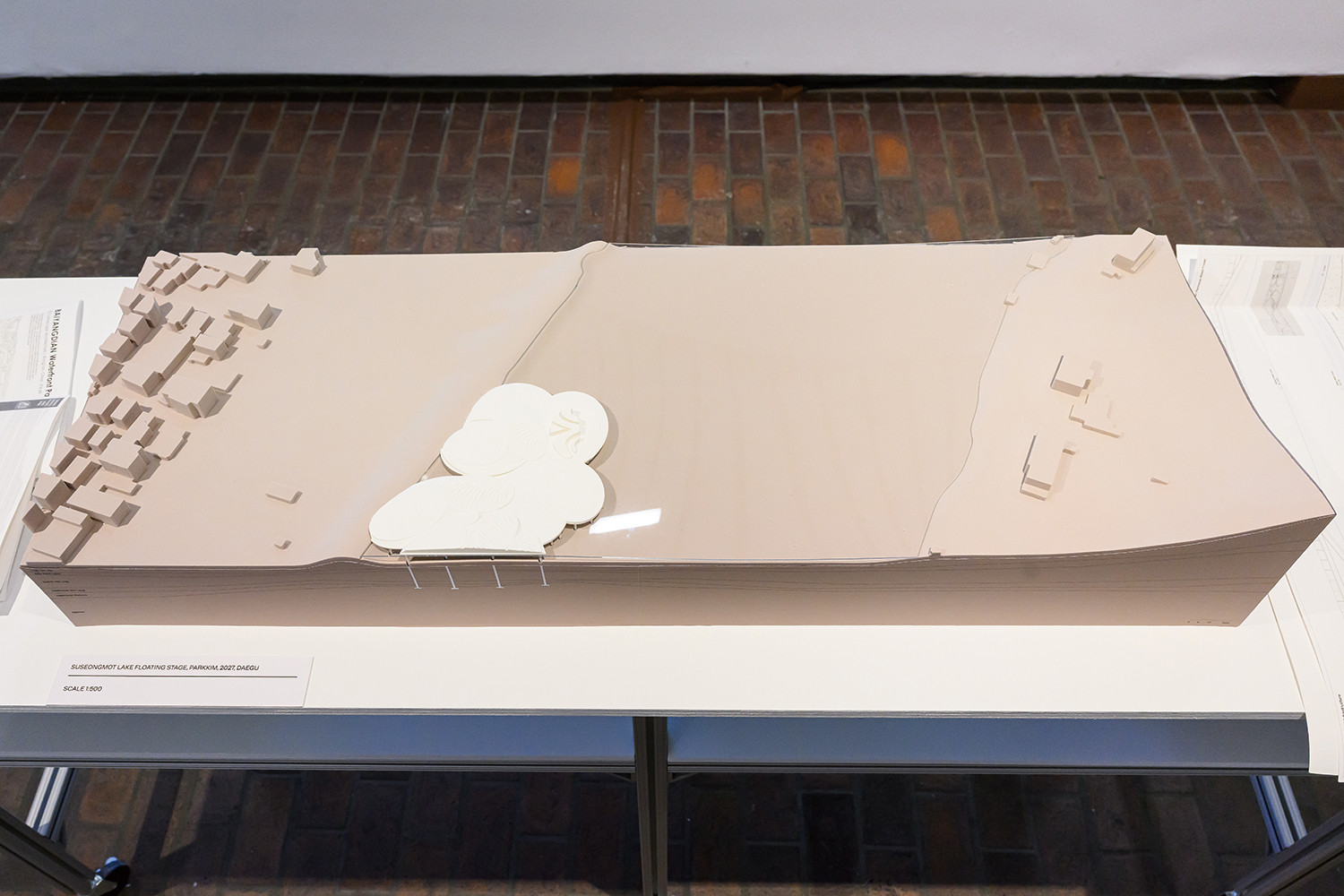
PARKKIM’s Floating Hills ‒ Suseongmot Lake Floating Stage (ongoing), located in bioregion PA48 (Korean Peninsula Mixed Forest). Six representative projects were presented as 1:500 scale three-dimensional models, illustrating their urban contexts and geological conditions.
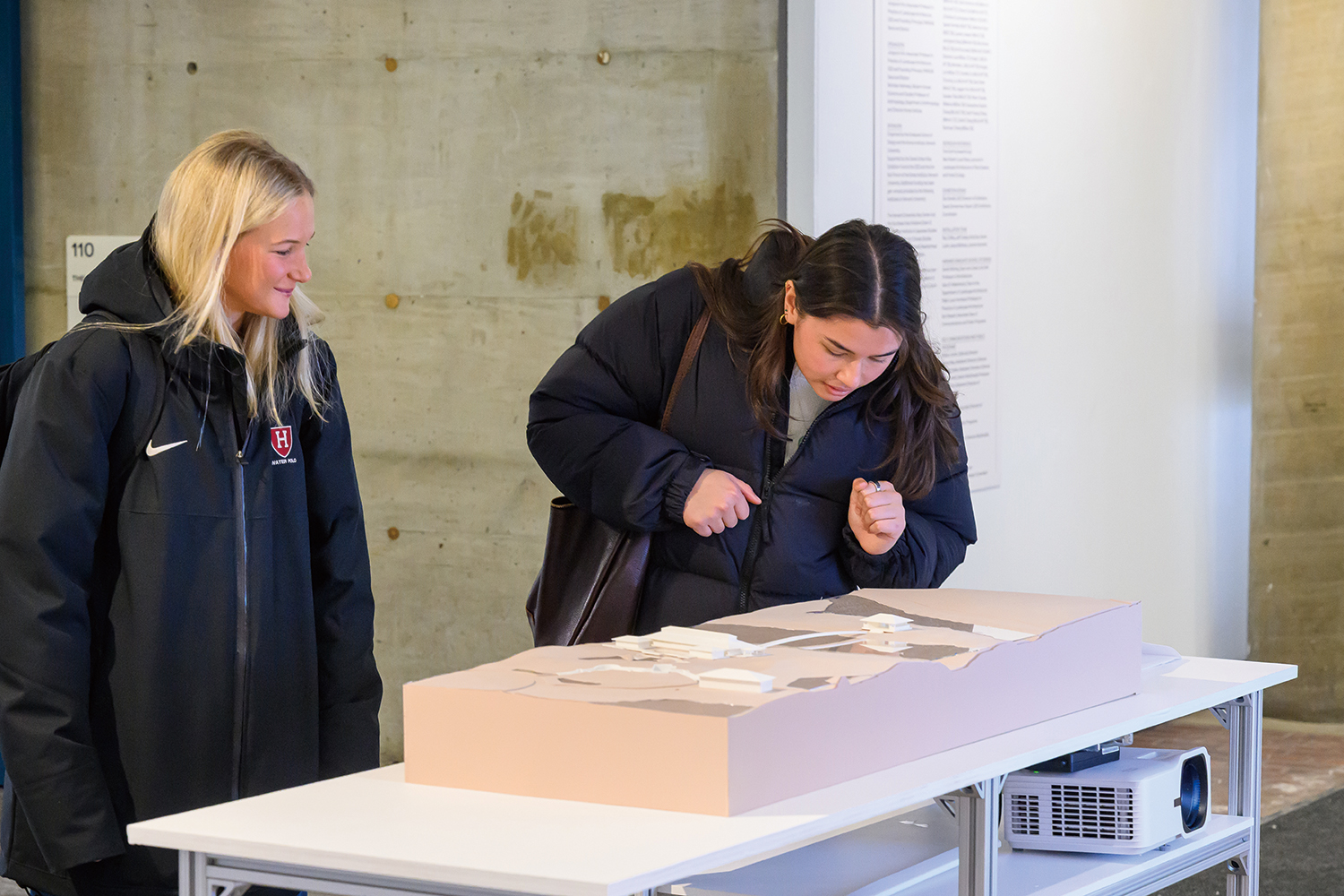
Installation view of a model
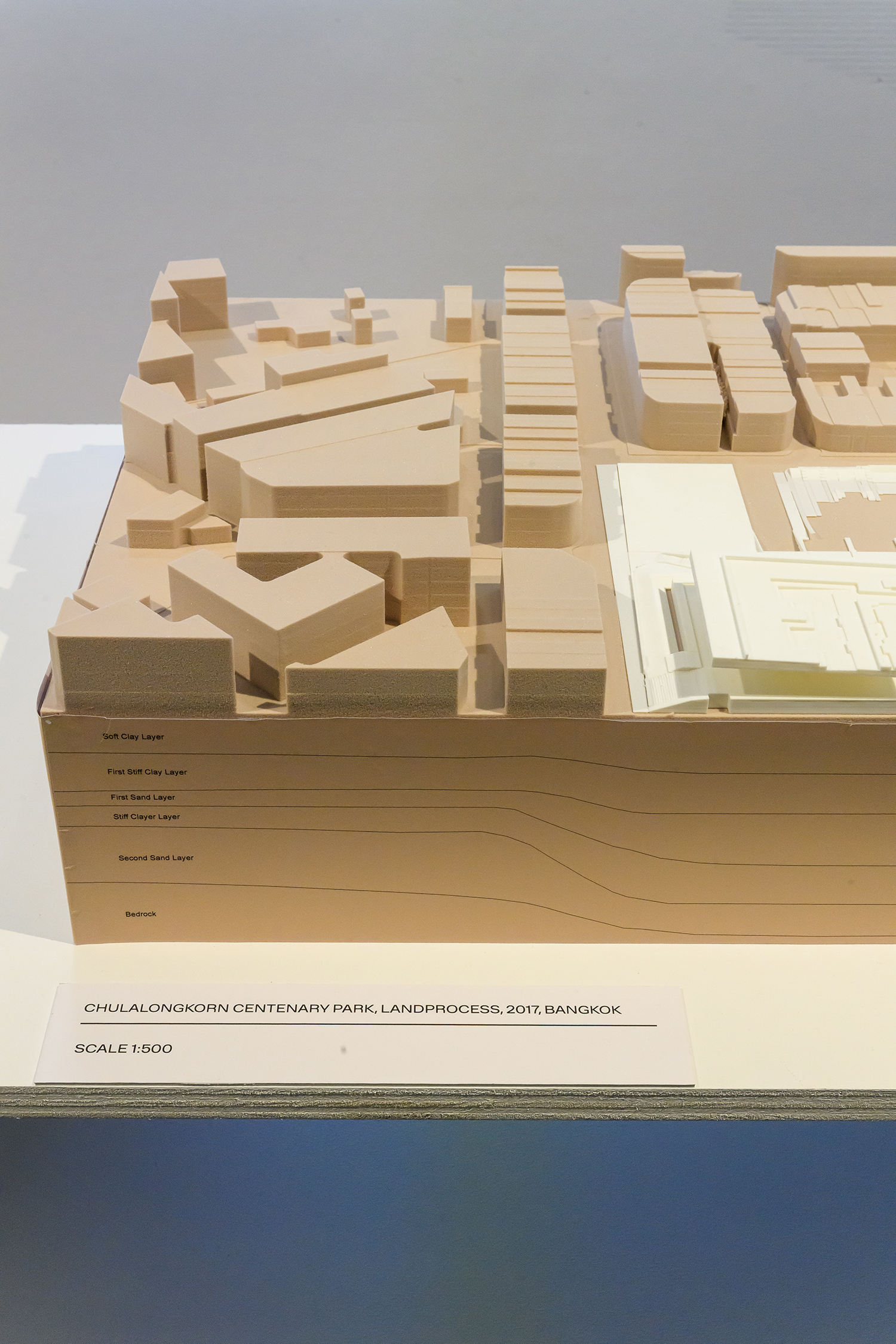
Landprocess’s Chulalongkorn Centenary Park (2017), located in bioregion IM12 (Indochina Mixed Forests & Peatlands). Project model including a deep section showing the typical geological conditions of IM12.
Lee: If bioregions can serve not only as a framework for classification and analysis but also as a practical reference point for landscape production, why are they especially important at a moment when climate change is transforming the conditions of landscape production?
Kim: Very bluntly and realistically speaking, climate change is shifting plant hardiness zones, torrential rainfall and extreme weather are surging, and drainage has emerged as a major issue in cities. These are problems that landscape architects must address in their everyday practice. However, if we limit ourselves to immediate responses, such as selecting different species or changing paving materials, we severely constrain the scope of what the profession of landscape architecture should and can do as a cultural agency in the era of climate change. This is similar to the limitations that inevitably arise when we look at projects only through the label of national origin mentioned above.
The boundaries of a bioregion are drawn by nature: they are a classification that takes into account, in a complex way, watershed, topography, vegetation, geology, climate, and even settlement patterns shaped by these physical environments. I believed that, in the era of climate change, it is relevant and timely to analyse how projects in such regions have responded to their environments.
Lee: What kinds of possibilities do the individual projects reveal within the bioregions to which they belong?
Kim: Some address climatic risk directly and others more quietly, but all share a particular sensibility in working with mountain and water.
Landprocess’s Chulalongkorn Centenary Park in the bioregion IM12 is a pioneering model which speaks to what designers of mountain and water can do: in a region where flooding is frequent because peat geology makes drainage difficult, the project argues that the building itself should function as a vast reservoir. Turenscape’s Tianjin Qiaoyuan Wetland Park in the bioregion PA49 acts as an alternative vision of lost nature, by detaining stormwater, cleansing wetlands, improving soil, restoring native vegetation, and serving as an open classroom.
P Landscape’s Khao Yai Art Forest in the bioregion IM12 transforms a former exploited farmland into an art forest, generating local employment and advancing more conservation‑minded agriculture.
Projects such as An Villa in the bioregion PA50 by TROP and CJ Blossom Park in the bioregion PA48 by PARKKIM invite you into a discourse on the aesthetics of sustainability through highly legible formal languages that inform their performances.
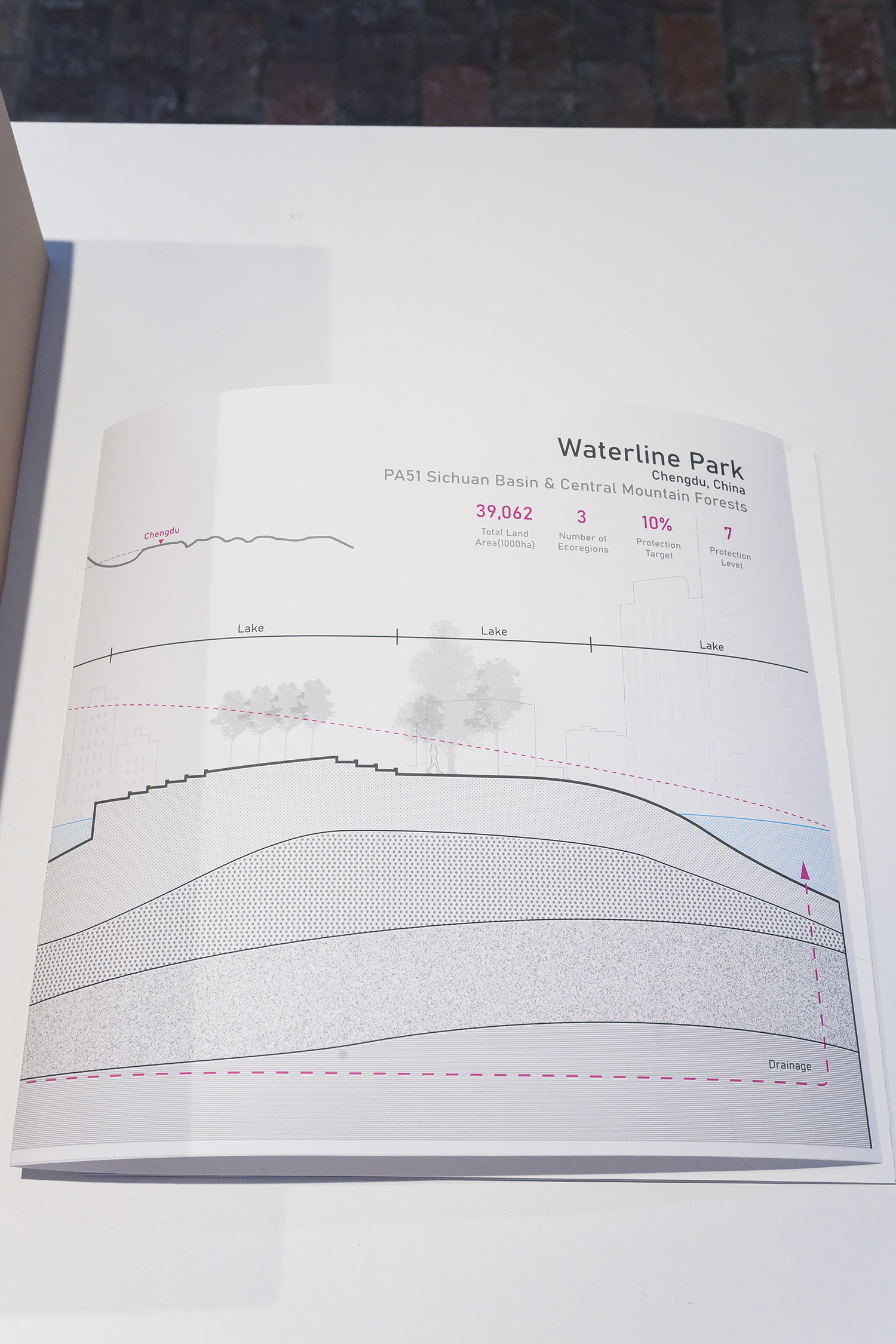
Sectional research on lab D+H’s Waterline Park (2022), located in the bioregion PA51 (Sichuan Basin & Central Mountain Forests)
Lee: Many of the works presented are not designs that mimic nature, but practical examples that reconfigure urban systems. In that case, is sansu an image, or is it performance?
Kim: This question was explored in depth in the conference’s first session, ‘Cultures of Nature’, through presentations by four Harvard’s Senior Professors and the discussion that followed. Interpreting those conversations in my own way: if sansu is an image – that is, a material condition perceived as ‘a physicality out there’, at a distance from me – then landscape is a system endowed with performance. In other words, a landscape architect is a specialist who designs with sansu as material in order to produce landscapes that operate as performative systems: a designer of mountain and water.
Lee: If there is a shared sensibility or attitude that emerges across these works in the way they engage mountains and water, what would it be?
Kim: Of the 58 projects, not a single one can be lifted out and applied directly, as is, to another context. The common value that these projects share is a finely tuned sensibility in terms of how they work with mountains and water.
About two hundred years ago, when landscape architecture was first institutionalised as a modern profession in the West, its purpose was to create simulations of nature within rapidly industrialising cities whose conditions had deteriorated under sudden population growth. But for Korea and other parts of Asia – latecomers both to urbanisation and to the institutionalisation of landscape architecture – this Western model can’t be, in many respects, the best reference for working with sansu.
In fact, I often find Western practice more conservative than practice in many Asian contexts. If, instead of seeking a monolithic ‘Asian methodology’, we examine how individual projects respond to their specific bioregions, we find cases in which designers go so far as to work from the site’s geological structure to actively construct new surface forms. We also encounter projects that would be unimaginable within the conventional disciplinary boundary between ‘architecture’ and ‘landscape architecture’. These are precisely the kinds of projects that constitute ‘alternative landscapes for a changing climate’.
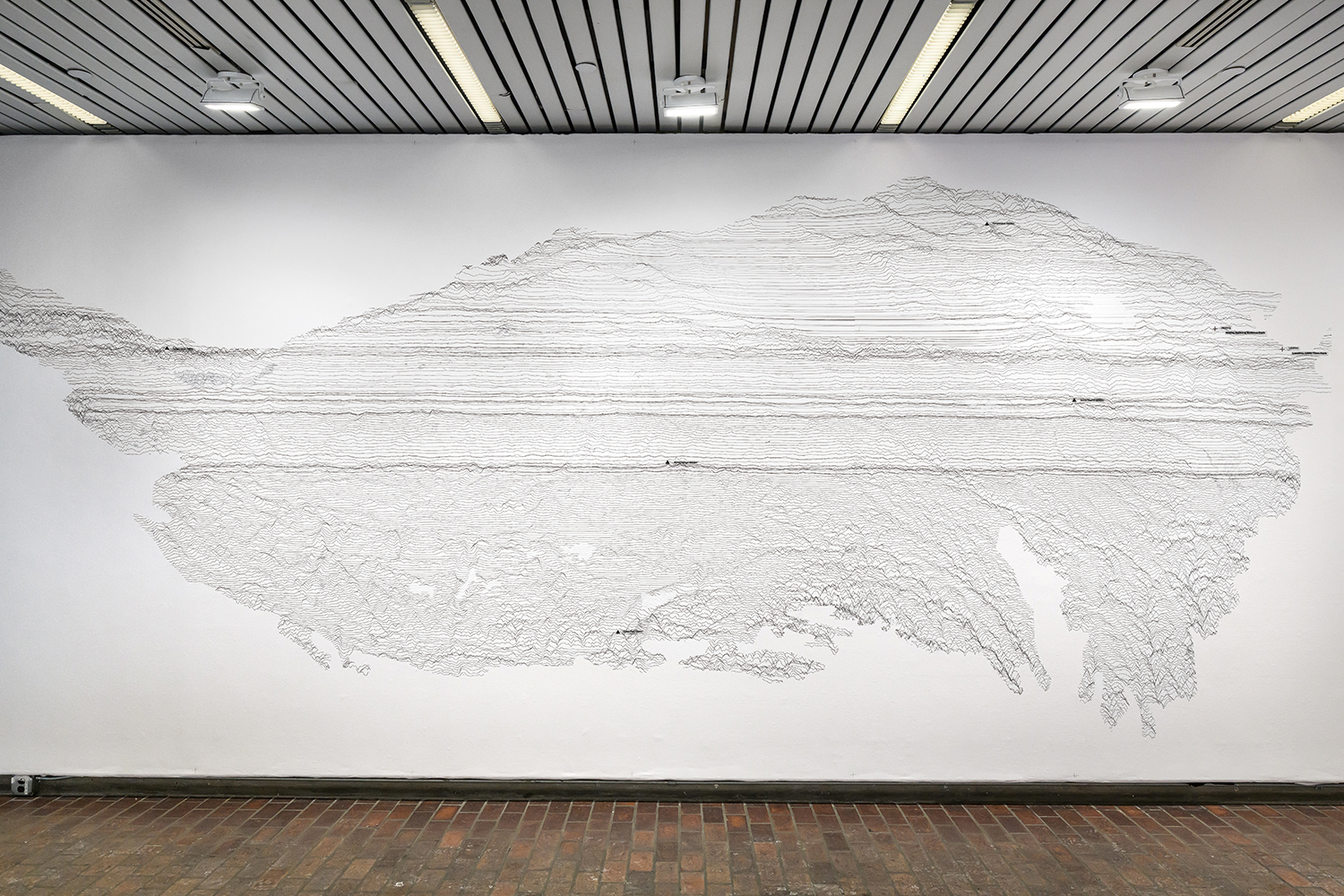
Two-tone topographic section drawing of bioregion PA40 (Greater Tibetan Plateau Alpine Meadows & Shrublands)
_
1 This exhibition, together with the conference of the same title held at its opening, was co-organised by the Harvard GSD and the Harvard Korea Institute. The respective leads for the two institutions were Kim Jungyoon and Nicholas Harkness, and the exhibition was curated by Kim Jungyoon. The exhibition runs from Jan. 20 to May 15, 2026.