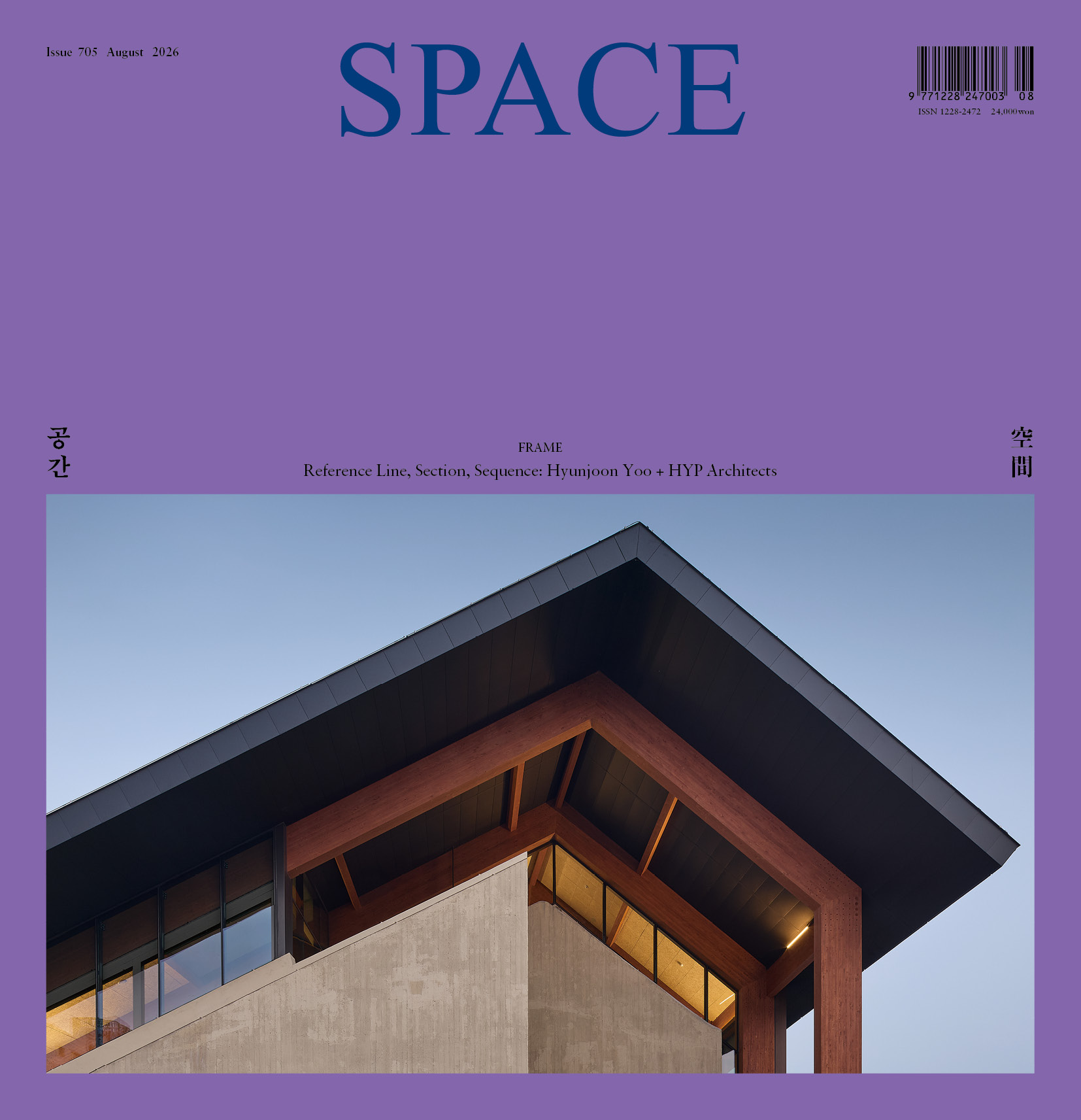

SPACE August 2026 (No. 705)
Art Museum Where Artworks Meet Royal Tombs
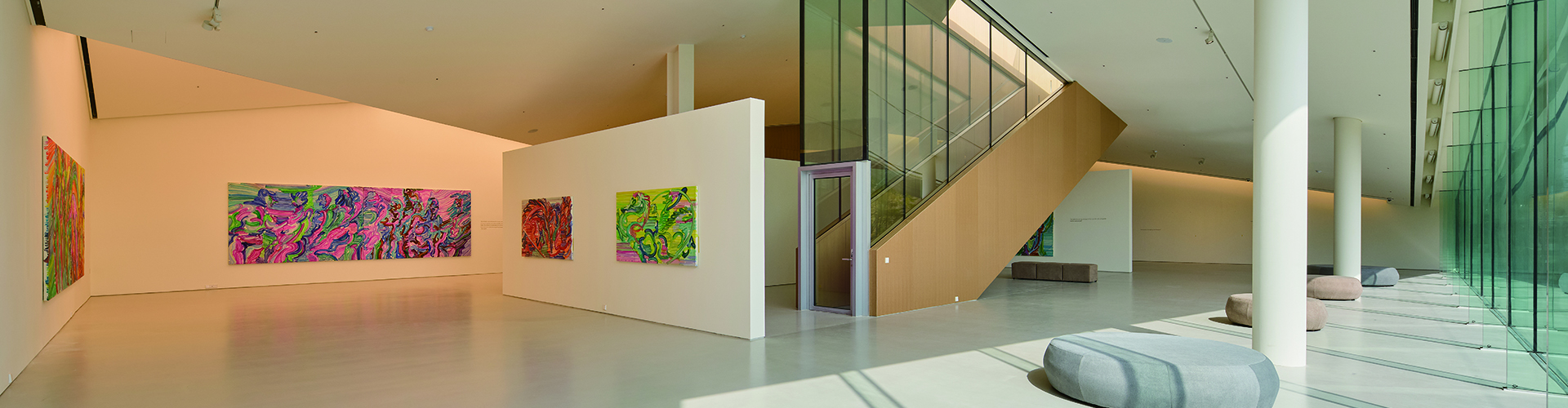
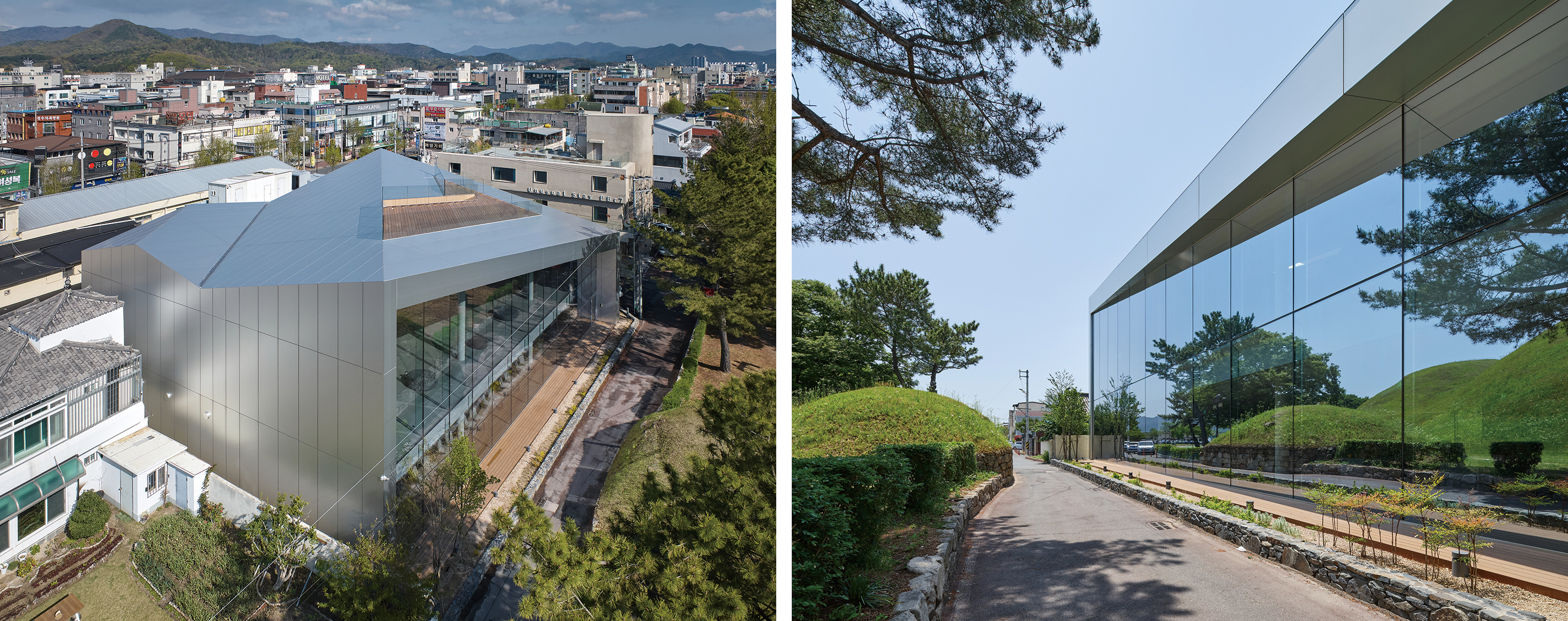
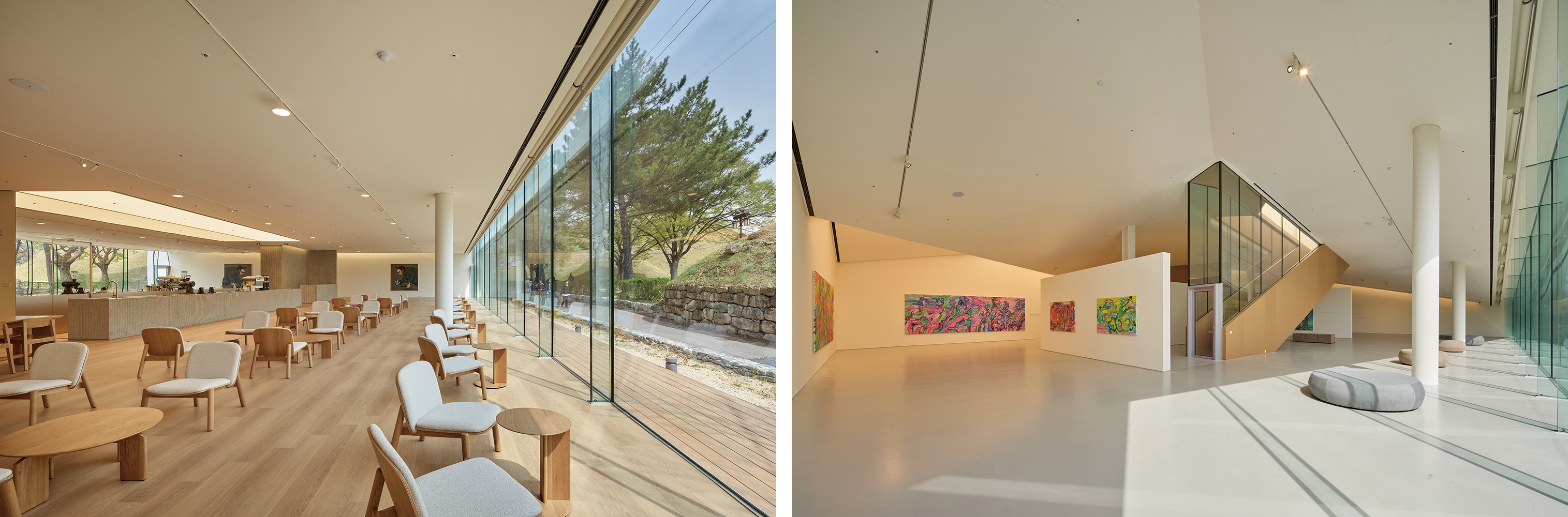
The OAR Contemporary Art Museum (hereinafter OAR) is located on the edge of Daereungwon Ancient Royal Tombs (hereinafter Daereungwon), which is adjacent to the Ancient Tombs in Noseo-ri, Gyeongju—a cluster of Silla royal tombs dating back 1,500 years. While these royal tombs are human-made structures, their gentle, grass-covered earthen mounds have become part of nature over the course of time. Amid this landscape, where the boundary between nature and artificiality has blurred, we sought to propose architecture not merely as a structure overlooking Daereungwon but as a device that guides visitors toward a new way of experiencing it. The site is located within a Historical and Cultural Environment Preservation District which imposed restrictions requiring a maximum height of 12m and a sloped roof. Instead of a conventional gable roof, we twisted the axis of the slope to create a form where two roofs interlock, much like folded paper. This twist lends a new character to the exterior and creates varying ceiling heights inside the exhibition hall, thereby transforming the spatial experience.
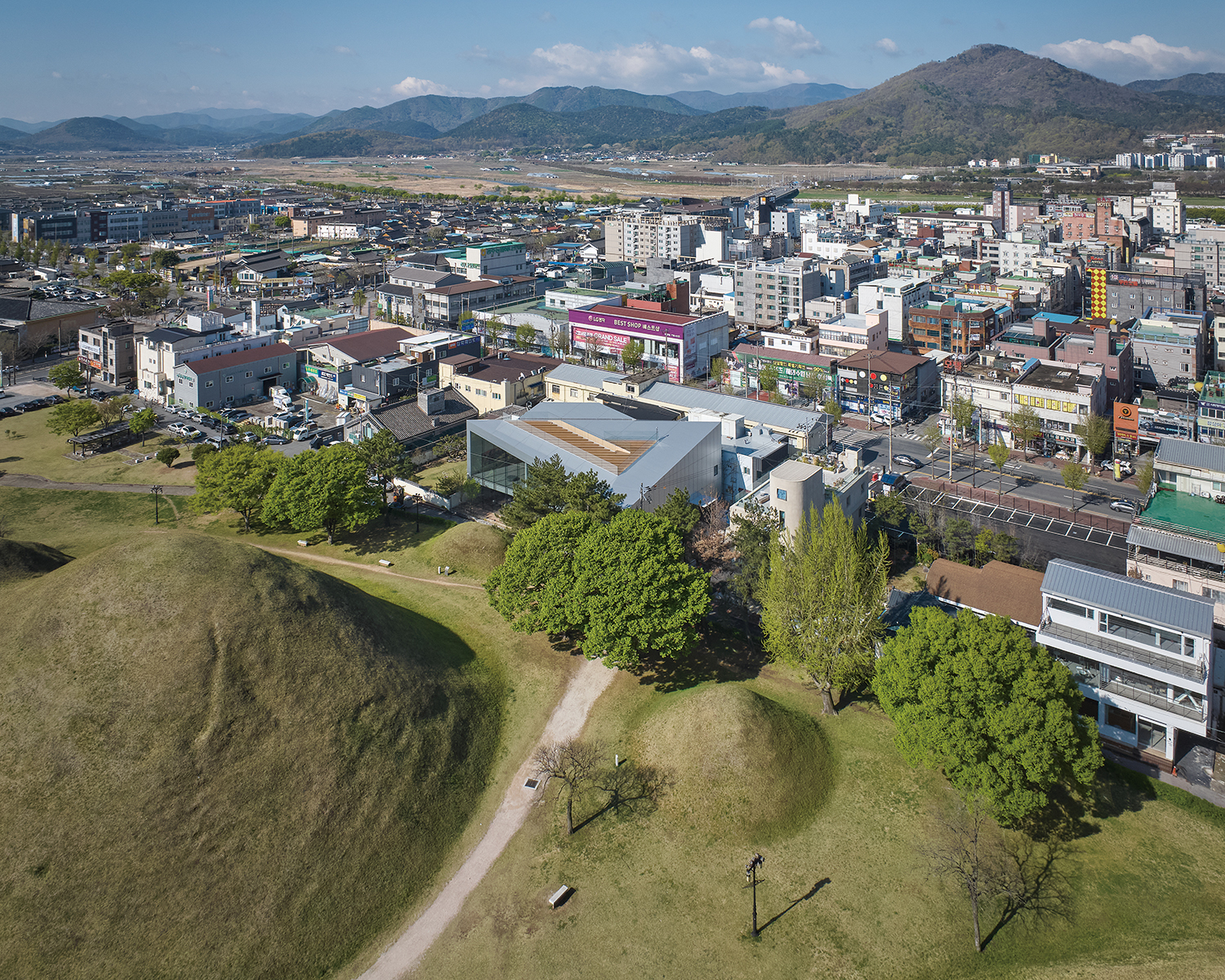
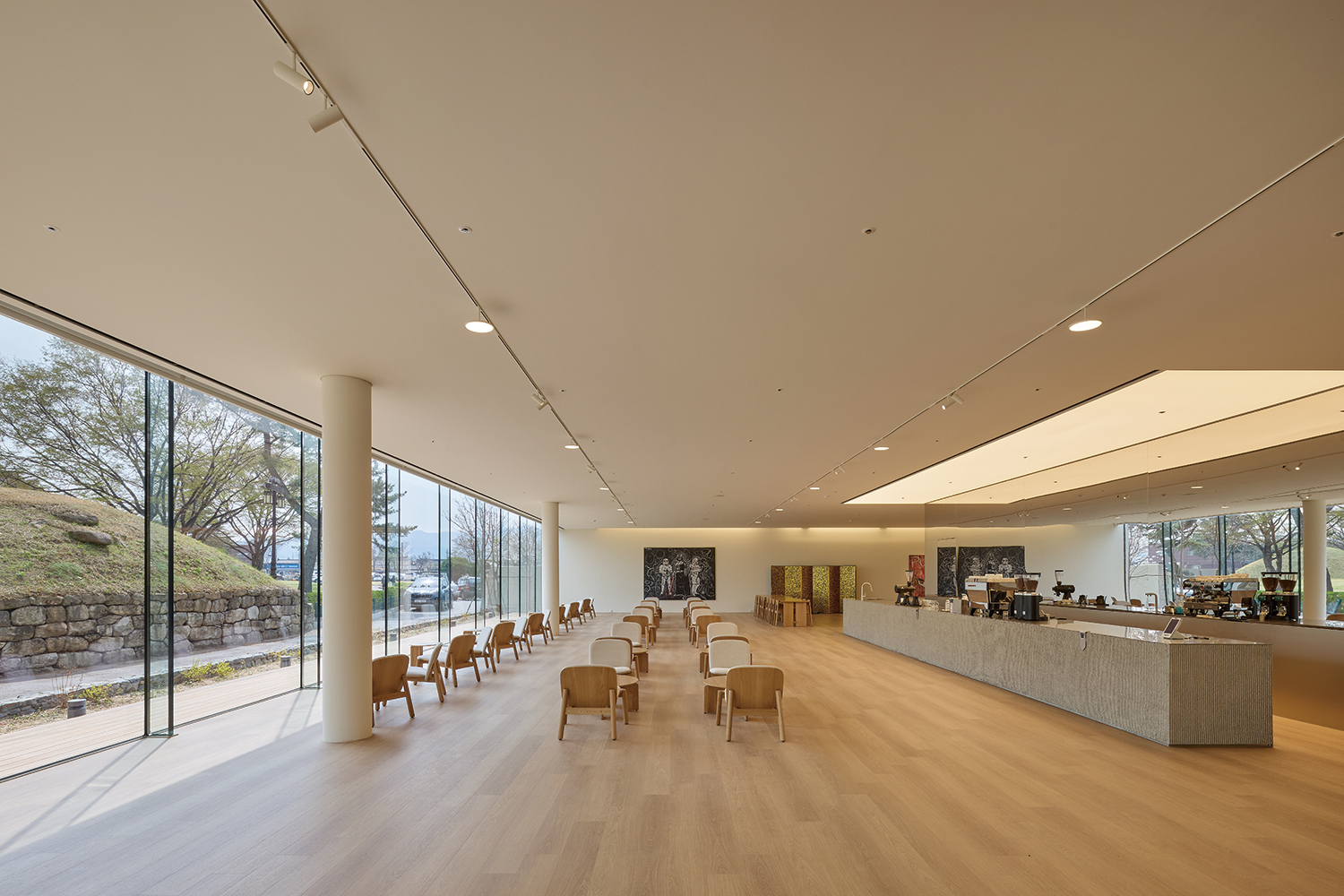
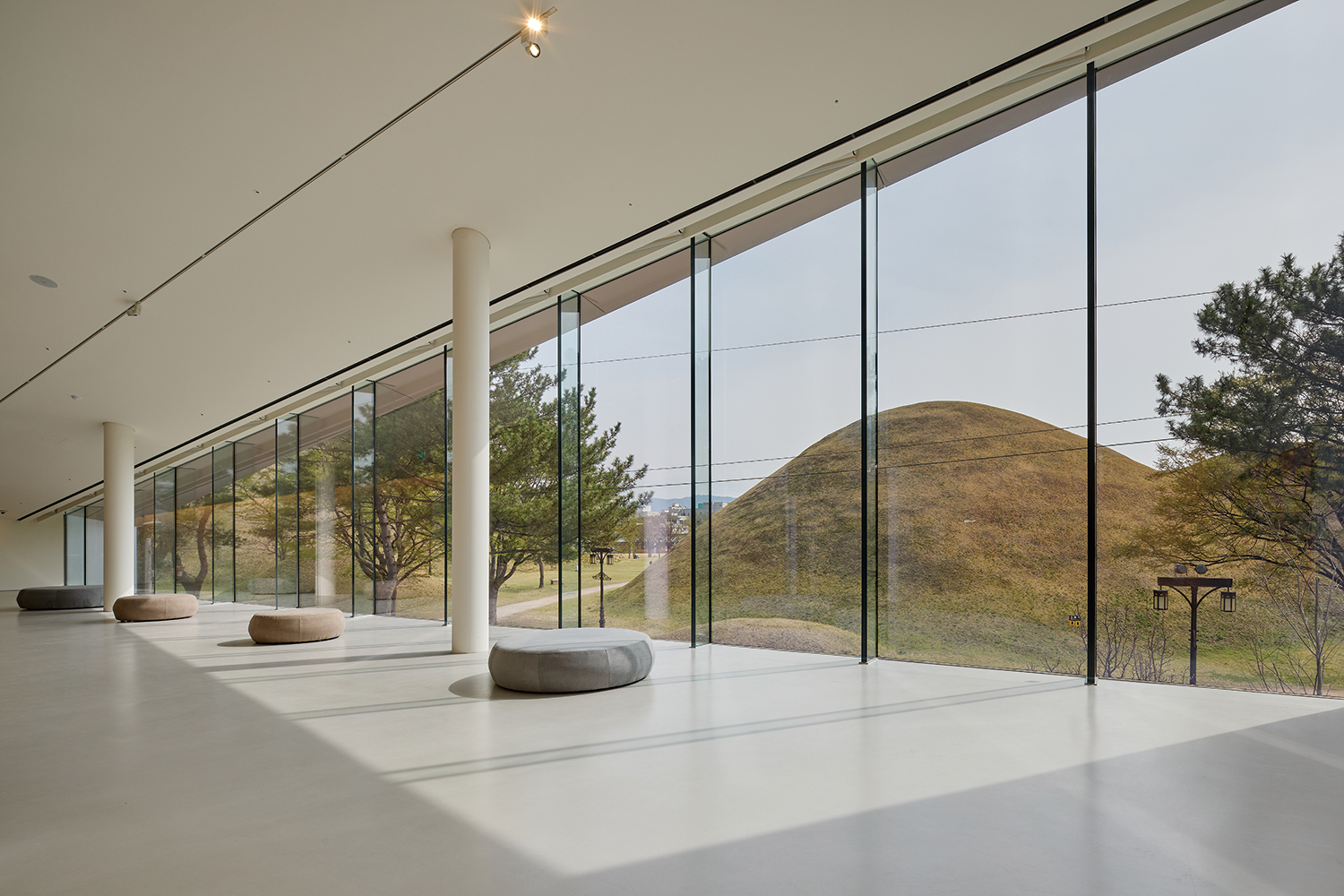
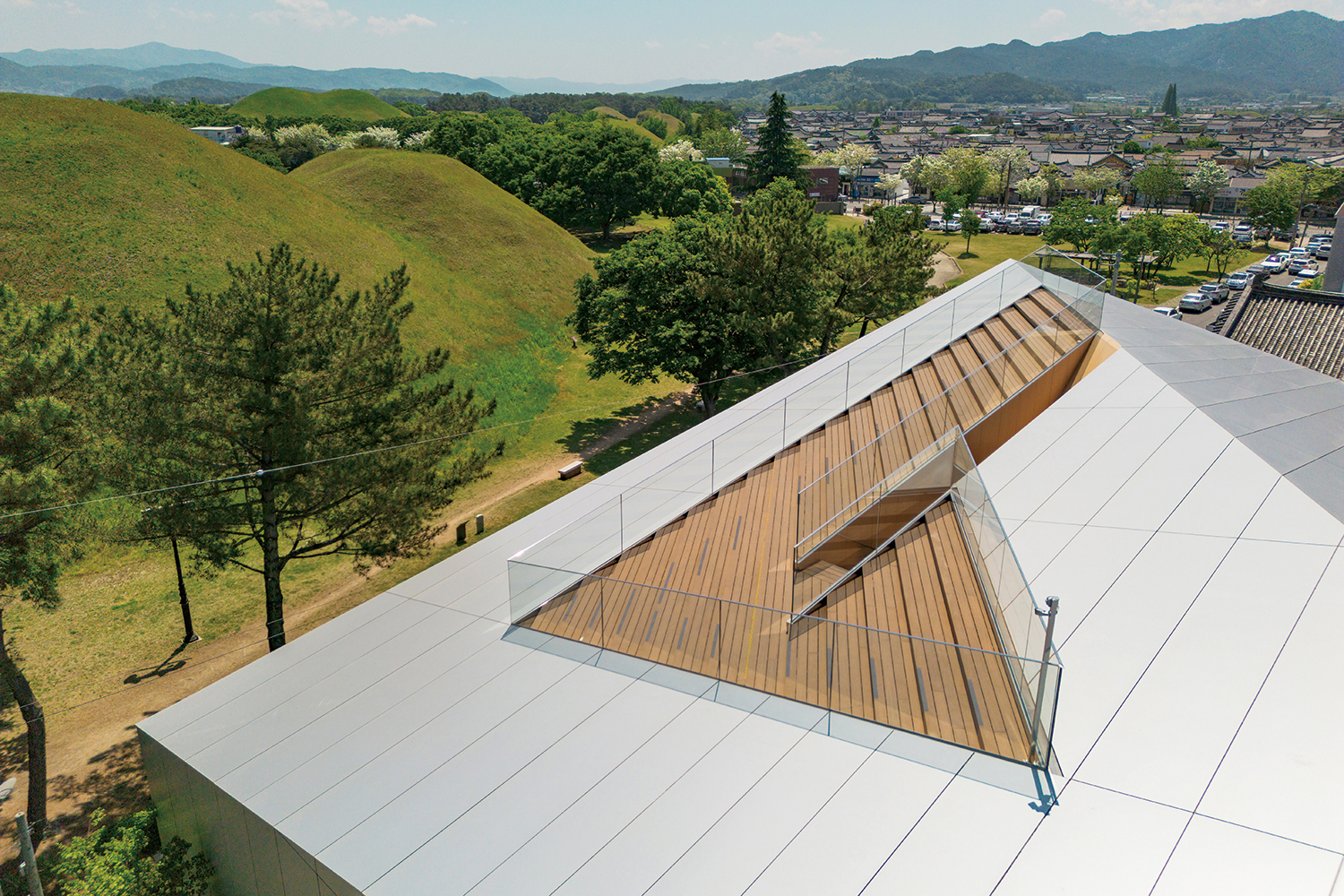
Image courtesy of OAR Contemporary Art Museum / ©Jinsol Kim
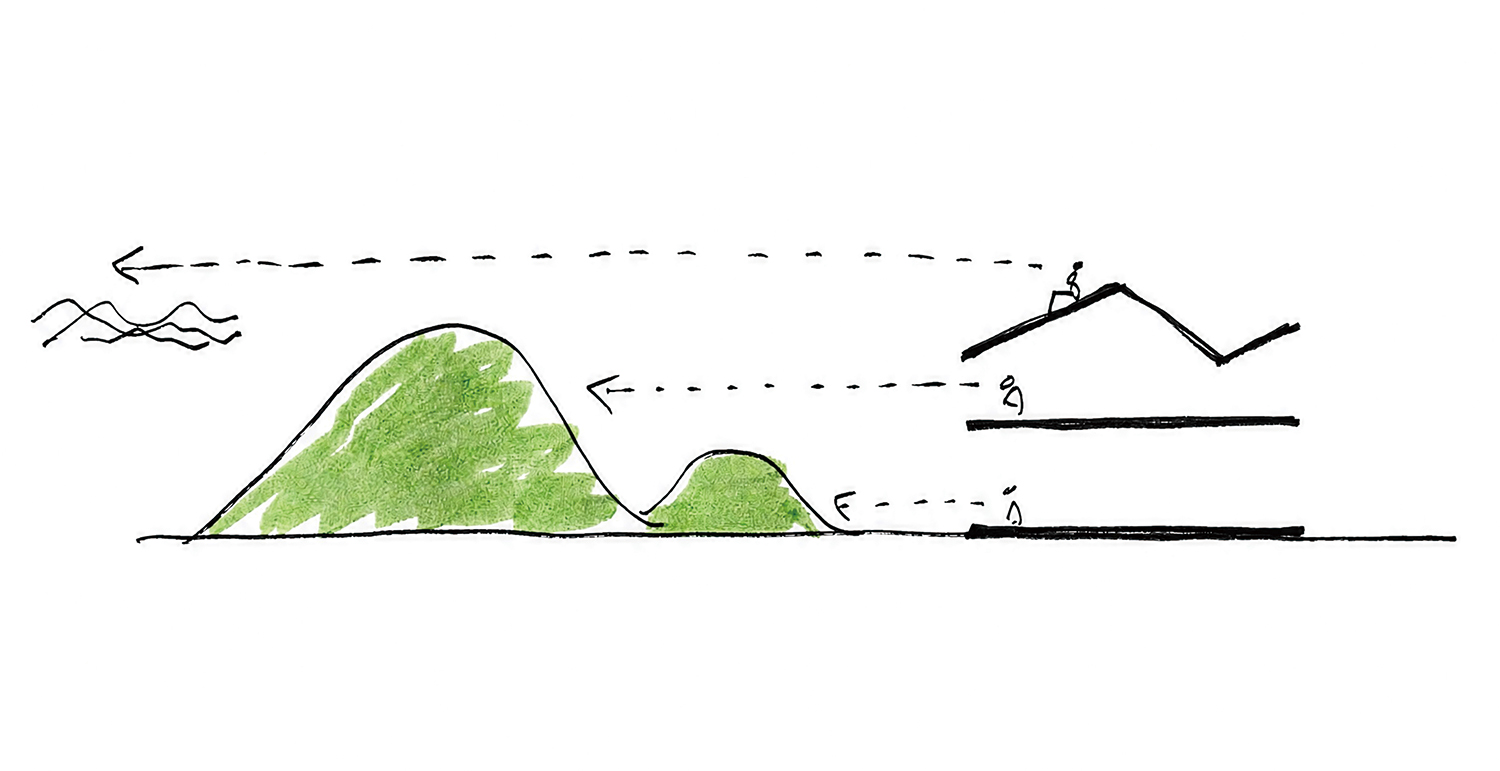
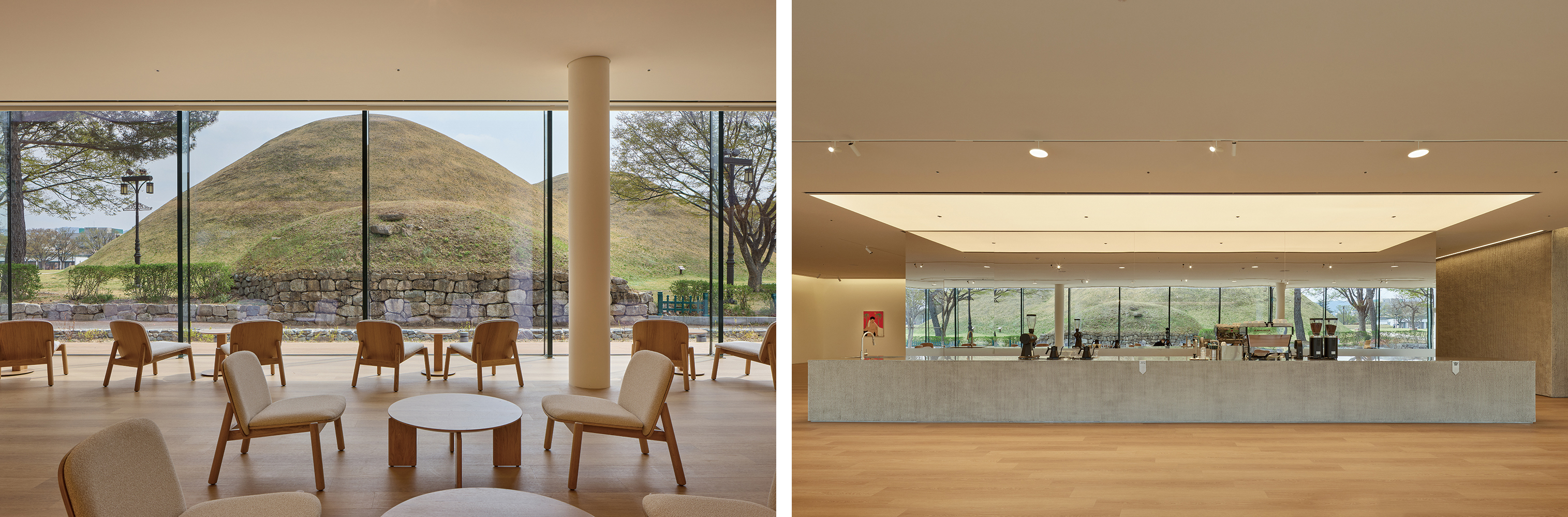
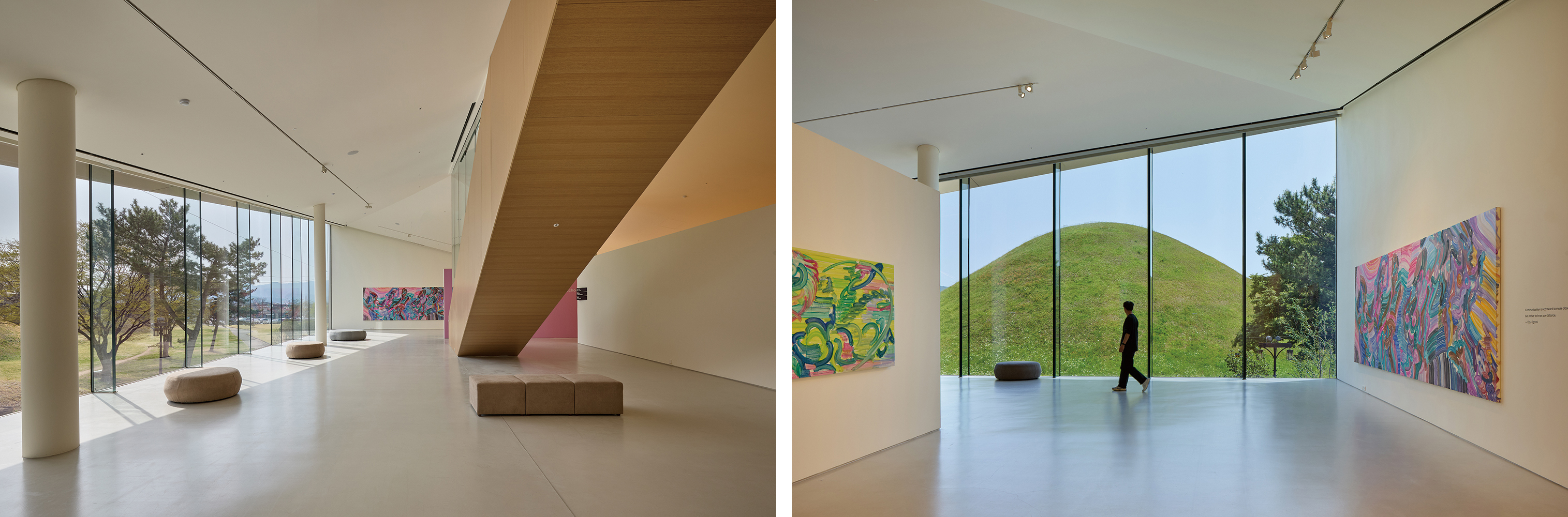
The architecture is designed so that visitors encounter the five ‘royal tombs’ in sequence. The first is the view of the royal tombs reflected in the glass façade as visitors approach the museum. The second is the landscape of the royal tombs framed like a folding screen through the horizontal window frames of the first floor interior. The third is the royal tombs reflected in the stainless-steel mirrors on the café walls. The fourth is the view framed by the slanted floor-to-ceiling windows in the second-floor exhibition hall, and the last is the panoramic view of the entire tomb complex seen from the rooftop. As the architectural frames disappear, visitors are invited to fully experience Daereungwon—not just visually, but through the wind, sounds, scents, and temperature as well. The architecture of OAR neither replicates nor appropriates the landscape. By designing five distinct viewing distances and perspectives, the museum functions as an architectural mediator that brings contemporary art, Daereungwon, and the visitors into harmony.
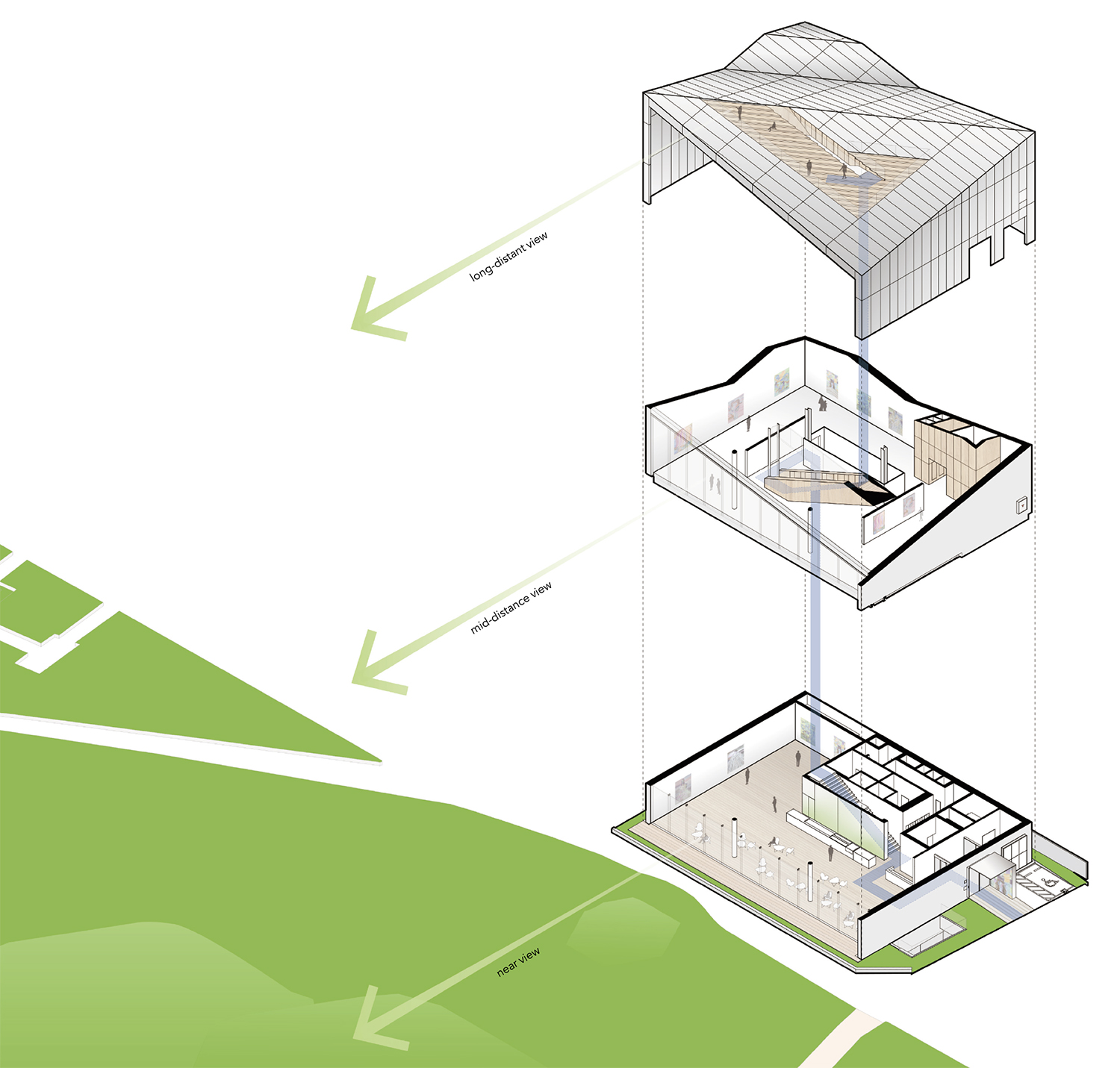
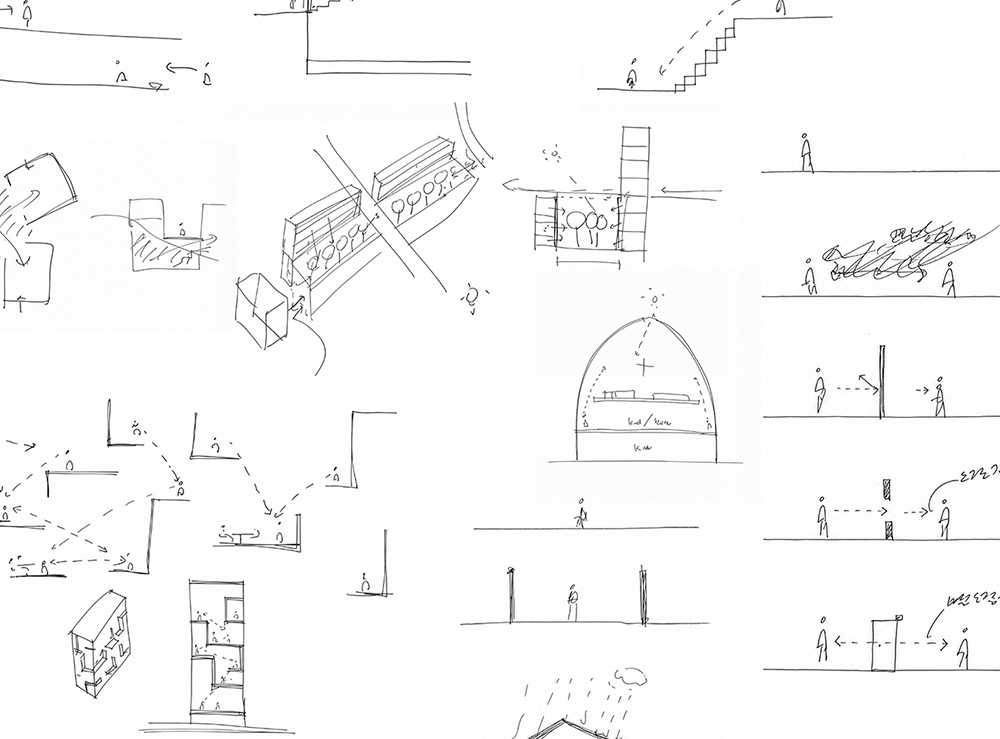
Diagram