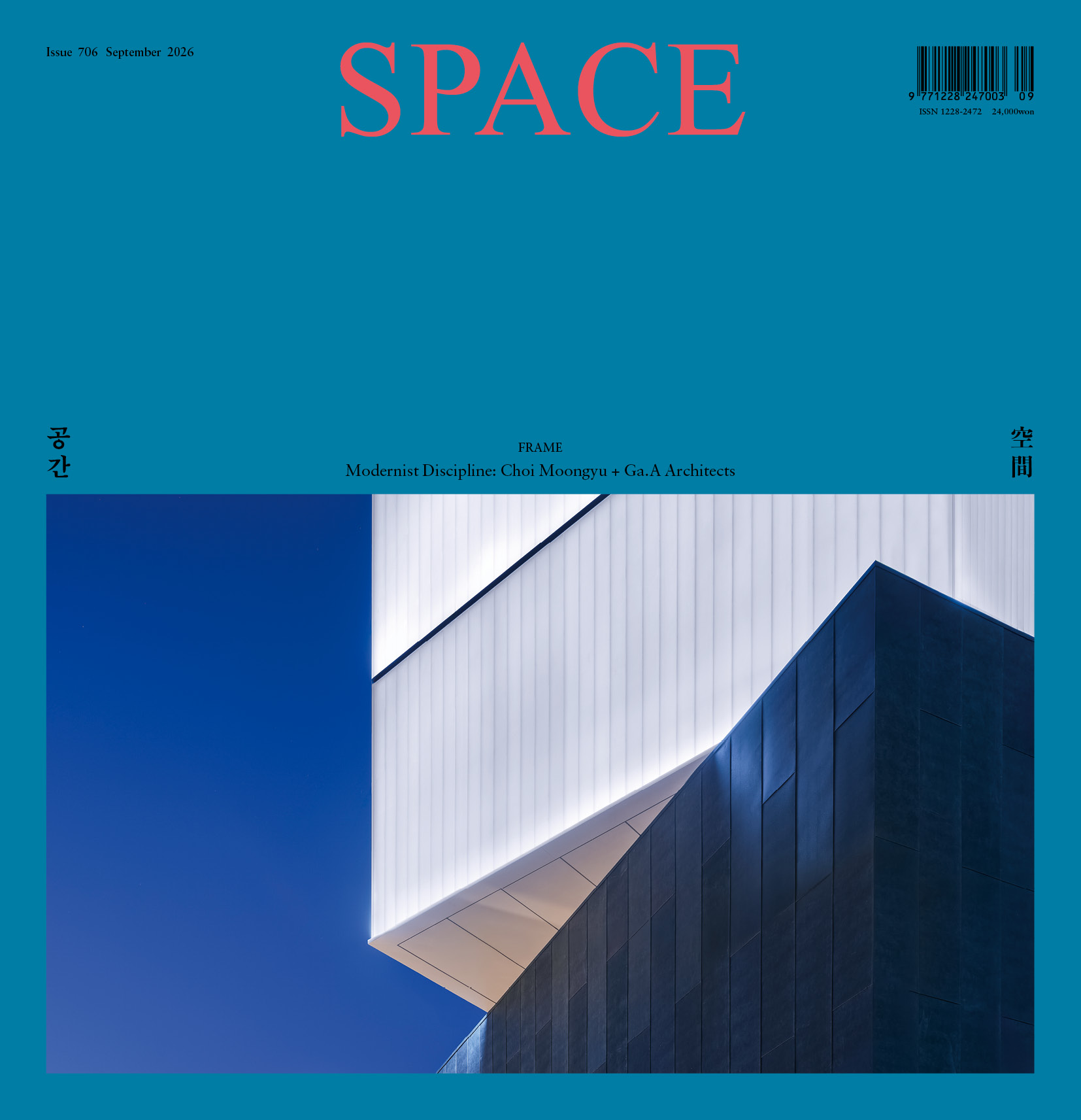

SPACE September 2026 (No. 706)
I AM AN ARCHITECT
‘I am an Architect’ was planned to meet young architects who seek their own architecture in a variety of materials and methods. What do they like, explore, and worry about? And how are architects in various regions expanding their own worlds in different ways? SPACE is going to discover individual characteristics of them rather than group them into a single category.
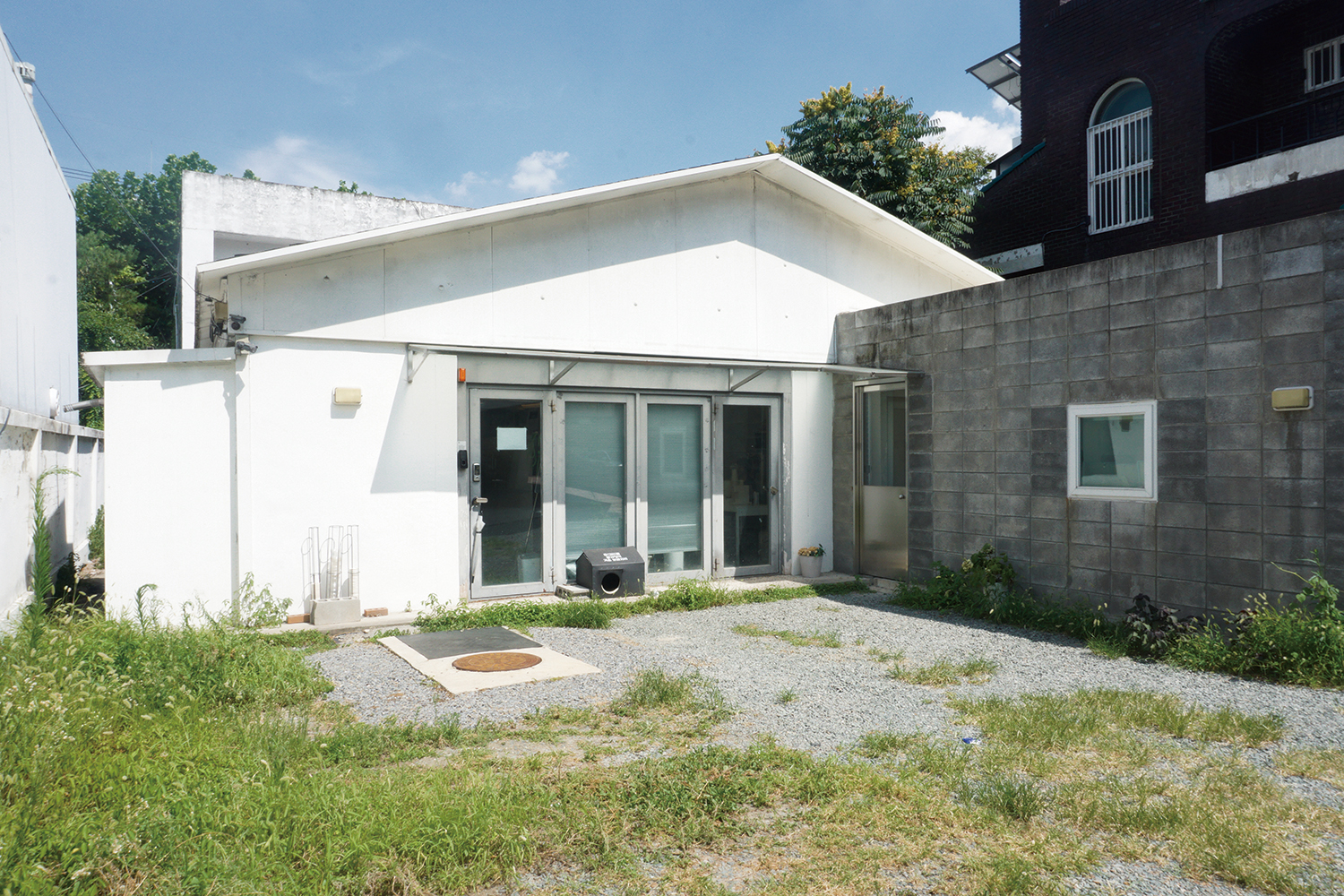
Atelier Bosquet
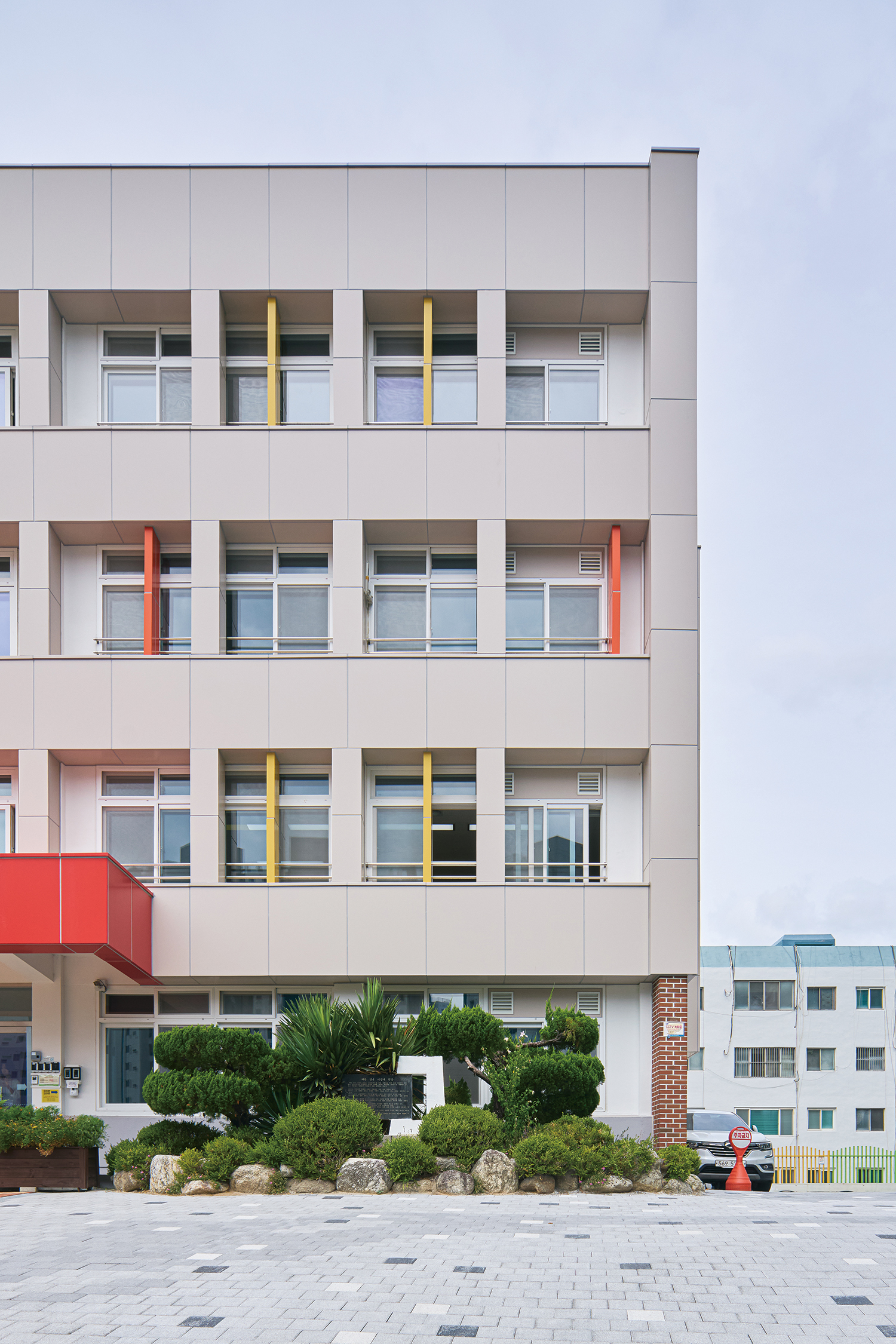
Elevation of the Hyoshin Elementary School Remodeling (2025) ©Yoon Donggyu
interview Jung Jiyoung Principal, Atelier Bosquet × Lee Sowoon
Looking from the Outside In
Lee Sowoon (Lee): After graduating Hongik University, you practiced at KUNWON Architects Planners Engineers before leaving for Paris to study. What did you learn while studying abroad, and how did it change your design attitudes?
Jung Jiyoung (Jung): In the early years of my professional career, I didn’t have a very clear idea of what kind of architecture I wanted to pursue. I was sometimes swept up in the atmosphere. Still, I think I was more focused on architecture itself then. I spent a lot of time thinking about the space itself—how the light would come inside, what the space would smell like, and so on. Studying abroad broadened my perspective. Before, I had looked at architecture from the inside out. Afterward, I began to look from the outside in. I started considering how architecture exists within history, what kind of order it forms within the urban landscape, the structures and orders of old cities, and how buildings should be preserved. Most of the projects in Paris were involved with renovation or extension, and it is very difficult to design something that goes against the established order of an old city. Naturally, my perspective naturally expanded towards the city and the urban context.
Lee: After returning to Korea, you founded Atelier Bosquet independently in 2020. What does the name of the office mean?
Jung: In Paris, the small artificial groves you often come across are called bosquets. I lived on a street with that name, so I liked its familiarity. I also thought the meaning of an artificial grove resembled the kind of urban architecture I envision. I do not think of a building as an independent object that exists on its own. Just as trees with different forms and characteristics create an order among themselves to form the environment we call a forest, architecture is also like an artificial forest. It continually forms relationships with the city, nature, people, time, and various other elements.
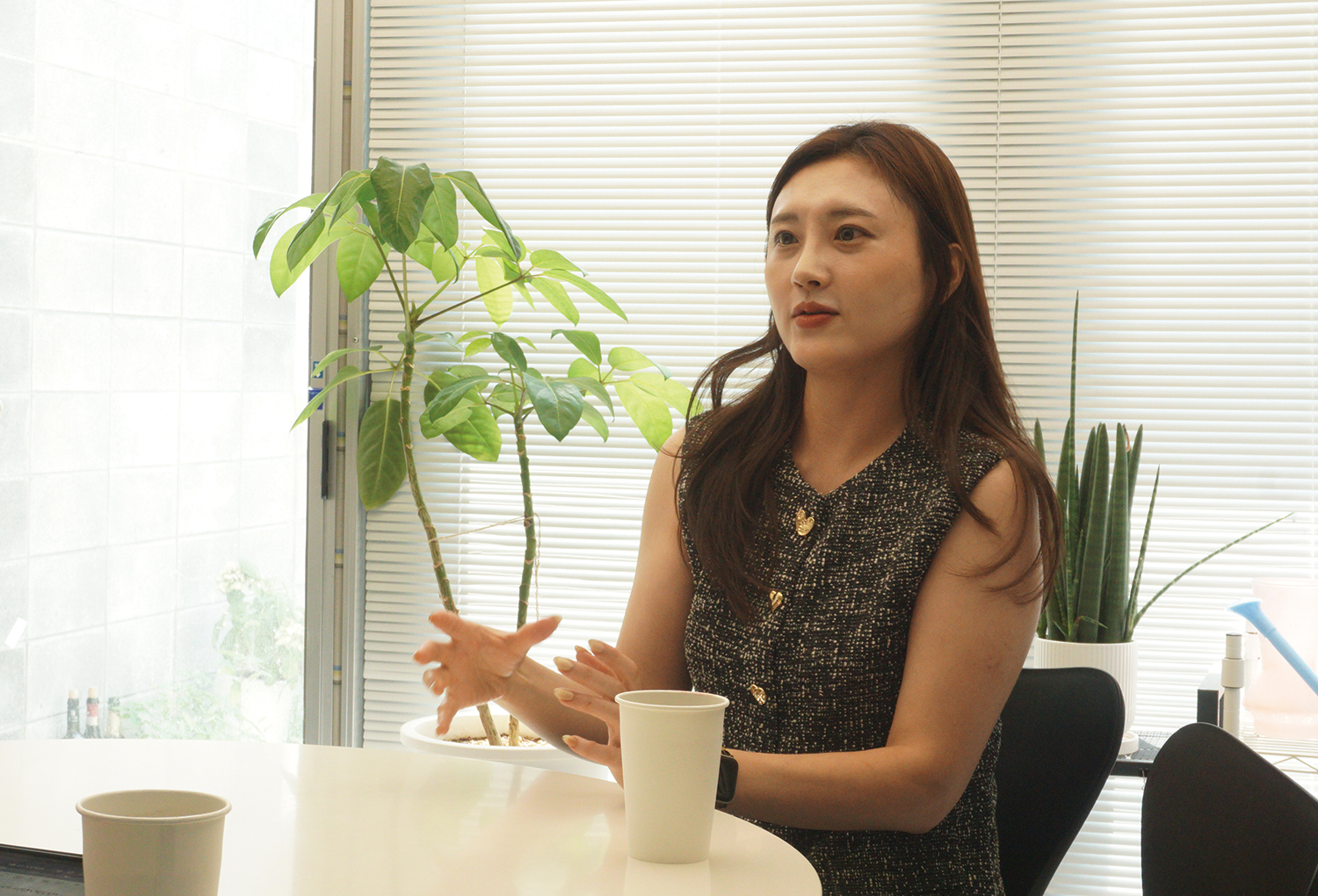
Jung Jiyoung