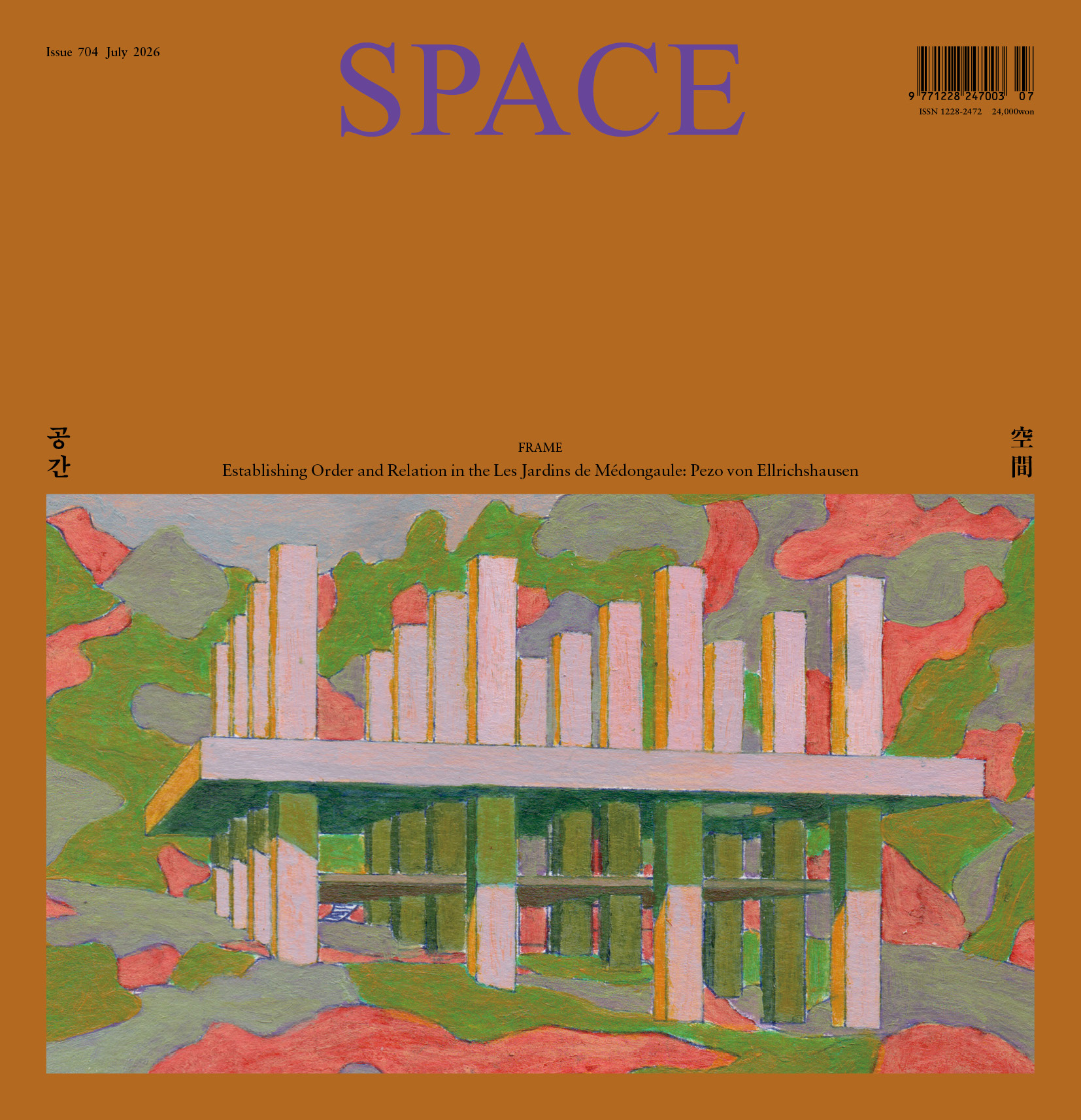

SPACE July 2026 (No. 704)
I AM AN ARCHITECT
‘I am an Architect’ was planned to meet young architects who seek their own architecture in a variety of materials and methods. What do they like, explore, and worry about? And how are architects in various regions expanding their own worlds in different ways? SPACE is going to discover individual characteristics of them rather than group them into a single category.
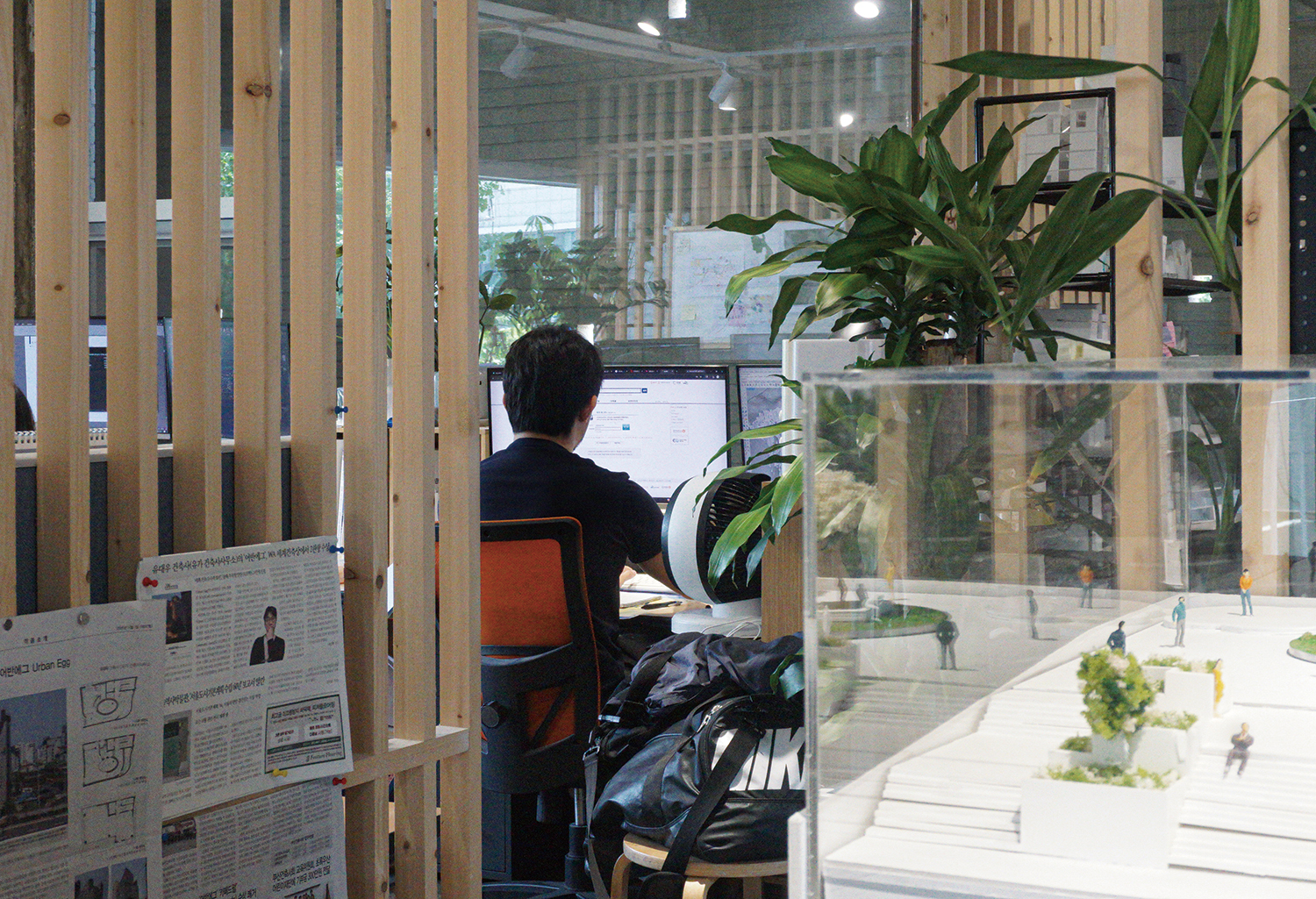
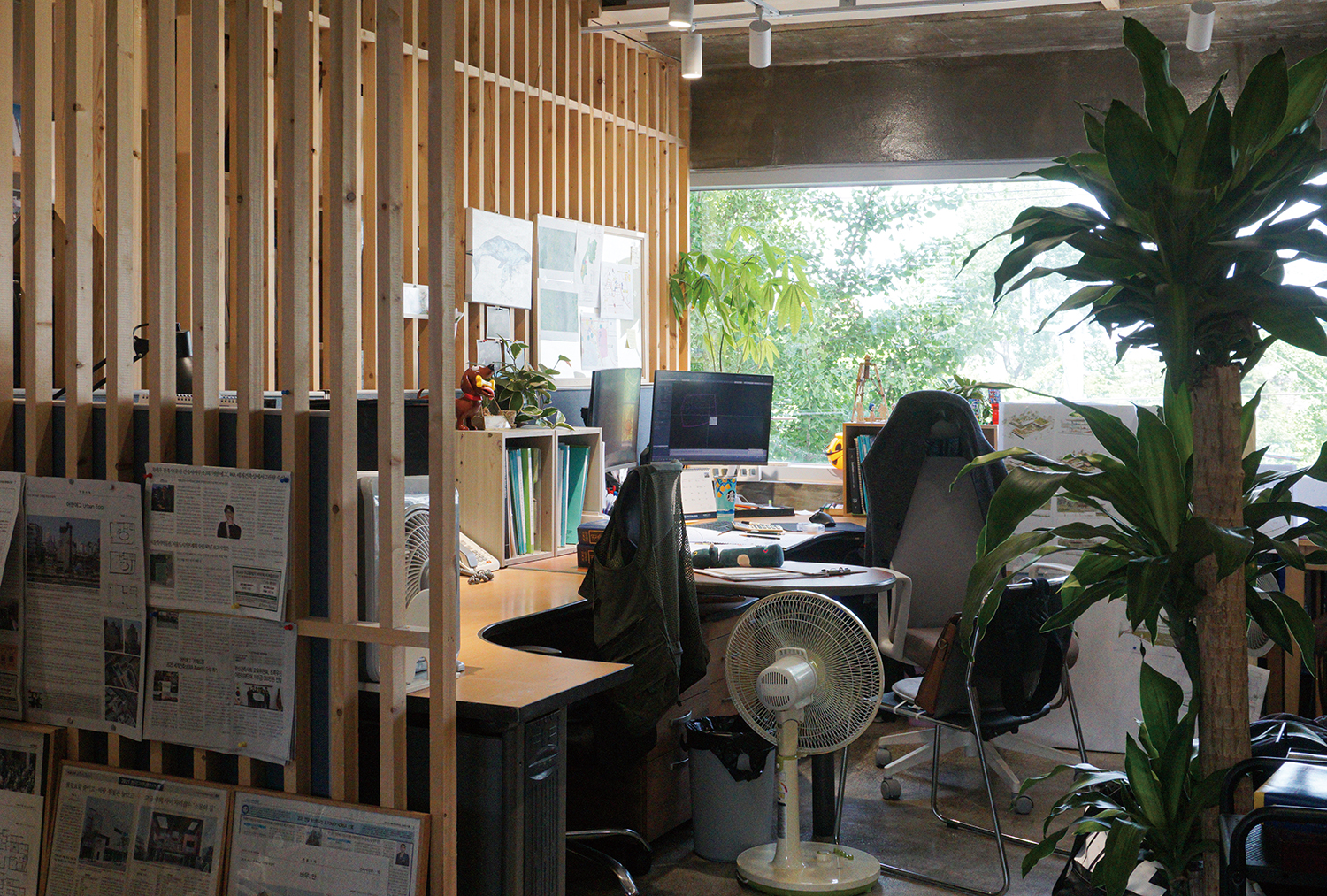
Interior view of U.GA architects
interview Yu Daewoo Principal, U.GA architects × Lee Sowoon
Environmental Conditions: Getting the Sense of a Site
Lee Sowoon (Lee): You founded U.GA architects in 2016 and have been working in Busan ever since. Are your designs influenced by the regional context of Busan?
Yu Daewoo (Yu): I believe that the environment is the most influential factor informing the design vision of architects. Some people describe the work of architects based in Busan as ‘excessive’ or ‘strong’, and I wonder if that is because the environment around us is itself so dynamic. Seoul has its own distinctive environment, Busan also has its own, characterised by the sea, mountains, and a rich variety of natural environments. Within that, there are also artificial landscapes such as Gwangandaegyo Bridge. Constantly surrounded by these elements, it is inevitable that they flow into our work, even if indirectly.
But it’s not only a matter of sensibility. In areas where land prices are high, such as Gangnam in Seoul, the profit structure generated by the land is different, which leaves more room to invest in construction costs. In Busan, land prices have a limit, and the construction budget is constrained accordingly. So, we are always negotiating how far we can go within a given budget. I hear that in Seoul there is extreme competion just to work on a new project, whereas in Busan the competition is somewhat less intense. (laugh)
Lee: What does the name ‘U.GA’ stand for?
Yu: It stands for ‘unique’ and ‘universal’. I wanted to create something distinctive for those who seek the unique experience while at the same time to devise something more broadly accessible for those who prefer the familiar. Interestingly, because people read it as Yuga in Korean, they often interpret it as ‘houses built by Yu Daewoo’. That interpretation is not wrong, but originally the intention was to embrace a wide range of design approaches.
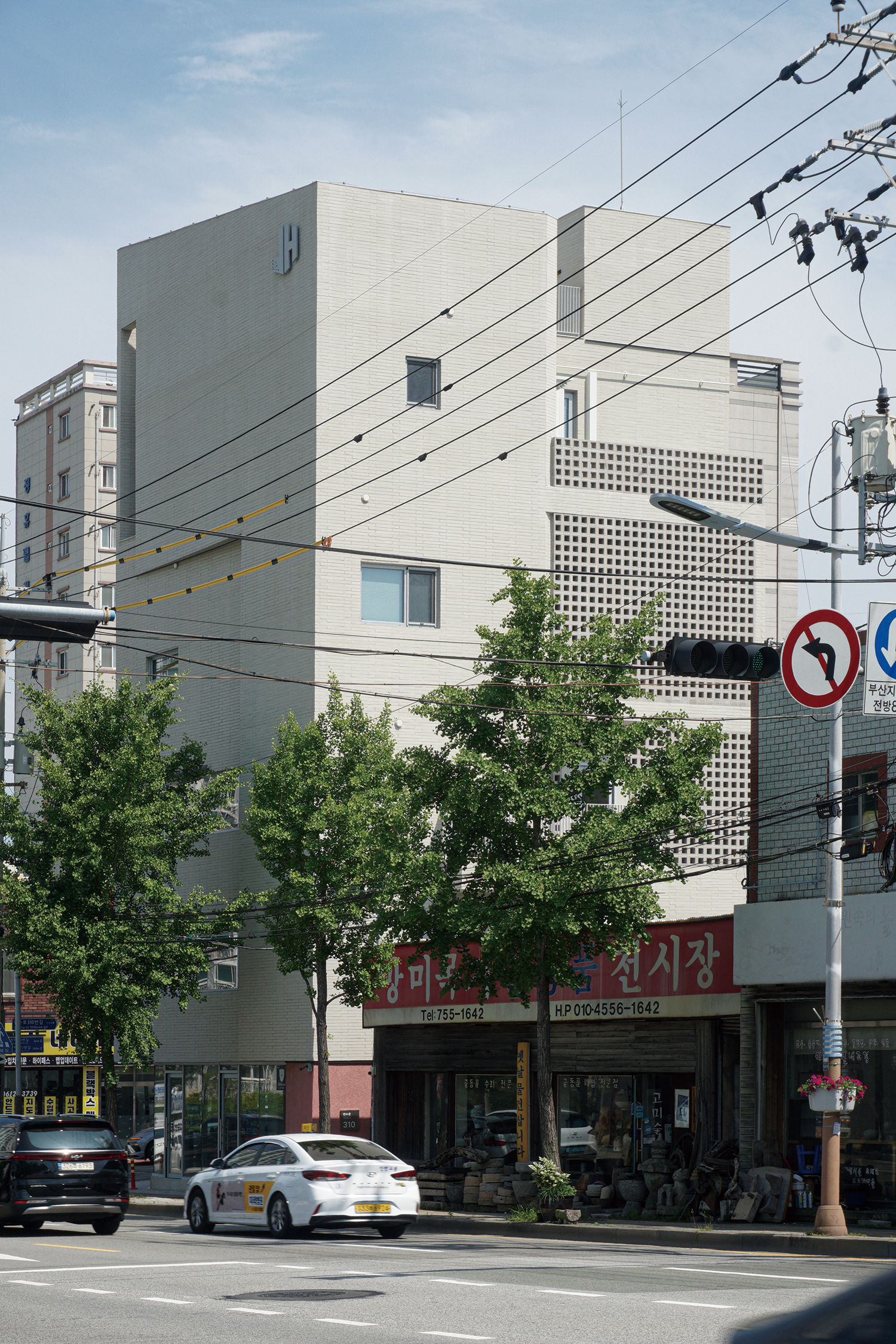
JH Gwangan (2025), a mixed-use residential and commercial building designed by and currently housing U.GA architects
Lee: Your office is filled with models. What do they mean for your work?
Yu: I was born in 1980. When I was a student, tools like SketchUp or Rhino were not as advanced as they are today.
I became accustomed to building models by hand, for example cutting and assembling materials. While I let my staff work in their own preferred ways, I still rely heavily on physical models. I like the process of making something while changing it little by little in the moment.
Presentation models are not just for display. Once a design is finalised, we bring them to the construction site along with the full drawing set. Carpenters and site managers immediately understand aspects that cannot be read in two dimensions. Some projects simply cannot be realised without models. That is why we keep making them, and after completion, we bring them back to the office.
Lee: I noticed that you previously worked at Daewoo E&C. What was your role there?
Yu: I began my practice in a design office, but I became curious about the process of building so I decided to move to a construction company. I believed that architects could gain valuable knowledge from the construction site. Initially,
I worked in the design division, and later I took on the role of a site manager, working with labourers, foremen, and site supervisors.
It was not easy. The way designers draw and the way drawings are actually read on site were completely different. After that,
I returned to the design side, working in construction supervision, and then working as a project architect in an architectural office. Eventually, I began to feel that I wanted to pursue my own design agenda. That is what led me to open my own office.
Lee: So you experienced the architectural industry in broad terms before opening your own office.
Yu: Younger colleagues often ask me whether site experience is necessary. I tell them there are many ways to learn without going to a construction site, especially because returning to design afterward is not always easy. But at the time, I felt strongly that I needed to experience it firsthand.
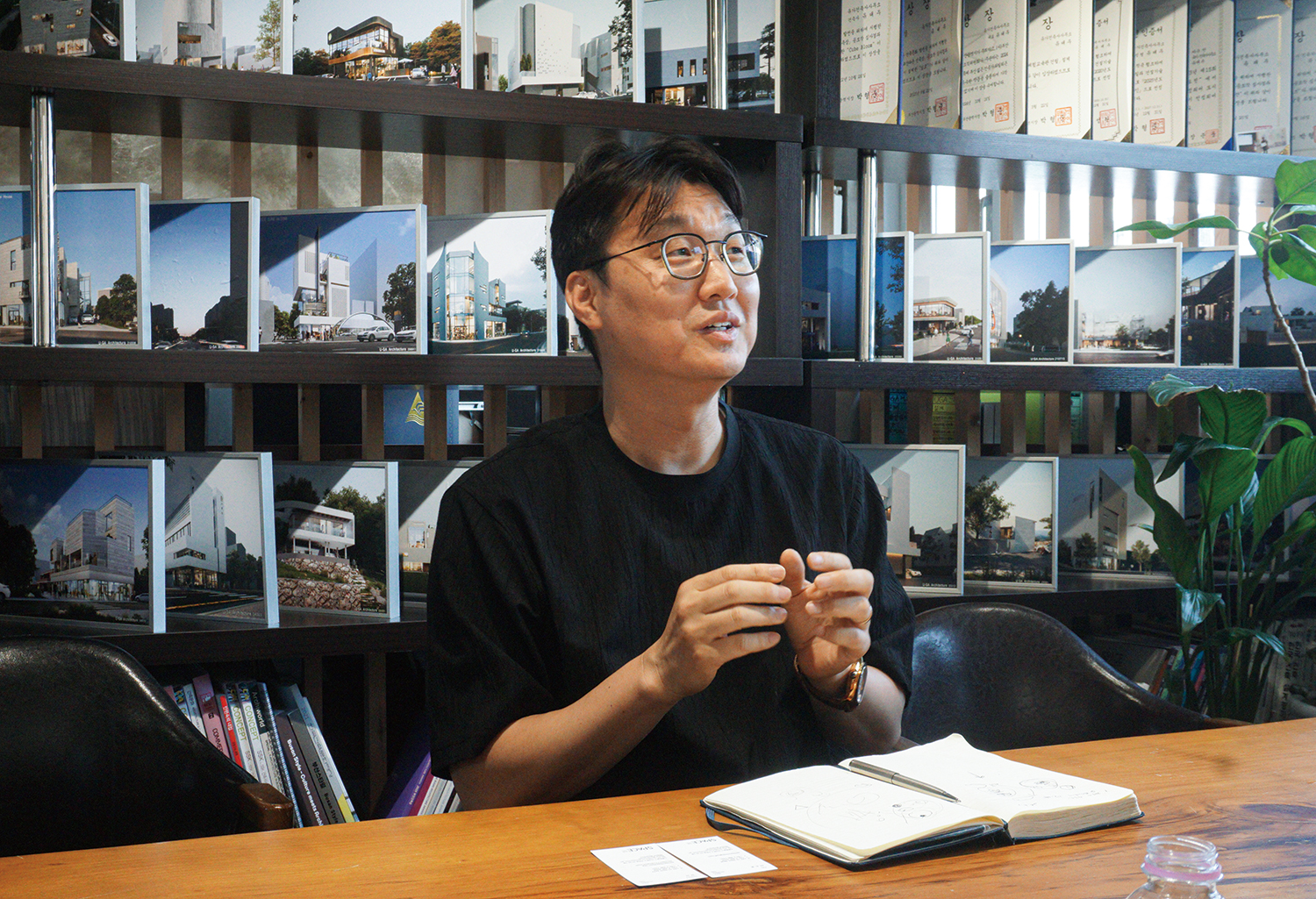
Yu Daewoo
The Art of Persuasion and the Strategy Behind Coordination
Lee: U.GA architects has worked on a wide range of private projects such as housing, mixed-use buildings, and stays. You in particular seem to have worked on many mixed-use residential buildings.
Yu: When you start an office under your own name, clients rarely commission you based solely on that name. My first project came from a contractor who asked me to design his own house, which was a mixed-use building in a new development district. That led to more similar projects, and gradually expanded into houses, neighbourhood facilities, and stays.
Lee: It is a typology that does not easily allow for strong authorial intervention. What have you been trying to explore within its bounds?
Yu: When I was young, I lived in a detached house. It had a yard, and my siblings and I would play baseball there, ride bicycles, and play badminton. We watched our family making kimchi, and in the evenings, we would eat dinner outside. The interior of the house was small, but many activities took place in the yard. Today, that kind of space has almost disappeared.
So, when designing mixed-use residential buildings, I knew there were a few things I wanted to bring in. I wanted to design a courtyard from which each household would be able to see the sky, vertically connected spaces like attics, and a carefully considered façade. In development districts where repetitive typologies are placed, I want buildings that catch the eye, something that passersby might remember.
While the interior is primarily experienced by the client, the exterior is seen by many. If someone passing by pauses and wonders, ‘What is that?’ then architecture has a certain influence. I saw the exterior of house as something intended for a third party.
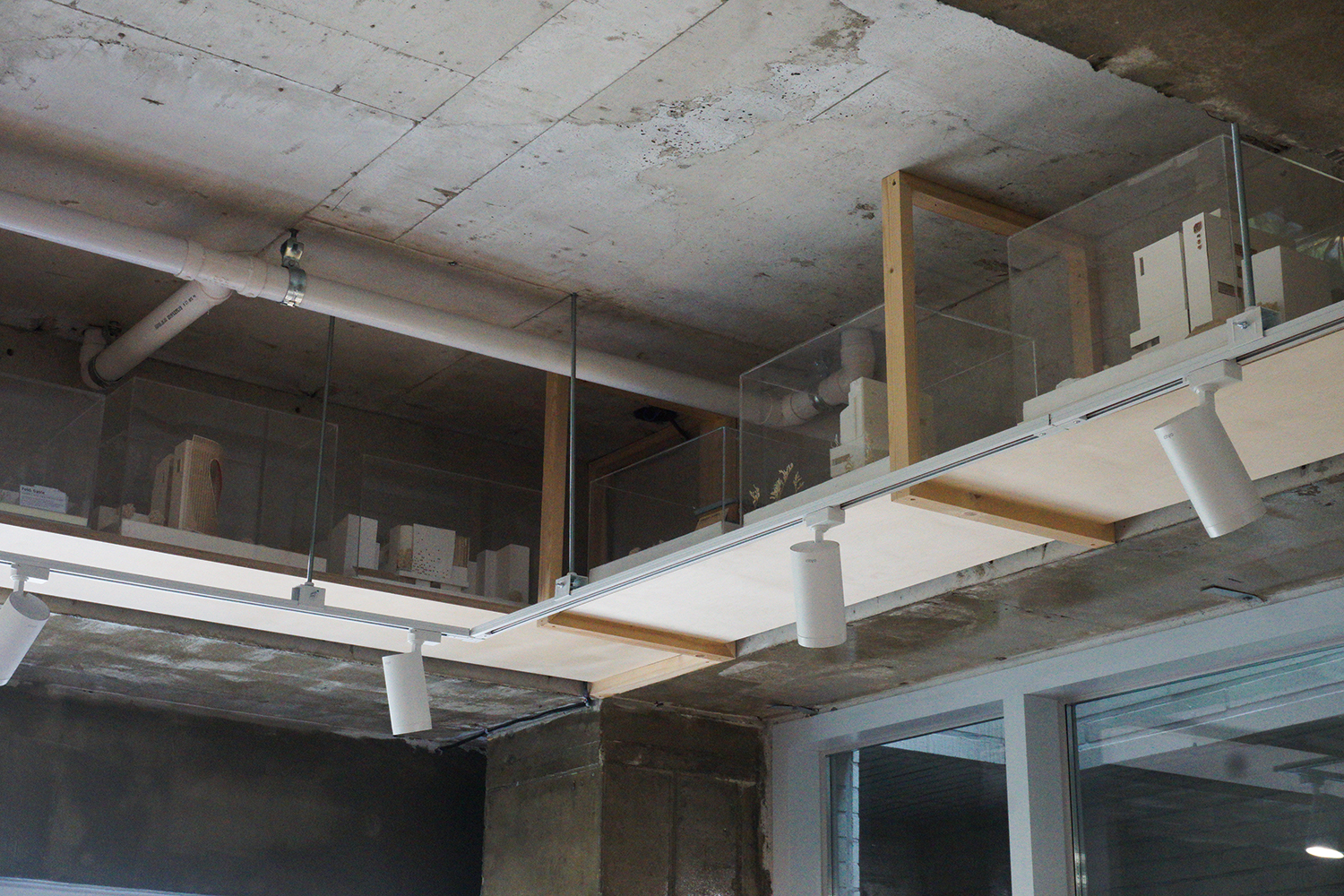
models kept on overhead shelves
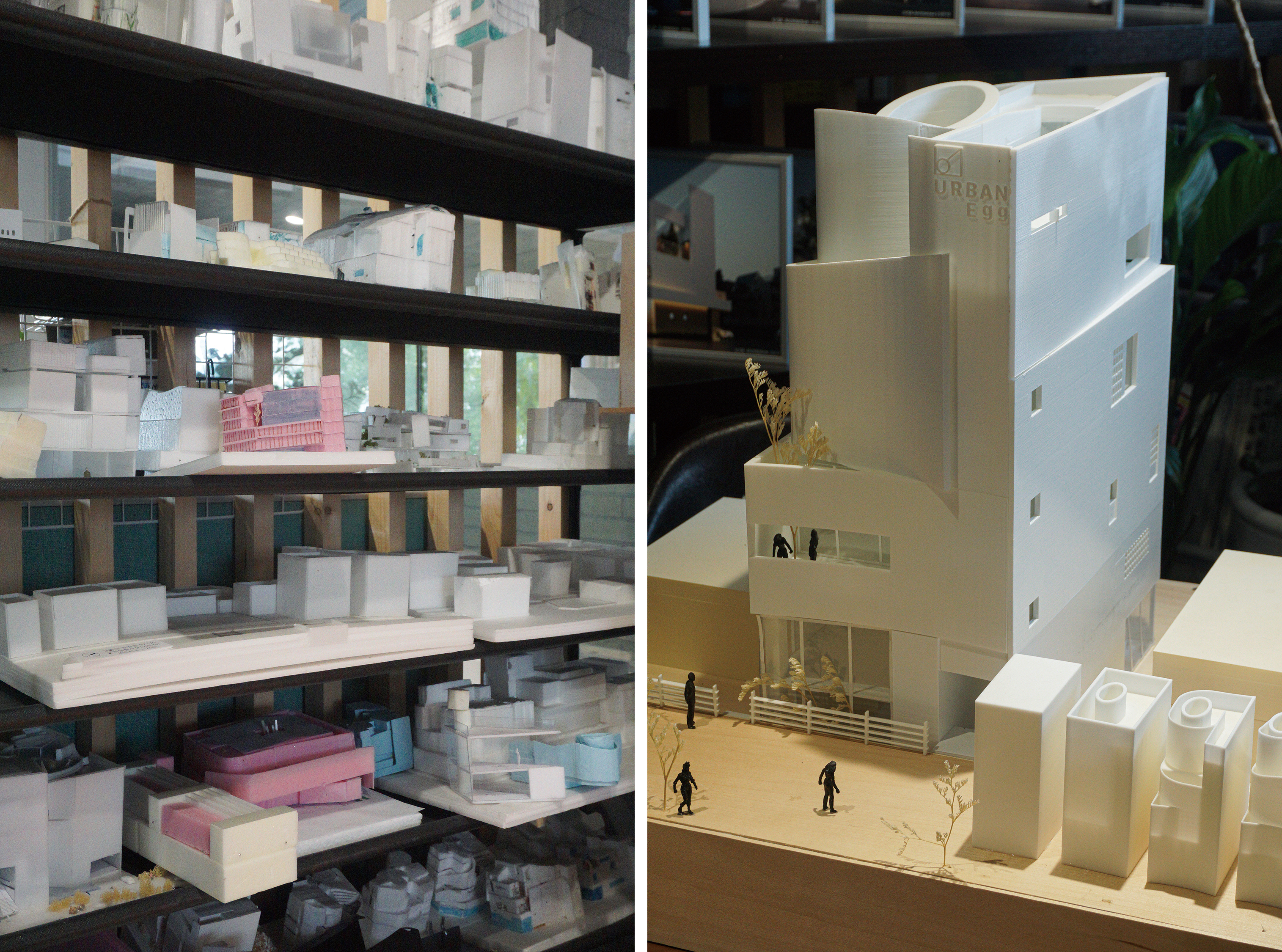 (left) Study models, (right) Model of Urban Egg (2025)
Lee: From the client’s perspective, budgeting and efficiency are usually the top priorities. What is your strategy for guiding them towards your design intentions?
Yu: Commercial buildings are evaluated in terms of efficiency per unit area, so clients often want 100% usable space. However, as an architect, I want to design meaningful spaces, use interesting materials, and pursue new ideas. The challenge is to find a balance where the client, the contractor, and we as designers are all satisfied.
My experience in construction helps me understand how contractors operate. For example, if a client’s budget is 1.2 billion KRW but the estimate comes out at 1.5 billion, I analyse which items are driving up the cost. Then I look for alternative materials or methods that will better preserve the design concept.
I begin by obtaining estimates based on a full set of drawings, including detailed specifications, which often result in higher costs. But different contractors produce very different estimates. Some leave out certain items, some include only half of them, and others specify more expensive options. We then analyse why those differences occur, reorganise the specifications, and adjust them.
I look for ways to reduce the cost while achieving a similar result.
Through that process, the cost eventually comes into line. Contractors we have worked with several times already know our tendencies, so they sometimes bring an estimate that fits the budget from the start.
Lee: Another distinctive aspect of your portfolio is that you have designed several Starbucks stores in Busan and Gyeongnam.
Yu: To be honest, Starbucks has its own clear identity. It can be seen as a design that responds to the brand, and for that reason, the authorial mark may seem less bold. It was still a valuable experience.
I was not part of the membership architect for Starbucks. There was a client in Busan who wanted to open a Starbucks. He wanted to operate the store through a corporation, and that is how we came to work together. The first store was in Deokcheon-dong, Busan. I thought we would start right away, but it took two years to prepare the site and adjust the scale, all without a contract! (laugh) When the site was finally ready, the trust built over time led to multiple subsequent projects.
Lee: You seem to take on a lot of projects.
Yu: Some argue that an architect should focus on one project per year to achieve a refined result, but from the beginning we pursued the idea of being ‘universal’. Many people think hiring an architect means excessive cost and complexity. I wanted to lower that barrier.
It does not mean making everything cheap; rather, it is streamlining the process of producing high-quality design within a limited time, and considering how to reduce repetition in the permitting and construction phases. Asking the right questions during the initial client interview is crucial. If I compare it to cooking, it is like having a recipe—not to repeat a fixed answer but to quickly identify the right direction for each client.
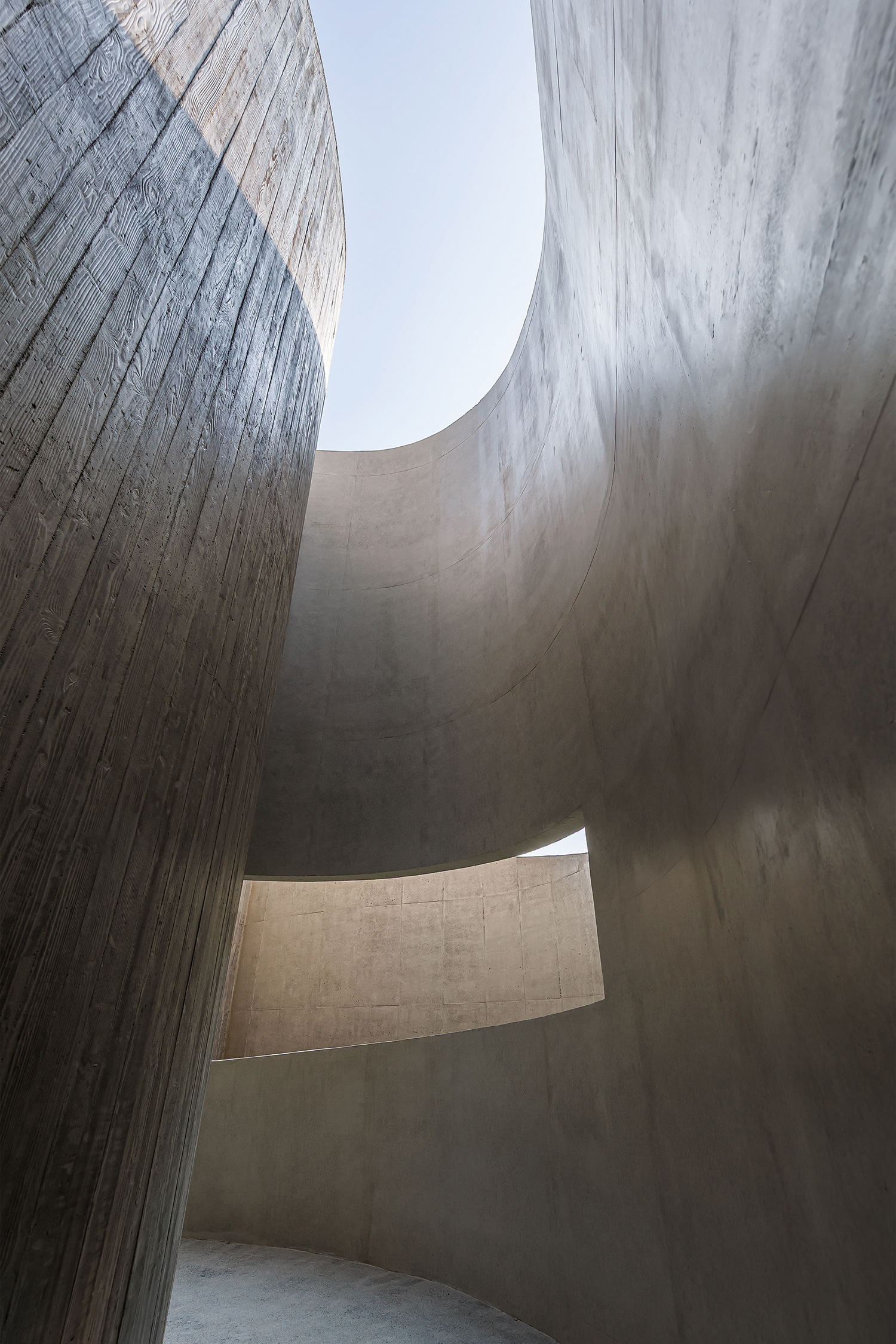
U.GA Architects’ first project ©Nam Sangin
Beyond the Recipe
Lee: Have your perspectives changed over time?
Yu: In the past, I focused more on outward form and façades. Now, I think more about the emotions people experience in space. Last year, we completed a stay called Urban Egg in Jeonpo-dong,
Busan. Unlike typical stays located in scenic areas, this one is in a busy urban environment. I wanted to create a sense of filtering as one enters, a transition into a quiet, forest-like atmosphere.
Lee: You participated in the Busan International Architecture Festival’s Young Architects exhibition alongside cmm architects (Bang Giae, Eom Taegyu), PLS Architects (Roh Youngmi, Lee Yeonjung, Shin Hyukhyu), and LALAHOHO ARCHITECTS (Cho Hoje). What do you think about the banner ‘young architects?’
Yu: I suppose I am on the older side. Busan does not have as large a pool of architects as Seoul. There is a debate, whether to pass the title of ‘young architect’ to the next generation or whether Busan needs to support its established figures first. If we keep passing it on, there may be no one left to pass it to! (laugh) Still, I think it may be time for me to move into the category of mid-career architect.
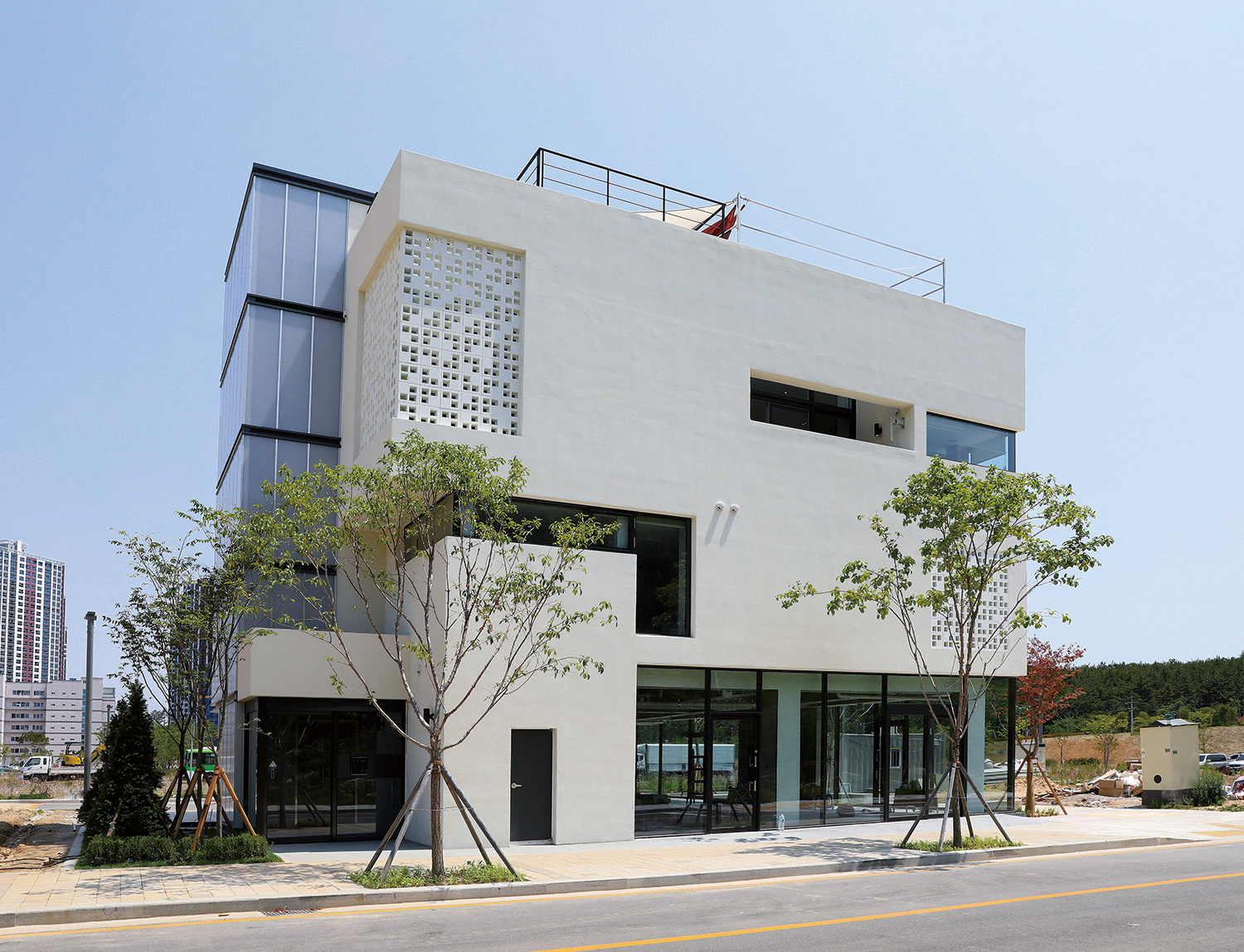
AB Origine (2020) ©U.GA architects
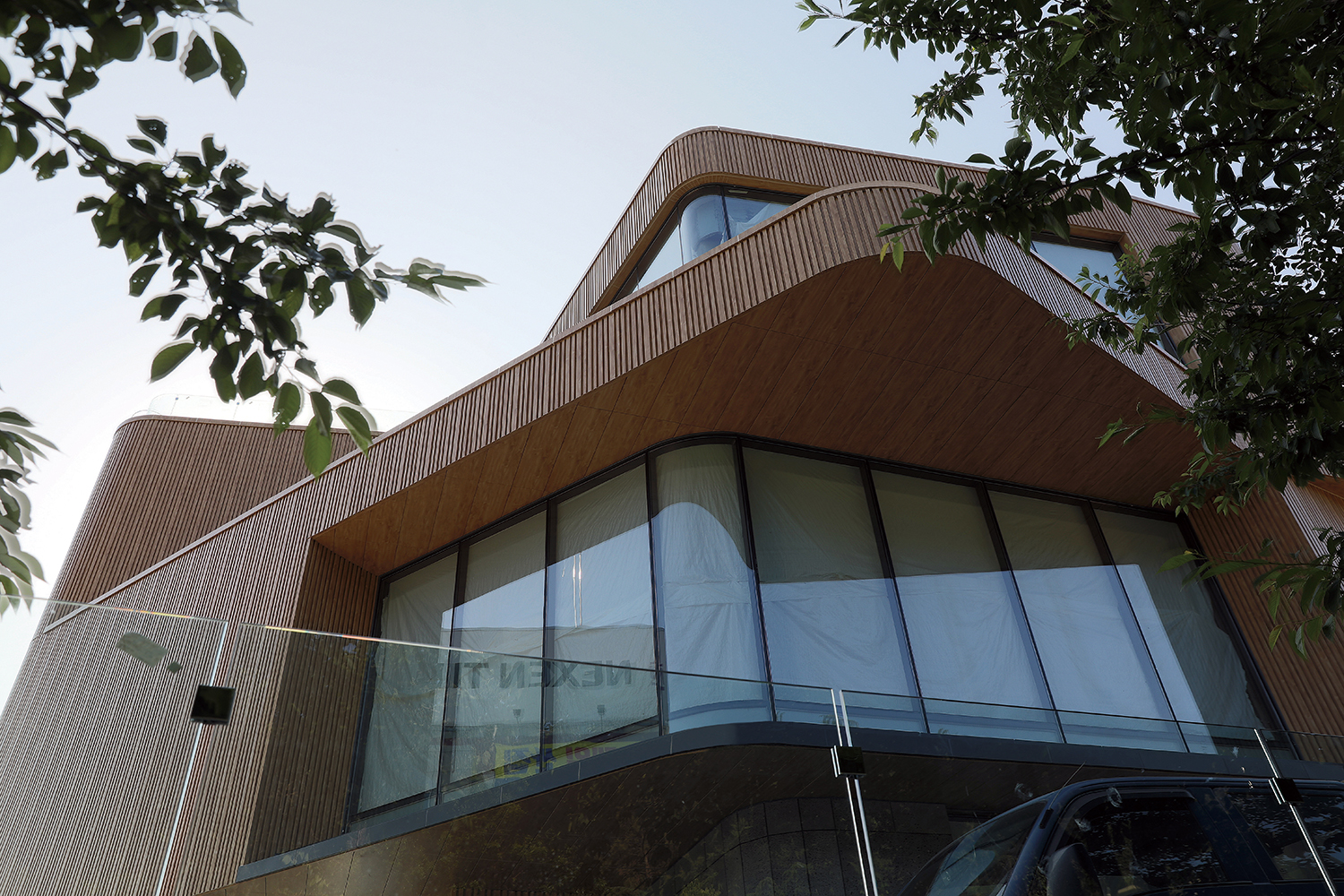
Starbucks Hwamyeong Riverside DT (2020) ©U.GA architects
Lee: I was also impressed to learn that you have consistently hired interns. That cannot be easy for a small office.
Yu: Now we may appear to be an atelier, but that was not the direction when I first opened the office. At one point, I changed direction after receiving a single comment from someone who was like a mentor to me. In the same way,
I thought I might also be able to have an influence on students.
But it is not a one-way process where we simply teach them. Young people sometimes offer ideas that are completely unpredictable. When they propose something different from the way we usually work, new outcomes can emerge from that. It has to be mutually beneficial. Nothing in the world is free! (laugh)
Lee: That sounds like an ideal internship experience. Do you have any plans to expand your portfolio into public architecture?
Yu: We continuously participate in design competitions, although we have not won yet. Private projects tend to be more closed character, such as commercial facilities or houses. In fact, I am quite shy and tend not to put myself forward too much. (laugh) Public architecture, however, requires openness, where people from outside can come in, communicate, and connect with others. I also want to try that kind of architecture, so we keep entering competitions.
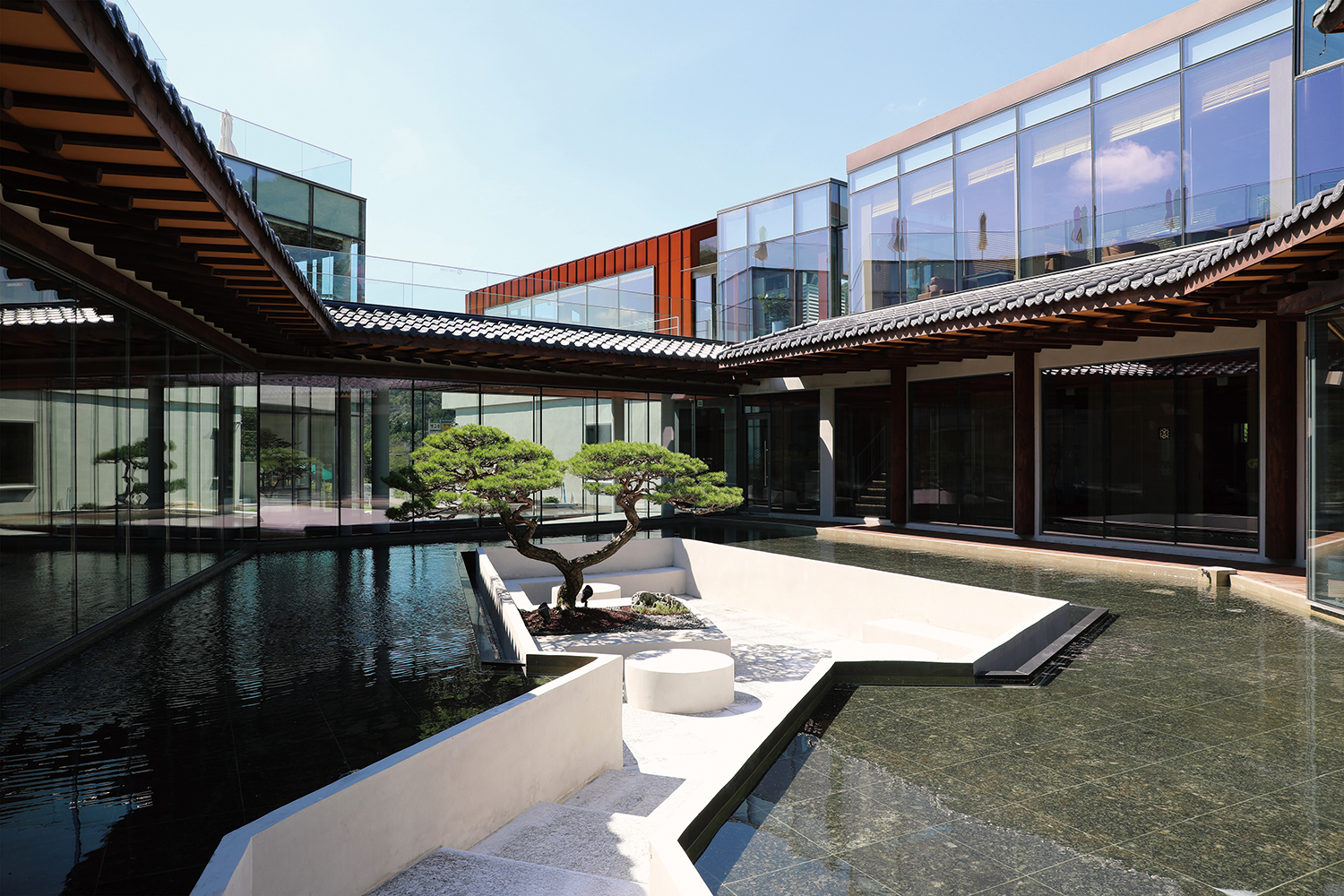
Gaya Butchers (2023) ©Kim Myunggu
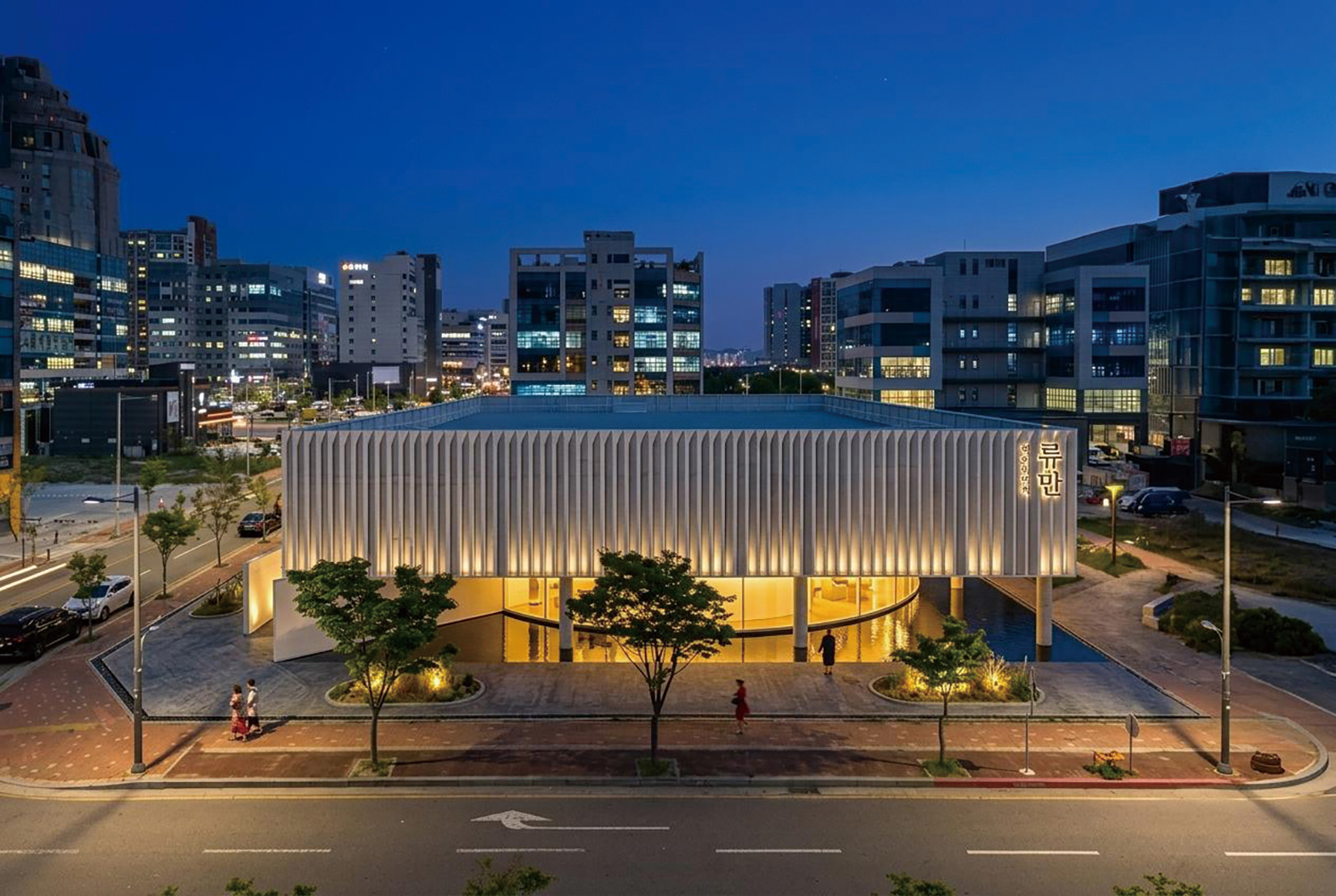
Ryuman (ongoing) ©U.GA architects
Lee: Finally, I’d like to ask about your future plans.
Yu: There are still many things I want to try. Some people say that U.GA architects should have its own distinct colour profile, but I do not want to become fixed in one direction yet. Until I reach fifty, I want to keep experimenting.
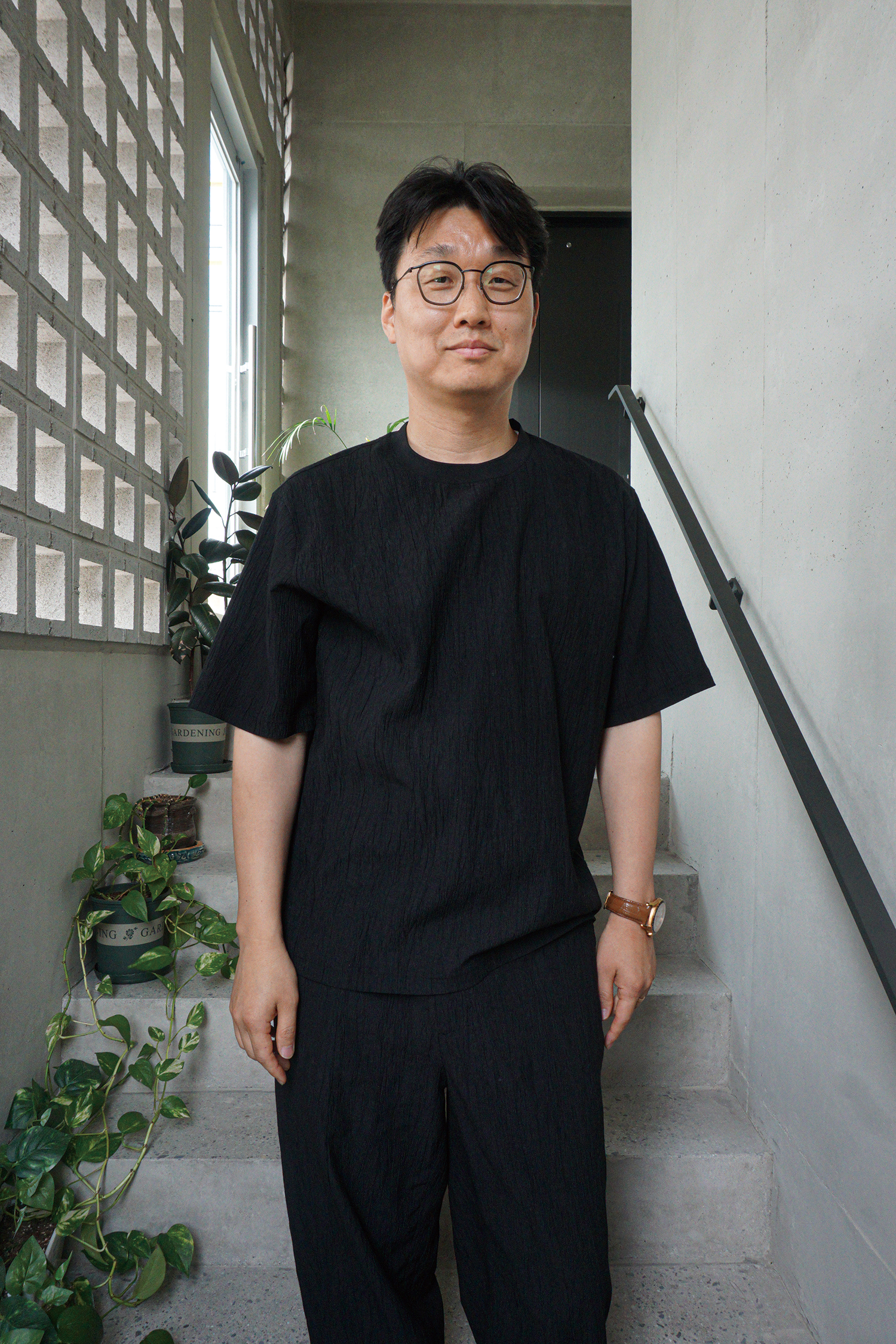
Yu Daewoo