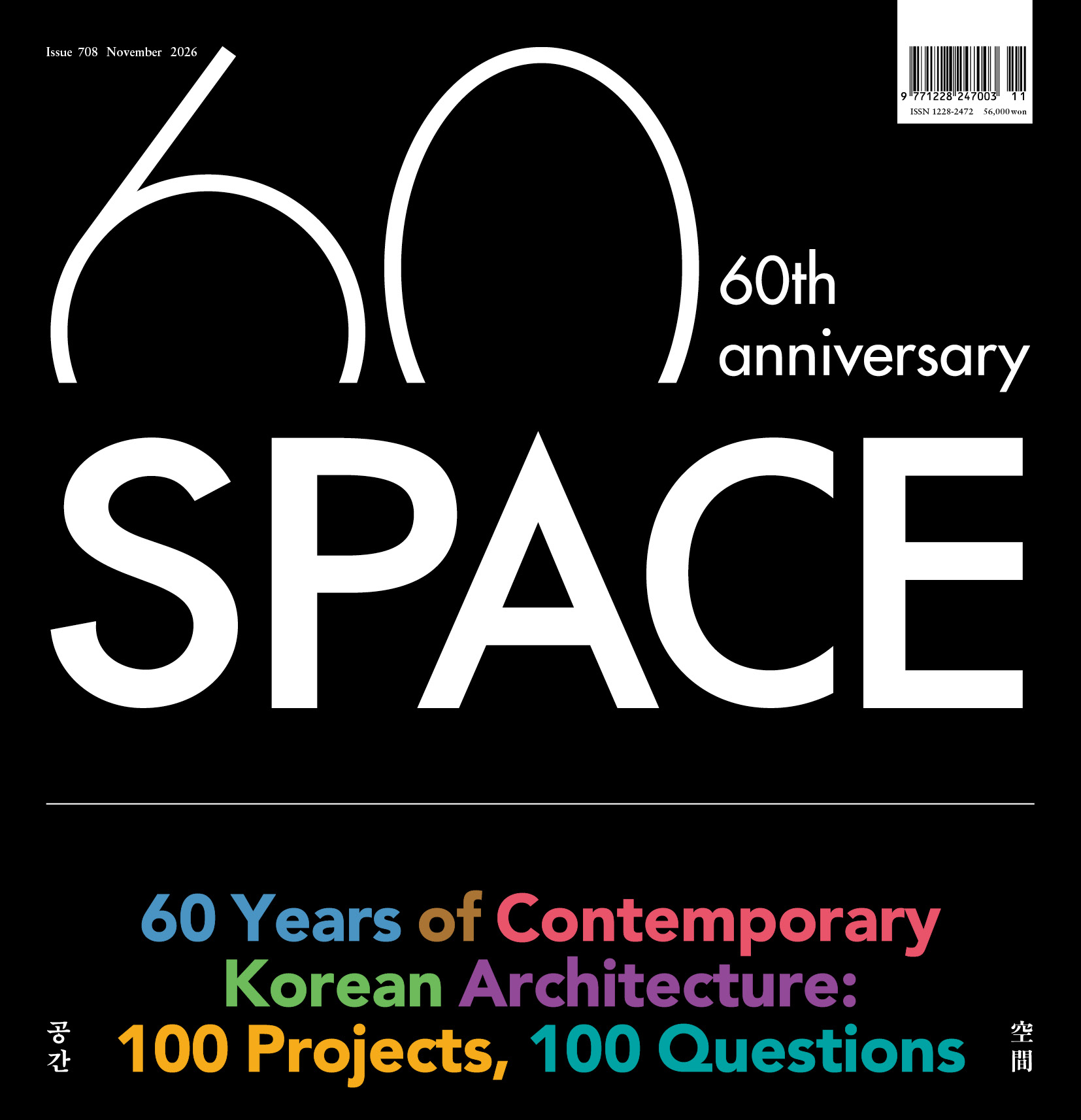

SPACE November 2026 (No. 708)
Reflecting on 60 Years in the Face of Even Bigger Questions Posed by AI
I look back fondly on Seoul in 1966, when SPACE began its journey 60 years ago. At the time, Seoul was undergoing rapid transformation under Mayor Kim Hyunok, who had been tasked by the President Park Chunghee with leading the city’s development. His relentless drive to push development forward earned him the nickname, ‘Mr. Bulldozer’. Thrust forward by this wave of development, the construction of Sewoon Sangga, one of Seoul’s landmarks, also began in 1966. It was a period of rapid economic growth, averaging 7.8% annually during the First Five-Year Economic Development Plan (1962‒1966), and Seoul was in the middle of a construction boom.
It was amidst this fervour that SPACE was born. Although Korea was then one of the poorest countries in the world, and the scars of war were still evident, leading figures in Korea’s cultural, architectural, and artistic communities were united by a shared hope for the future. Faced with the question, ‘How can we make Korea a more prosperous and beautiful country?’, SPACE and Korea’s cultural figures, architects, and artists responded over the last six decades by offering creative answers to these global challenges.
It is said that while the Western view of history sees progress as a steadily ascending line, the Eastern view sees history as a journey of wisdom deepened through recurring cycles. And so, the Year of the Fire Horse has returned in 2026, completing a 60-year cycle since 1966.
Over the past 60 years, the precedents set by Europe, the United States, and Japan provided us with reliable answers to contemplate and apply. We absorbed those answers faster than anyone else and adapted them to our own context. Today, however, such answers have all but disappeared. Korea now stands at the forefront of the artificial intelligence (AI) era.
Like a Lighthouse Turning Bewilderment to Creative Excitement
The explosive development of AI in recent years is fundamentally transforming the spaces, creative practices, and ways of life we once took for granted. In an era when AI rather than human experts can instantly design countless spaces, the direction and pace of tomorrow has become harder to predict than ever.
SPACE now faces an even greater question. In an age when AI is even encroaching upon the intellectual and creative domains of humanity, how can our cultural figures, architects, and artists demonstrate the unique value of humanity and justify our very existence?
The better AI becomes at providing so-called ‘model answers’, the more profound the questions become: ‘What should space be for human beings?’ and ‘Where does the true warmth lie in the spaces we inhabit and enjoy?’
It seems that our times are now compelling us to abandon the pursuit of correct answers and become explorers venturing into a sea of uncertainty. When setting out on an unfamiliar journey, we turn all the more to the past for the wisdom to discover something new. This is because clues to the future are often already hidden in the past. If the past 60 years were an era of ‘looking afar’, asking, ‘What answers might lie far away in Europe and America?’, perhaps the coming 60 years of AI and hyperconnectivity will be an era of ‘looking deeply’, examining the unique values and designs we have yet to discover within ourselves.
Perhaps it is time to delve deeply into the vast historical and architectural treasures of our neighbouring countries; Korea, China, and Japan, dynamic Southeast Asia, and the Eurasian continent. With the accelerating pace of technology in mind, we need, more than ever, a warm and humane perspective that can preserve a sense of human warmth while remaining at the forefront of emergent technologies.
The Year of the Fire Horse, which has returned after 60 years, is already galloping towards its close. Just as SPACE has been a guiding light over the past 60 years, let us hope that it will continue to play a leading role in turning unfamiliar questions to expressions of creative excitement in the uncertain decades to come.
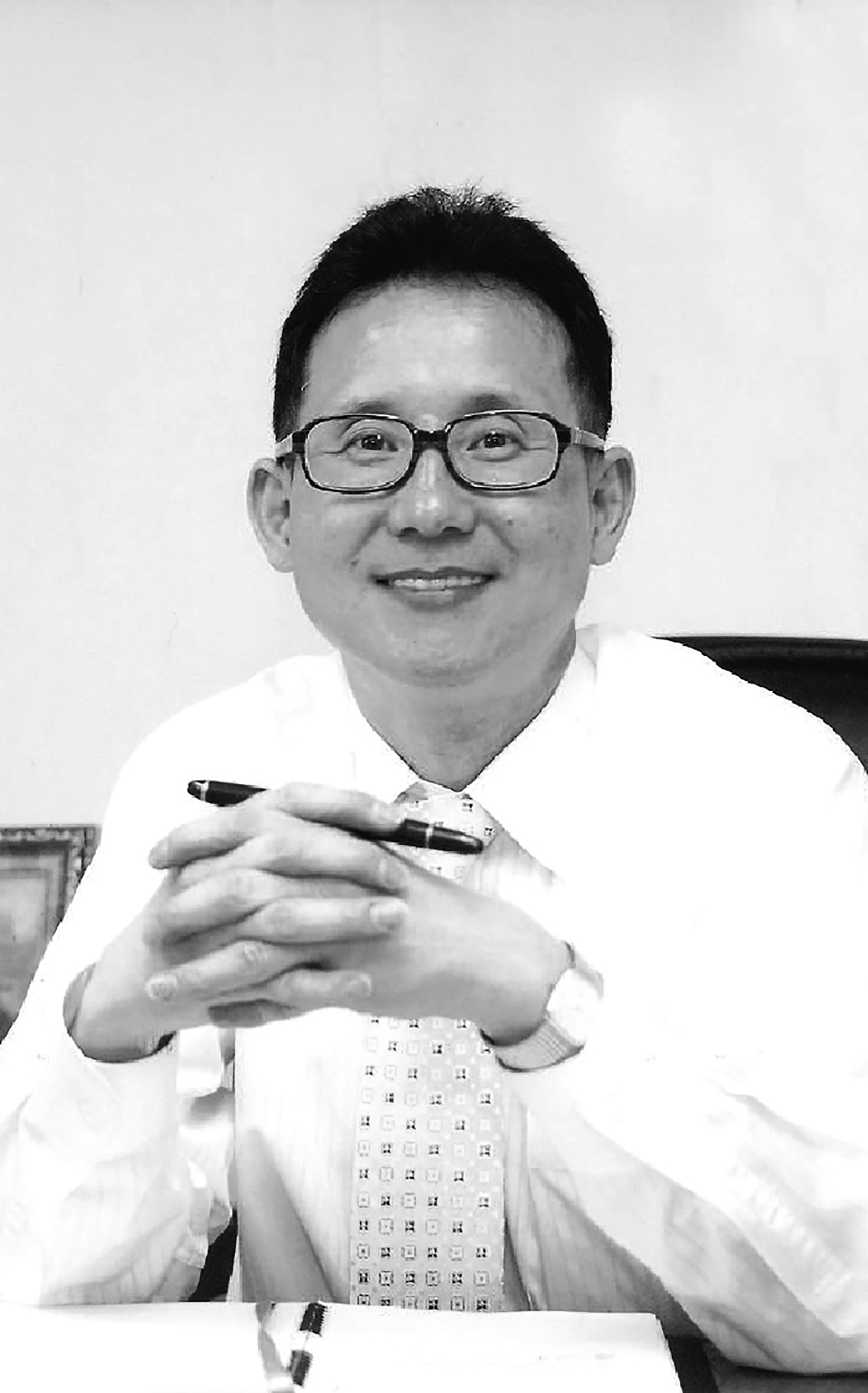
Hwang Yongcheol Publisher & Editor